

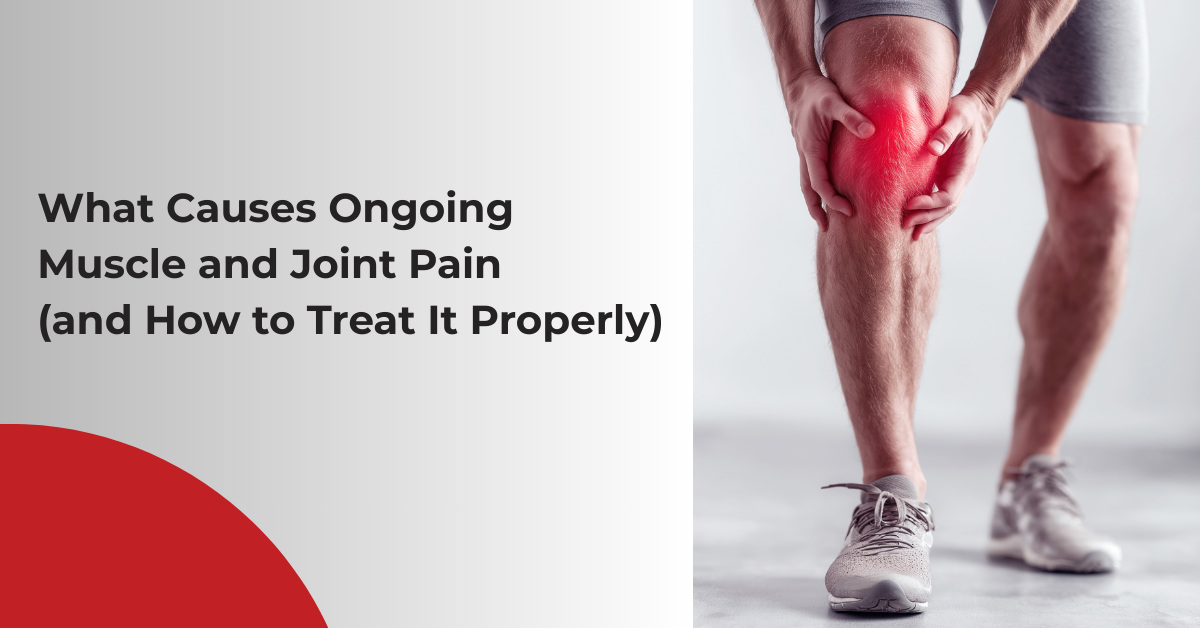
Muscle and joint pain is incredibly common. For many people, it starts as a mild ache after work, exercise, or an old injury. Over time, that discomfort can develop into ongoing muscle and joint pain that keeps returning, limits movement, or interferes with daily life.
Chronic Musculoskeletal Pain is not something you should simply push through. In most cases, it is your body signalling that something has not healed properly or is not functioning as it should.
Understanding why muscle and joint pain becomes ongoing is the first step toward treating it effectively.
Why Muscle and Joint Pain Becomes Ongoing
Short-term pain after activity or injury is a normal part of the healing process. However, when pain lasts for weeks or months, it often develops into ongoing muscle and joint pain, where there is an underlying cause that needs to be addressed.
Common Causes of Persistent Muscle and Joint Pain
| Cause | Explanation |
|---|---|
| Poor Movement Patterns | Repetitive postures or incorrect technique |
| Old Injury Compensations | Weakness or restricted mobility from unresolved injuries |
| Muscle Imbalances | Certain muscles overworked, others underactive |
| Joint Restrictions | Limited joint motion driving pain elsewhere |
| Overuse & Repetitive Strain | Tissues overloaded faster than they can recover |
Pain Is Not Always Felt at the Source
One of the most confusing aspects of Chronic Musculoskeletal Pain is that the painful area is not always the root of the problem.
For example:
Hip restrictions may contribute to lower back pain
Poor posture can lead to shoulder or neck pain
Weak glute muscles can increase stress on the knees
This is why treating only the sore area often provides temporary relief. A full assessment of how the body moves is essential to identify the true cause of ongoing muscle and joint pain.
Why Quick Fixes Rarely Solve Ongoing Pain
Many people rely on pain medication, rest, massage alone, or heat therapy to manage Chronic Musculoskeletal Pain. While these approaches can reduce symptoms temporarily, they do not correct the underlying issue.
Without addressing movement quality, strength deficits, and joint mechanics, ongoing muscle and joint pain often returns and sometimes becomes more frequent or more intense.
Long-term recovery from Chronic Musculoskeletal Pain requires more than short-term symptom relief.
How Ongoing Muscle and Joint Pain Should Be Treated
Effective treatment for Chronic Musculoskeletal Pain focuses on both reducing pain and preventing it from returning.
Thorough Assessment
Identifying the cause of Chronic Musculoskeletal Pain begins with assessing posture, movement patterns, joint mobility, muscle strength, and previous injury history.
Targeted Hands-On Therapy
Hands-on treatment helps reduce the pain, restore movement, and improve joint and soft tissue function.
Strength and Movement Rehabilitation
Rebuilding strength in the right muscles is essential for managing Chronic Musculoskeletal Pain. Specific exercises restore balance, improve control, and protect joints from future injury.
Core Stability and Postural Control
A strong and well-coordinated core provides the foundation for efficient movement. Structured exercise programs are highly effective in improving stability and reducing Chronic Musculoskeletal Pain.
Education and Prevention
Learning how to move, train, and load the body correctly helps prevent ongoing muscle and joint pain from returning and allows people to manage their condition with confidence.
When to Seek Professional Help
You should consider seeing a qualified health professional if:
- Ongoing muscle and joint pain lasts longer than a few weeks
- Chronic Musculoskeletal Pain keeps returning despite rest
- Movement feels stiff, unstable, or restricted
- Pain interferes with work, exercise, or sleep
- You rely on pain medication to function
Early assessment and treatment of Chronic Musculoskeletal Pain often lead to faster recovery and better long-term outcomes.es.
Need Help With Ongoing Muscle or Joint Pain?
If ongoing muscle and joint pain has been lingering, returning, or affecting your daily activities, a professional assessment can help identify the root cause and guide effective treatment.
At Next Phase Injury Therapy, our allied health team takes a personalised, evidence-based approach to ongoing muscle and joint pain management and injury rehabilitation, focusing on long-term results rather than quick fixes.
Explore our physiotherapy, chiropractic care, remedial massage, and Reformer Pilates services, or book an appointment to take the next step toward moving with confidence.
FAQs
1. What causes pain to keep returning in muscles and joints?
Recurring discomfort usually comes from weak muscles, poor posture, or unhealed injuries, which can place repeated stress on joints and surrounding tissues over time.
2. How do movement patterns affect joint health?
Repetitive or incorrect movements can overload muscles and joints, reduce stability, and gradually lead to stiffness, discomfort, and limited range of motion.
3. Can old injuries lead to long-term issues?
Yes, injuries that weren’t fully rehabilitated can leave weakness or altered movement patterns, causing the body to compensate and prolong discomfort.
4. Why does pain sometimes appear away from the injury site?
Limited mobility or muscle imbalances can make other areas of the body work harder, causing secondary pain in joints, back, shoulders, or knees.
5. Do rest and medication fully resolve persistent pain?
Rest and medication relieve symptoms temporarily, but without addressing strength, movement, and posture, the problem often returns or worsens over time.
6. How can long-term relief be achieved?
A combination of thorough assessment, hands-on therapy, strength training, posture correction, and education helps improve movement and reduce recurring pain.
Conclusion
Persistent, ongoing muscle is rarely random it almost always stems from underlying structural, neuromuscular, or biomechanical factors. Effective management requires a comprehensive approach, including thorough assessment, targeted hands-on therapy, strength and movement rehabilitation, and movement retraining.
Early professional intervention for muscle and joint pain can improve recovery outcomes, reduce the risk of recurrence, and help individuals return to daily activities, work, and exercise with confidence. By addressing the root cause rather than just the symptoms, long-term relief becomes achievable.
References:
- Britt, Tabitha. “What Can Cause Muscle and Joint Pain?” Medicalnewstoday.com, Medical News Today, 28 Mar. 2023, www.medicalnewstoday.com/articles/muscle-and-joint-pain.
- Australia, Healthdirect. “Joint Pain and Swelling.” Www.healthdirect.gov.au, 9 Mar. 2021, www.healthdirect.gov.au/joint-pain-and-swelling.
- “Joint Pain and Stiffness in the Morning and How to Reduce It | Brown University Health.” Brown University Health, 2019, www.brownhealth.org/be-well/joint-pain-and-stiffness-morning-and-how-reduce-it.