


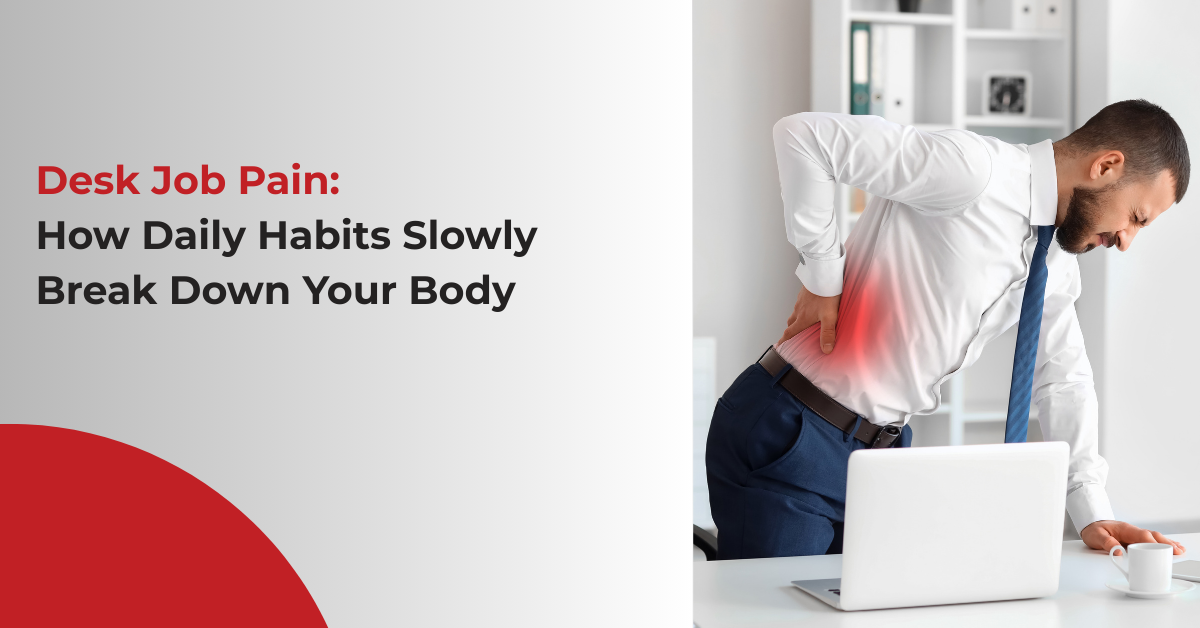
Spending long hours at a desk may feel harmless, but over time, small daily habits can place significant stress on the body. Many people associate desk jobs with mild stiffness or occasional aches, yet prolonged sitting and poor movement habits can gradually contribute to widespread pain and reduced physical function.
At Next Phase Injury Therapy, our physiotherapists, chiropractors, and Pilates practitioners regularly see patients whose neck, back, and joint pain can be traced back to prolonged desk work and repetitive postures.
Understanding how desk-based habits affect the body is the first step toward preventing long-term discomfort and maintaining healthy movement.
Why Desk Jobs Place Unique Stress on the Body
The human body is designed to move regularly. Sitting for extended periods places the spine and muscles in sustained positions that reduce circulation, limit joint movement, and increase muscular strain.
Common features of desk-based work include:
- Prolonged sitting
- Limited spinal movement
- Repetitive keyboard and mouse use
- Sustained neck and shoulder postures
- Reduced core and hip engagement
Over time, these factors may contribute to stiffness, weakness, and pain that extends beyond the desk itself.
How Daily Desk Habits Affect Different Areas of the Body
Pain from desk work often develops gradually and may not be felt immediately at the source of the problem.
Neck and Upper Back Strain
Forward head posture and rounded shoulders are common during desk work and may lead to:
- Neck stiffness or pain
- Tension headaches
- Shoulder discomfort
- Reduced neck mobility
Extended screen time and poor workstation setup can increase strain on the cervical spine and upper back muscles.
Lower Back and Hip Tightness
Sitting for long periods places sustained load on the lower back and reduces hip mobility, which may result in:
- Lower back pain or stiffness
- Tight hip flexors
- Reduced spinal flexibility
- Discomfort when standing or walking after sitting
Over time, limited movement in the hips can increase strain on the lumbar spine.
Wrist, Elbow, and Forearm Discomfort
Repetitive hand and arm movements may contribute to:
- Wrist pain or stiffness
- Elbow discomfort
- Forearm tightness
- Reduced grip strength
Poor desk ergonomics and prolonged keyboard or mouse use can increase stress on these joints and muscles.
Postural Changes That Develop Over Time
Poor posture is not usually intentional it develops as the body adapts to repeated positions. Common postural changes linked to desk jobs include:
- Forward head position
- Rounded shoulders
- Increased upper back curvature
- Reduced spinal extension
These changes can increase muscle fatigue and reduce the body’s ability to move efficiently.
The Role of Reduced Movement and Muscle Imbalance
Sitting for extended periods reduces activation of key muscle groups, particularly the core and gluteal muscles. Over time, this may lead to:
- Reduced core stability
- Weak gluteal muscles
- Increased reliance on passive structures such as ligaments and joints
- Greater risk of strain during everyday movements
A lack of regular movement breaks compounds these effects.
How Desk Job Pain Develops Gradually
Desk-related pain often builds slowly due to:
- Long hours without movement breaks
- Poor workstation setup
- Inadequate strength or mobility training
- High workloads and stress
- Previous injuries that were not fully rehabilitated
Because symptoms develop gradually, they are often ignored until pain begins to interfere with work, exercise, or sleep.
How Allied Health Care Can Help Desk Job Pain
Managing desk-related pain requires more than short-term relief. A targeted, movement-based approach helps address the underlying causes.
Physiotherapy
Physiotherapy focuses on improving movement, posture, and strength. Treatment may include manual therapy, postural education, and tailored exercises to support desk-based workers.
Chiropractic Care
Chiropractic care aims to restore spinal mobility and reduce joint stiffness that develops from prolonged sitting and repetitive postures.
Remedial Massage
Remedial massage may help relieve muscle tension and soft tissue tightness that commonly builds up from prolonged sitting and repetitive desk-based tasks. It can support recovery by improving circulation, reducing muscular discomfort, and complementing active treatments such as physiotherapy and chiropractic care.
Reformer Pilates
Reformer Pilates helps build core strength, postural awareness, and movement control, supporting long-term resilience for desk-based lifestyles.
Simple Daily Habits That Support Your Body at Work
Small changes can make a meaningful difference, including:
- Taking regular movement breaks
- Adjusting screen height and chair setup
- Changing sitting positions throughout the day
- Incorporating strength and mobility exercises
- Staying physically active outside work hours
Consistency matters more than perfection.
When to Seek Professional Support
You may benefit from professional guidance if:
- Pain persists or worsens
- Stiffness limits daily movement
- Headaches or arm pain develop
- Work productivity is affected
- You are unsure how to manage symptoms safely
Early support can help prevent long-term injury.
A Whole-Body Approach to Desk Job Pain
At Next Phase Injury Therapy, desk-related pain is addressed through a whole-body approach. Physiotherapy, chiropractic care, and Reformer Pilates work together to restore movement, improve posture, and support long-term physical wellbeing for our local community.
Supporting Your Body Starts With the Right Guidance
If desk work is contributing to ongoing pain or stiffness, a personalised assessment can help identify contributing factors and guide effective treatment.
Explore our physiotherapy, chiropractic care, Remedial Massage, and Reformer Pilates services, or book an appointment with Next Phase Injury Therapy to support your body and long-term movement health.
Conclusion
Desk job pain is often caused by prolonged sitting, poor posture, and inefficient movement throughout the day. Over time, these habits can lead to stiffness, muscle tension, and recurring discomfort in the neck, shoulders, back, and hips.
Addressing the root causes through posture correction, targeted exercises, and movement retraining helps reduce pain, improve mobility, and prevent long-term injury. Combining ergonomic adjustments, physiotherapy, and lifestyle strategies empowers you to work comfortably and maintain long-term musculoskeletal health.
FAQs
1. Why does sitting at a desk cause pain?
Prolonged sitting can strain muscles and joints, reduce circulation, and create stiffness, leading to discomfort in the neck, shoulders, back, and hips.
2. How can I improve posture at work?
Adjust chair height, monitor level, and desk setup. Engage core muscles, keep feet flat, and take regular breaks to move and stretch throughout the day.
3. What exercises help relieve desk job pain?
Gentle stretches for the neck, shoulders, and back, along with strengthening exercises for the core and upper back, reduce tension and improve stability.
4. Can ergonomic equipment prevent pain?
Yes. Ergonomic chairs, adjustable desks, and supportive accessories help maintain proper alignment, reduce strain, and minimize recurring discomfort.
5. How often should I take breaks from sitting?
Aim to stand, walk, or stretch for 2–5 minutes every 30–60 minutes to relieve muscle tension and improve circulation.
6. When should I see a professional for desk job pain?
If pain persists despite self-care, limits movement, or affects work performance, a physiotherapist or allied health professional can assess and provide targeted treatment.
References:
- Laskowski, Edward. “Sitting Risks: How Harmful Is Too Much Sitting?” Mayo Clinic, 2022, www.mayoclinic.org/healthy-lifestyle/adult-health/expert-answers/sitting/faq-20058005.
- Institute for Physical Activity and Nutrition. “Why Do Some People Get a Curved Back as They Age and What Can I Do to Avoid It?” 7 May 2025. https://ipan.deakin.edu.au/2025/05/why-do-some-people-get-a-curved-back-as-they-age-and-what-can-i-do-to-avoid-it/
- obrienphysicaltherapy.net. “The Rise in Postural Issues: Data behind Desk Jobs and Physical Strain – Obrienphysicaltherapy.net.” Obrienphysicaltherapy.net, 14 Aug. 2025, www.obrienphysicaltherapy.net/blog/the-rise-in-postural-issues-data-behind-desk-jobs-and-physical-strain.