

Muscle pain and tightness are common causes of ongoing discomfort, restricted movement, and recurring injury. For many people, stretching and rest alone are not enough to release deep muscle tension or restore normal movement.
Dry needling is a clinical technique commonly used within physiotherapy and chiropractic care to help reduce muscle tightness, improve movement, and support injury recovery when used as part of a structured treatment plan.
Understanding how dry needling works and when it is appropriate can help people make informed decisions about their care.
What Is Dry Needling?
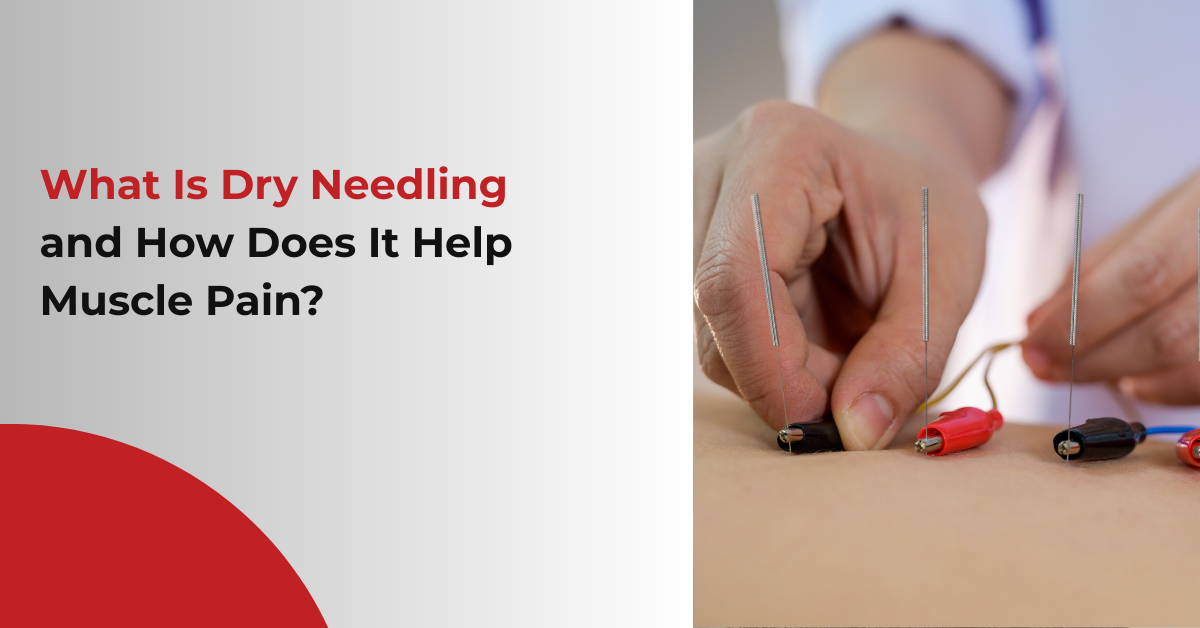
Dry needling is a treatment technique that uses thin, sterile needles inserted into specific areas of muscle known as trigger points. These trigger points are tight, sensitive areas within muscle tissue that can contribute to pain, stiffness, and reduced movement.
Despite the name, no medication or injection is involved.
The term “dry” refers to the absence of any substance being injected.
Dry needling is commonly used by trained physiotherapists and chiropractors as part of evidence based musculoskeletal care.
How Dry Needling Helps Reduce Pain
Dry needling works by targeting muscle tension at its source rather than treating symptoms alone.
Releasing Tight and Overactive Muscles
Trigger points can prevent muscles from relaxing properly. Dry needling helps interrupt this cycle, allowing the muscle to release and return to a more normal resting state.
Improving Blood Flow and Healing
Needling can increase local blood flow to the affected area, supporting tissue healing and reducing sensitivity.
Restoring Movement
When tight muscles relax, joints can move more freely. This makes movement based rehabilitation more effective and comfortable.
What Conditions Can Dry Needling Help With?
Dry needling may be used to support treatment for:
- Neck and shoulder tension
- Lower back pain
- Sports and gym related injuries
- Headaches linked to muscle tension
- Postural muscle overload
- Chronic muscle tightness
It is most effective when used alongside physiotherapy, chiropractic care, and active rehabilitation rather than as a standalone treatment.
Dry Needling vs Acupuncture
acupuncture and Dry needling use similar needles, but they are based on different principles.
Dry needling is grounded in modern anatomy, biomechanics, and pain science.
Treatment is directed toward muscles, movement, and injury related dysfunction.
Acupuncture is based on traditional Chinese medicine and focuses on energy pathways rather than musculoskeletal assessment.
Both have their place, but dry needling is specifically
used within injury rehabilitation and movement focused care.
What to Expect During a Dry Needling Session
Before treatment, a qualified practitioner will assess posture, movement, and muscle function to determine whether dry needling is appropriate.
During treatment:
- The needle may cause a brief muscle twitch or sensation
- Mild discomfort is possible but usually short lived
- Treatment is quick and targeted
After treatment, some muscle soreness may occur for up to 24 hours. This is normal and usually settles quickly.
How Dry Needling Fits Into a Full Recovery Plan
Dry needling works best when combined with other forms of care.
Physiotherapy focuses on restoring strength, mobility,
and movement control after muscle tension has been reduced.
Chiropractic care helps address joint restrictions that may be contributing to muscle overload or recurring pain.
Remedial massage and dry cupping may also be used to support soft tissue recovery and circulation.
Reformer Pilates is often introduced to rebuild strength, stability, and movement confidence once pain has settled.
This combined approach addresses both symptoms and underlying causes.
Is Dry Needling Safe?
When performed by a properly trained and qualified practitioner, dry needling is considered safe and effective.
At Next Phase Injury Therapy, dry needling is used as part of evidence based care following a thorough assessment.
Not every condition or person is suitable for dry needling, which is why professional assessment is essential.
When Should You Consider Dry Needling?
You may benefit from dry needling if:
- Muscle tightness is limiting movement
- Pain keeps returning despite rest or stretching
- Muscles feel constantly tight or overloaded
- Progress with exercise feels restricted by tension
A professional assessment can determine whether dry needling is appropriate for your condition.
Dry Needling at Next Phase Injury Therapy
At Next Phase Injury Therapy, dry needling is used as part of a personalised treatment plan that may include physiotherapy, chiropractic care, remedial massage, dry cupping, and Reformer Pilates.
Our focus is on reducing pain, restoring movement, and supporting long term recovery rather than quick fixes.
Ready to Address Muscle Pain at the Source?
If muscle tightness or recurring pain is holding you back, dry needling may help support your recovery when combined with the right rehabilitation plan.
Explore our physiotherapy, chiropractic care, remedial massage, dry needling, dry cupping, and Reformer Pilates services or book an appointment with Next Phase Injury Therapy to take the next step toward moving with confidence.
References:
- —. “On Pins and Needles: Just What Is Dry Needling? – Mayo Clinic Health System.” Mayoclinichealthsystem.org, 2019, www.mayoclinichealthsystem.org/hometown-health/speaking-of-health/on-pins-and-needles-just-what-is-dry-needling.
- Dunning, James, et al. “Dry Needling: A Literature Review with Implications for Clinical Practice Guidelines.” Physical Therapy Reviews, vol. 19, no. 4, 6 Feb. 2014, pp. 252–265, www.ncbi.nlm.nih.gov/pmc/articles/PMC4117383/, https://doi.org/10.1179/108331913×13844245102034.
- Cleveland Clinic. “Dry Needling & Physical Therapy | Cleveland Clinic.” Cleveland Clinic, 20 Feb. 2023, my.clevelandclinic.org/health/treatments/16542-dry-needling.
- Mayo Clinic staff. “Muscle Pain Causes.” Mayo Clinic, 27 Apr. 2023, www.mayoclinic.org/symptoms/muscle-pain/basics/causes/sym-20050866.