

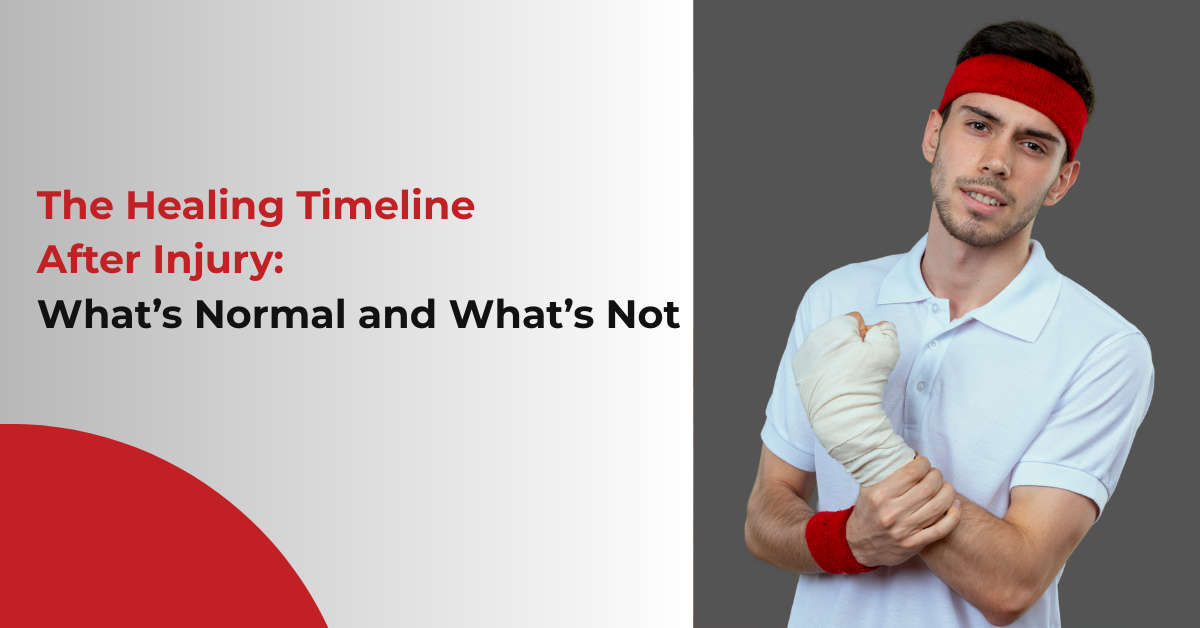
After an injury, one of the most common questions people ask is, “How long should this take to heal?”
The answer is not always straightforward.
Every injury follows a general healing process, but recovery timelines vary depending on the type of injury, how it is managed, and whether the underlying cause has been properly addressed. Understanding what is normal and what may signal a problem can help prevent minor injuries from becoming long-term issues.
Why Healing Timelines Differ From Person to Person
Not all injuries heal at the same speed. Several factors influence recovery, including:
- The type and severity of the injury
- Age and overall health
- Activity level and workload
- Previous injuries in the same area
- How early and appropriately treatment begins
While pain may settle quickly for some people, others may experience lingering symptoms if healing is incomplete or movement patterns are not restored.
The Typical Stages of Injury Healing
Most injuries progress through three main stages. These stages often overlap and vary in length.
The Acute Phase (First Few Days to 2 Weeks)
This is the initial response after injury. It often includes pain, swelling, stiffness, and reduced movement.
During this phase, rest and protection are important, but complete inactivity is not always beneficial.
What is normal:
- Localised pain and tenderness
- Swelling or stiffness
- Reduced strength or range of motion
What is not:
- Rapidly worsening pain
- Severe swelling that does not improve
- Pain spreading without clear reason
Early assessment during this stage can help guide safe movement and prevent complications.
The Subacute Phase (2 to 6 Weeks)
As tissues begin to repair, pain usually reduces and movement improves. This is when guided rehabilitation becomes essential.
What is normal:
- Gradual return of movement
- Mild discomfort with activity
- Improving strength and control
What is not:
- Pain that stays the same or worsens
- Ongoing stiffness with no progress
- Fear of movement due to instability or sharp pain
Physiotherapy and chiropractic care often play a key role at this stage by restoring joint mobility, improving muscle activation, and correcting movement patterns.
The Remodelling Phase (6 Weeks to Several Months)
This stage focuses on rebuilding strength, resilience, and confidence in movement. Many people feel “mostly better” here, but incomplete rehab can lead to re-injury.
What is normal:
- Occasional mild soreness with increased activity
- Continued improvement in function
What is not:
- Pain that returns every time activity increases
- Ongoing weakness or instability
- Repeated flare-ups in the same area
Movement-based rehabilitation and progressive loading are essential to ensure tissues adapt fully and can handle daily demands.
Why Rest Alone Often Delays Recovery
While rest is important early on, relying on rest alone can slow healing. Without movement and strength restoration, tissues may heal in a weakened or restricted state.
This can lead to:
- Muscle imbalances
- Joint stiffness
- Poor movement habits
- Recurrent pain
Active rehabilitation focuses on helping the body heal properly, not just reducing pain.
When Pain Persists Beyond the Expected Timeline
Pain that lasts longer than expected often means something has been missed. Common reasons include:
- Incomplete rehabilitation
- Ongoing movement or postural issues
- Joint restrictions or muscle weakness
- Compensation from other areas of the body
Supporting treatments such as remedial massage, dry needling, or dry cupping may help reduce muscle tension and improve tissue recovery when used alongside active care.
When to Seek Professional Support
You should consider a professional assessment if:
- Pain lasts longer than expected
- Progress has stalled
- Pain keeps returning after activity
- Movement feels restricted or unstable
- You are unsure how to safely return to exercise or work
Early guidance often shortens recovery time and reduces the risk of chronic pain.
A Smarter Approach to Injury Recovery
At Next Phase Injury Therapy, recovery is guided by a personalised, evidence-based approach. Physiotherapy, chiropractic care, movement rehabilitation, and supportive therapies work together to address both symptoms and root causes.
The goal is not just to heal, but to restore confidence, movement quality, and long-term resilience.
Need Help Understanding Your Recovery Timeline?
If you are unsure whether your injury is healing normally or something feels off, a professional assessment can provide clarity and direction.
Explore our physiotherapy, chiropractic care, and rehabilitation services or book an appointment with Next Phase Injury Therapy to support your recovery properly.
References:
- PT Evolve. “Tissue Healing: Understanding the 4 Phases for Optimal Recovery.” PT Evolve, 7 Mar. 2025.
https://ptevolve.com/the-4-phases-of-tissue-healing/
- Baoge, L., et al. “Treatment of Skeletal Muscle Injury: A Review.” ISRN Orthopedics, vol. 2012, no. 1, 2012, pp. 1–7, www.hindawi.com/journals/isrn/2012/689012/, https://doi.org/10.5402/2012/689012.
- Willwacher, Steffen, et al. “Running-Related Biomechanical Risk Factors for Overuse Injuries in Distance Runners: A Systematic Review Considering Injury Specificity and the Potentials for Future Research.” Sports Medicine, vol. 52, no. 8, 5 Mar. 2022, pp. 1863–1877, https://doi.org/10.1007/s40279-022-01666-3.
- Susilowati, Indri Hapsari, et al. “The Prevalence of Bad Posture and Musculoskeletal Symptoms Originating from the Use of Gadgets as an Impact of the Work from Home Program of the University Community.” Heliyon, vol. 8, no. 10, Oct. 2022, p. e11059, https://doi.org/10.1016/j.heliyon.2022.e11059.