

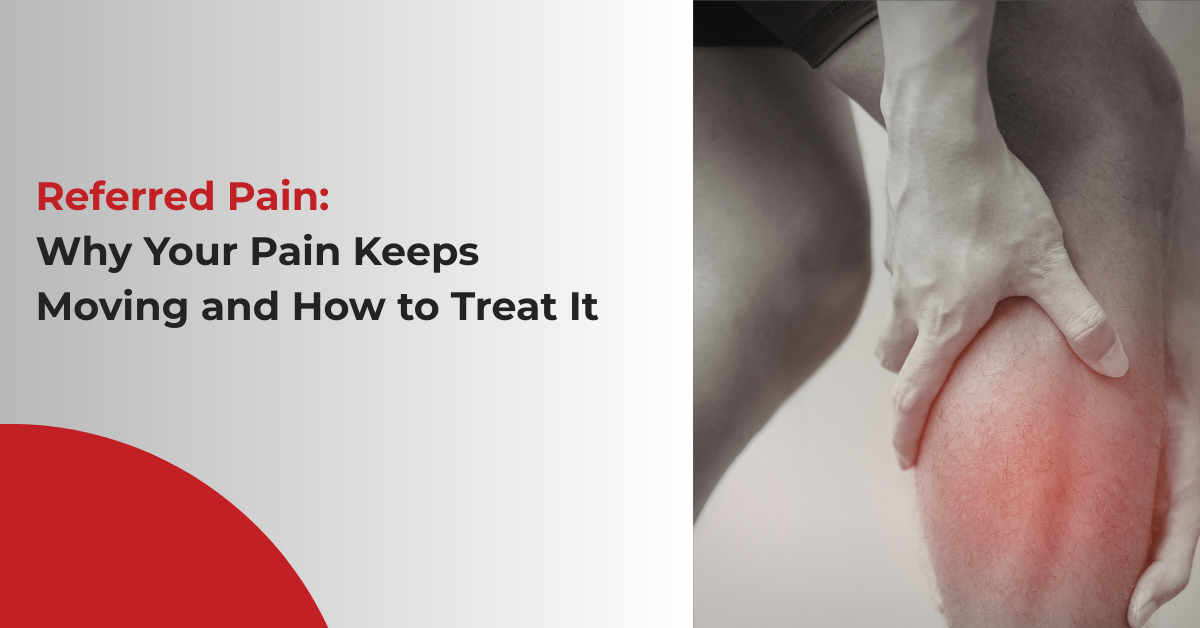
Have you ever felt pain in your shoulder, only to discover the real problem was in your neck? Or noticed that no matter how often you treat a sore spot, it just keeps coming back? You’re not imagining it. This confusing experience is often caused by referred pain.
Referred pain occurs when discomfort is felt in one area of the body, even though the source of the problem is located elsewhere. Understanding how referred pain works can help explain why symptoms feel unpredictable, and why proper assessment is essential for effective treatment.
What Is a Referred Pain?
Referred pain happens when the brain misinterprets where pain signals come from. Instead of feeling discomfort at the source of the issue, the pain is experienced in a different area.
This often occurs because nerves, muscles, and joints share common nerve pathways. When one structure becomes irritated, the brain may register the pain in another region that uses the same neural connections.
Sound familiar? Common examples include:
- Shoulder pain caused by neck dysfunction
- Leg pain linked to lower back issues
- Headaches originating from tight neck muscles
Why Pain Does Not Always Stay in One Place
Pain is rarely isolated to a single structure. The body works as an interconnected system, and dysfunction in one area can affect how other areas move and function.
So why does pain travel? It may develop due to:
Shared Nerve Pathways
Nerves from different parts of the body connect to the same regions in the spinal cord, which can cause pain signals to be perceived elsewhere.
Muscle Trigger Points
Tight or overloaded muscles can create pain patterns that radiate to surrounding or distant areas.
Joint Restrictions
Restricted or irritated joints, especially in the spine, may cause discomfort that travels along nerve pathways.
Poor Movement Patterns
Compensatory movement habits can overload muscles and joints, leading to pain that appears to move or spread over time.
Common Areas Where Referred Pain Is Felt
Referred pain often follows predictable patterns. Does any of these sound like what you’re experiencing?
| Source Area | Where Pain May Be Felt |
| Neck | Head or shoulder |
| Lower back / pelvis | Hip or down the leg |
| Shoulder / upper back | Arm, with possible tingling or weakness |
| Hip joint or muscles | Around the knee |
Important: Because symptoms may not reflect the true source, self-diagnosing pain based solely on location can be misleading.
Why Treating Only the Pain Location Often Fails
Ask yourself this: Have you been treating the same spot over and over without lasting results?
Focusing only on where pain is felt may provide temporary relief but often does not address the root cause. For example, massaging a painful shoulder may help briefly but if the source is neck or spinal dysfunction, the pain is likely to return.
Effective care requires identifying the underlying cause, not just the symptom. This is why comprehensive assessment is essential when pain seems to move or persist despite treatment.
How Physiotherapy Helps Address Referred Pain
Physiotherapy focuses on restoring proper movement, strength, and function. A physiotherapist assesses how the body moves as a whole to identify weaknesses, imbalances, or faulty movement patterns contributing to referred pain.
Physiotherapy treatment may include:
- Movement and Postural Assessment: Identifying dysfunctional movement patterns that overload muscles or joints
- Targeted Exercise Programs: Improving strength, mobility, and control to reduce stress on affected structures
- Hands-On Therapy: Reducing muscle tension and improving joint mobility where needed
By addressing movement quality, physiotherapy helps reduce recurring or migrating pain patterns.
How Chiropractic Care Addresses Referred Pain
Chiropractic care focuses on spinal and joint function and how restrictions may impact the nervous system and overall movement.
Chiropractic treatment may involve:
- Joint and Spinal Assessment: Identifying restricted or irritated joints contributing to nerve-related pain patterns
- Evidence-Based Adjustments: Restoring joint mobility to reduce irritation and improve movement efficiency
- Movement and Postural Guidance: Supporting long-term symptom relief and functional improvement
Improving joint function can help reduce referred pain caused by spinal or joint dysfunction.
The Supporting Role of Remedial Massage
Think of remedial massage as the final piece of the puzzle. It may be used as a supportive service to help reduce muscle tension and improve soft tissue flexibility. By addressing tight or overworked muscles, remedial massage can assist the body in moving more freely, and support the effectiveness of physiotherapy and chiropractic care.
When Should You Seek Professional Help?
Not sure if your pain warrants a visit? Here are some clear signs it’s time to get assessed:
- Pain keeps changing location: It moves from one area to another without clear cause
- Symptoms keep returning: Relief is short-lived or pain repeatedly comes back
- Pain interferes with daily life: Discomfort affects work, exercise, sleep, or daily activities
- You’re unsure of the source: Pain location doesn’t match the activity or injury you expect
If you checked even one of these, a professional assessment could make all the difference.
A Whole-Body Approach to Pain at Next Phase Injury Therapy
At Next Phase Injury Therapy, physiotherapy, chiropractic care, and supportive services such as remedial massage work together to identify the true source of pain.
Our team focuses on understanding how your body moves, addressing joint and muscle dysfunction, and helping you return to comfortable, confident movement through evidence-based care.
Take the First Step Toward Lasting Relief
Still wondering why your pain keeps moving? The answer might be closer than you think — and so is the solution.
If your pain seems to move, return, or never fully resolve, it may be referred pain rather than a local issue. A professional assessment can help uncover the root cause and guide the most effective treatment approach.
Explore our physiotherapy, chiropractic care, and remedial massage services or book an appointment with Next Phase Injury Therapy to start your recovery with clarity and confidence.
References:
- National Institute of Neurological Disorders and Stroke. “Pain.” National Institute of Neurological Disorders and Stroke, 2023, www.ninds.nih.gov/health-information/disorders/pain.
- Chen, Jiatong, and Jasjit S. Sehdev. “Physiology, Pain.” PubMed, StatPearls Publishing, 2023, www.ncbi.nlm.nih.gov/books/NBK539789/.
- Sanvictores, Terrence, et al. “[Figure, Areas of Referred Pain With…].” Www.ncbi.nlm.nih.gov, 30 July 2023, www.ncbi.nlm.nih.gov/books/NBK560843/figure/article-895.image.f2/.