

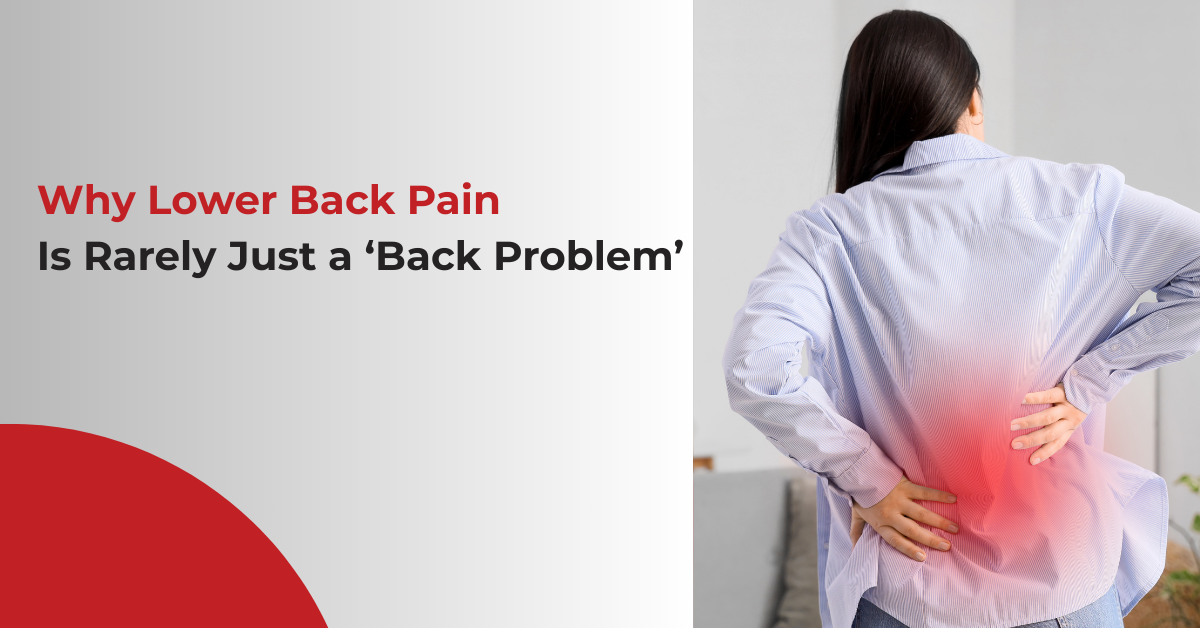
Lower back pain is one of the most common reasons people seek treatment. It is also one of the most misunderstood.
While pain is felt in the lower back, the source of the problem is often somewhere else entirely. In many cases, the lower back becomes painful because it is compensating for issues in other parts of the body.
Understanding this connection is key to treating back pain properly and preventing it from coming back.
The Lower Back’s Role in Movement
The lower back is designed to transfer force between the upper and lower body. It relies on surrounding joints and muscles to share the load during everyday movement.
When nearby areas are not doing their job, the lower back often picks up the slack. Over time, this increased demand can lead to stiffness, irritation, and pain.
Common Areas That Contribute to Lower Back Pain
Hip Mobility and Strength
The hips are meant to generate and absorb force during walking, lifting, and exercise. When hip mobility is limited or hip muscles are weak, the lower back is forced to move more than it should.
This is a common contributor to ongoing lower back discomfort.
Core Stability and Control
Core muscles provide stability and control during movement. When core support is lacking, the lower back can become overloaded during simple tasks such as bending, standing, or sitting for long periods.
This often results in recurring pain rather than a single injury.
Thoracic Spine Movement
Limited movement in the upper back can shift extra stress to the lower back, particularly during rotation and overhead activities.
Restricted thoracic mobility is frequently overlooked but plays an important role in back pain patterns.
Posture and Daily Habits
Prolonged sitting, repetitive work tasks, and poor postural habits can all influence how the lower back functions.
Over time, these patterns change how the body moves and distributes load, increasing strain on the lower back.
Why Treating the Back Alone Often Fails
Focusing only on the painful area may provide short-term relief, but it rarely solves the underlying problem.
Without addressing movement patterns, joint restrictions, or muscle imbalances elsewhere in the body, lower back pain often returns. In some cases, symptoms may even shift to other areas.
A Whole-Body Approach to Lower Back Pain
Effective management of lower back pain involves understanding how the entire body moves and functions together.
Assessment Beyond the Pain
A thorough assessment looks at hip movement, spinal mobility, muscle strength, and movement control to identify contributing factors.
Restoring Joint and Muscle Function
Chiropractic care can help improve joint mobility, while physiotherapy focuses on restoring strength, control, and movement efficiency.
Supporting treatments such as remedial massage, dry needling, or dry cupping may help reduce muscle tension and improve tissue comfort as part of a broader plan.
Movement Retraining and Prevention
Rehabilitation aims to improve how the body moves during daily activities, work, and exercise to reduce ongoing strain on the lower back.
This approach helps prevent recurrence, not just manage symptoms.
When to Seek Professional Support
You should consider professional guidance if:
- Back pain keeps returning
- Pain worsens with activity
- Movement feels restricted or unstable
- Pain interferes with work, exercise, or sleep
Early assessment often leads to better outcomes and faster recovery.
Lower Back Pain Care at Next Phase Injury Therapy
At Next Phase Injury Therapy, lower back pain is managed using a personalised, evidence-based approach. Physiotherapy, chiropractic care, movement rehabilitation, and supportive therapies work together to address the cause of pain, not just the symptoms.
Struggling With Lower Back Pain?
If back pain is affecting your daily life, a professional assessment can help identify contributing factors and guide effective treatment.
Explore our physiotherapy and chiropractic services or book an appointment with Next Phase Injury Therapy to move with confidence again.
References:
- Ferdinandov, Dilyan, et al. “Common Differential Diagnosis of Low Back Pain in Contemporary Medical Practice: A Narrative Review.” Frontiers in Medicine, vol. 11, 6 Feb. 2024, https://doi.org/10.3389/fmed.2024.1366514.
- Lee, Sang wk, and Suhn Yeop Kim. “Effects of Hip Exercises for Chronic Low-Back Pain Patients with Lumbar Instability.” Journal of Physical Therapy Science, vol. 27, no. 2, 2015, pp. 345–348, https://doi.org/10.1589/jpts.27.345.
- Ldrdan. “The Three Best Core Exercises for Back Pain: A Research-Backed Approach.” Central Ohio Spine and Joint, 3 Feb. 2025.
https://cospineandjoint.com/the-three-best-core-exercises-for-back-pain-a-research-backed-approach/
- Cleveland Clinic. “Low Back Pain: Causes, Diagnosis & Treatments.” Cleveland Clinic, 2021.
https://my.clevelandclinic.org/health/diseases/7936-lower-back-pain