

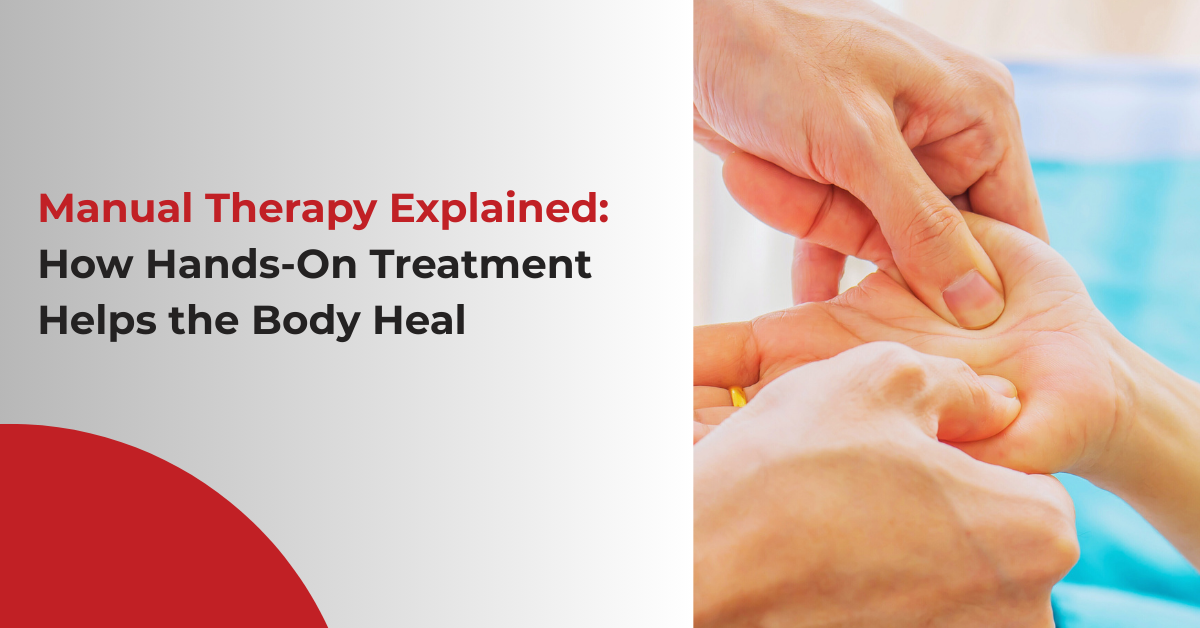
Manual therapy is a hands-on approach used by physiotherapists, chiropractors, and other allied health professionals to reduce pain, restore movement, and support long-term recovery.
Many people experience pain in their neck, back, shoulders, or joints, and while exercise and movement are essential, targeted hands-on treatment can help the body heal more effectively. Understanding what manual therapy involves and how it works can help people make informed choices about their care.
What Is Manual Therapy?
Manual therapy includes a variety of hands-on techniques designed to improve mobility, reduce muscle tension, and support joint function. Unlike medication, which manages symptoms, manual therapy aims to address the underlying causes of pain.
Common manual therapy techniques include:
- Soft tissue massage
- Joint mobilization and manipulation
- Myofascial release
- Trigger point therapy
These approaches are used as part of a broader rehabilitation program to restore movement, strength, and function.
How Manual Therapy Helps the Body
Manual therapy works by addressing both the muscular and joint systems, promoting healing and functional improvement.
Reducing Muscle Tension
Tight muscles can limit movement, increase pain, and contribute to poor posture. Manual therapy helps release tension, allowing muscles to relax and function more efficiently.
Improving Joint Mobility
Restricted joints can alter movement patterns and increase stress on surrounding tissues. Mobilization and manipulation techniques help restore normal joint movement, reducing discomfort and improving overall function.
Enhancing Circulation and Healing
Hands-on treatment stimulates blood flow to affected tissues, supporting nutrient delivery, reducing inflammation, and promoting tissue repair.
Supporting Nervous System Function
Manual therapy can influence the nervous system by reducing pain signals, improving muscle activation, and enhancing proprioception (awareness of body position).
Conditions That Benefit From Manual Therapy
Manual therapy is effective for a wide range of musculoskeletal issues, including:
- Neck and shoulder tension
- Back pain and stiffness
- Joint pain in knees, hips, and elbows
- Sports and gym-related injuries
- Postural dysfunction
It is most effective when combined with active rehabilitation, exercise, and movement retraining rather than used alone.
Manual Therapy vs Other Hands-On Approaches
While manual therapy often overlaps with massage or chiropractic adjustments, it is distinct in its focus on restoring movement and function:
- Physiotherapy-led manual therapy: Targets movement restrictions and muscle imbalances
- Chiropractic adjustments: Focus on spinal alignment and joint mobility
- Remedial massage: Relieves soft tissue tension and improves circulation
A collaborative approach ensures that treatment addresses the root cause of pain, not just the symptoms.
What to Expect During a Manual Therapy Session
Before treatment, a practitioner will assess your posture, movement, and areas of pain.
During a session:
- Hands-on techniques target affected muscles and joints
- You may feel pressure, stretching, or gentle mobilization
- Some temporary soreness is normal after treatment
Sessions are tailored to your specific needs, aiming to reduce pain and restore functional movement safely.
Integrating Manual Therapy Into Recovery
Manual therapy works best as part of a structured recovery plan:
- Physiotherapy: Strengthens and retrains muscles to support joints
- Chiropractic care: Restores spinal and joint function
- Pilates or functional exercises: Improves postural control and movement patterns
- Supportive therapies: Massage or dry cupping can complement treatment
This integrated approach promotes long-term recovery and reduces the risk of recurring pain.
When to Consider Manual Therapy
Professional assessment is recommended if:
- Pain persists or keeps returning
- Movement feels stiff or restricted
- Daily activities are affected by discomfort
- You want to prevent recurring injuries
Early intervention can improve outcomes and accelerate recovery.
Manual Therapy at Next Phase Injury Therapy
At Next Phase Injury Therapy, manual therapy is combined with physiotherapy, chiropractic care, and movement rehabilitation to address the underlying cause of pain.
Our hands-on approach helps:
- Reduce pain and stiffness
- Restore mobility and function
- Support long-term strength and posture
Ready to Heal With Hands-On Care?
If pain or restricted movement is holding you back, manual therapy may help support your recovery.
Explore our physiotherapy, chiropractic care, remedial massage, and rehabilitation services, or book an appointment with Next Phase Injury Therapy to start healing and moving with confidence.
References:
- National Guideline Centre (UK). Evidence Review for Manual Therapy for Chronic Primary Pain: Chronic Pain (Primary and Secondary) in over 16s: Assessment of All Chronic Pain and Management of Chronic Primary Pain: Evidence Review I. PubMed, London, National Institute for Health and Care Excellence (NICE), 2021, www.ncbi.nlm.nih.gov/books/NBK569986/.
- Arsovski, Denis. “Deep Tissue Massage Therapy: Effects on Muscle Recovery and Performance in Athletes.” International Journal of Therapeutic Massage & Bodywork Research Education & Practice, vol. 18, no. 2, 12 June 2025, pp. 40–51, https://doi.org/10.3822/ijtmb.v18i2.1139.
- Gyurcsik, Zsuzsanna Némethné, et al. “Improvement in Pain Intensity, Spine Stiffness, and Mobility during a Controlled Individualized Physiotherapy Program in Ankylosing Spondylitis.” Rheumatology International, vol. 32, no. 12, 25 Dec. 2011, pp. 3931–3936, https://doi.org/10.1007/s00296-011-2325-9. Accessed 15 May 2020.