

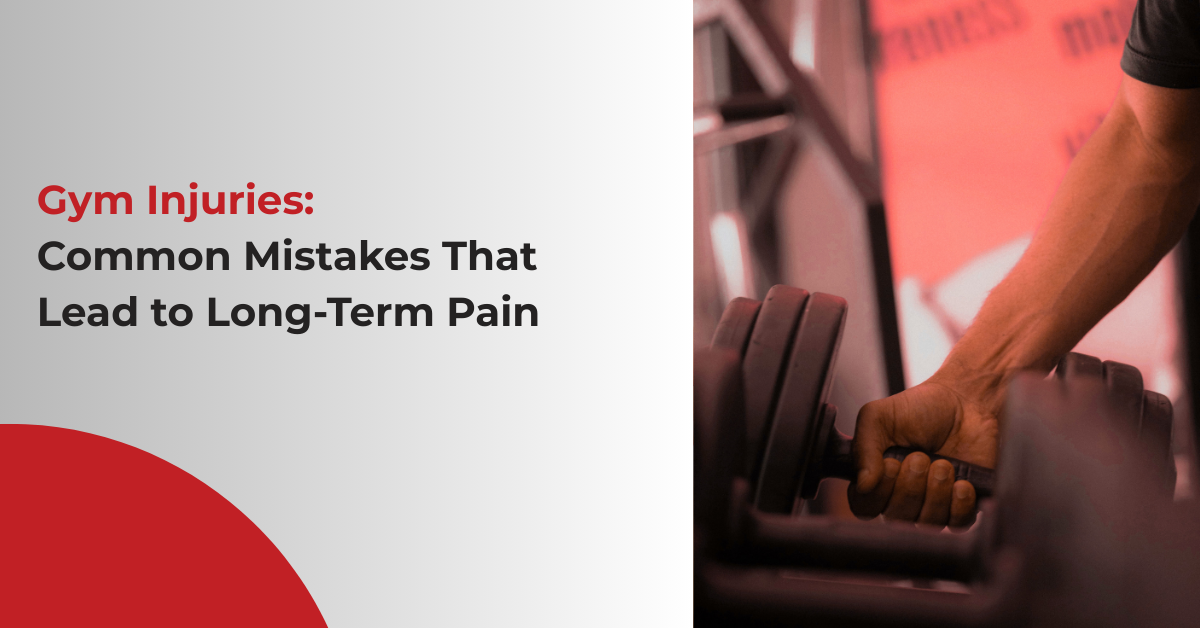
Regular exercise is one of the best things you can do for your health, but when training is poorly managed, gym workouts can become a common source of long-term pain and injury.
Many gym-related injuries do not come from a single accident. Instead, they develop gradually due to repeated mistakes in training, technique, or recovery. Understanding these mistakes can help reduce injury risk and support safer, more effective training.
Why Gym Injuries Often Become Ongoing Problems
Gym injuries frequently turn into persistent pain because early warning signs are ignored. Mild discomfort is often pushed through, poor movement patterns are repeated, and recovery is rushed.
Over time, this can lead to:
- Muscle imbalances
- Joint irritation
- Tendon overload
- Reduced movement efficiency
Without proper assessment and correction, these issues can continue even when training volume is reduced.
Common Gym Mistakes That Lead to Injury
H3: Poor Technique and Movement Control
Incorrect lifting technique places unnecessary stress on joints and soft tissues. Common examples include poor squat depth, uncontrolled spinal movement, and over-reliance on momentum.
Even small technique errors, when repeated, can result in shoulder, back, hip, or knee pain.
Lifting Too Heavy Too Soon
Progressing weight faster than the body can adapt is a major cause of gym injuries. Muscles may feel capable, but tendons, joints, and connective tissue often lag behind.
This mismatch increases the risk of strains, tendinopathy, and joint irritation.
Ignoring Pain and Warning Signs
Pain is often dismissed as normal muscle soreness. However, sharp pain, joint discomfort, or pain that worsens during or after training is not normal.
Continuing to train through these symptoms can turn a minor issue into a long-term problem.
Lack of Recovery and Rest
Training intensity without adequate recovery places continuous stress on the body. Poor sleep, insufficient rest days, and high training frequency can prevent tissues from repairing properly.
Over time, this leads to reduced performance and increased injury risk.
Muscle Imbalances and Weak Supporting Muscles
Strong primary muscles with weak stabilisers create joint instability. This is commonly seen with weak glutes, core, or scapular muscles.
These imbalances increase strain on joints and often contribute to recurring injuries.
Why Rest Alone Does Not Fix Gym Injuries
Many gym-goers respond to pain by stopping training altogether. While rest may reduce symptoms temporarily, it does not address underlying movement faults, weakness, or joint restriction.
Without rehabilitation, pain often returns once training resumes.
How Gym Injuries Should Be Managed Properly
Effective injury management focuses on restoring movement quality, strength, and control.
Accurate Assessment
Understanding why an injury occurred is essential. Assessment looks beyond the painful area to identify movement patterns, joint mobility, and muscle activation issues.
Active Rehabilitation and Strength Rebuilding
Physiotherapy programs focus on correcting weaknesses, improving technique, and gradually reintroducing load in a controlled way.
Joint and Soft Tissue Support
Chiropractic care can help restore joint mobility, particularly in the spine and major joints. Supporting treatments such as remedial massage, dry needling, or dry cupping may assist in reducing muscle tension and improving tissue recovery.
Movement Education and Injury Prevention
Learning how to train with better form, appropriate load, and proper recovery helps prevent future injuries and supports long-term performance.
When to Seek Professional Support
You should consider professional guidance if:
- Pain persists beyond a few training sessions
- Pain keeps returning after rest
- Movement feels restricted or unstable
- Training performance continues to decline
Early intervention often prevents minor gym injuries from becoming chronic issues.
Supporting Gym-Goers at Next Phase Injury Therapy
At Next Phase Injury Therapy, gym-related injuries are managed through a personalised, evidence-based approach. Physiotherapy, chiropractic care, movement rehabilitation, and supportive therapies work together to help individuals return to training safely and confidently.
Struggling With a Gym Injury?
If gym pain is limiting your progress or affecting daily life, a professional assessment can help identify the cause and guide recovery.
Explore our physiotherapy, chiropractic care, and injury rehabilitation services or book an appointment with Next Phase Injury Therapy to train smarter and stay pain-free.
References:
- Gray, Shannon E, and Caroline F Finch. “The Causes of Injuries Sustained at Fitness Facilities Presenting to Victorian Emergency Departments – Identifying the Main Culprits.” Injury Epidemiology, vol. 2, no. 1, 14 Apr. 2015, www.ncbi.nlm.nih.gov/pmc/articles/PMC5005555/, https://doi.org/10.1186/s40621-015-0037-4.
- Fleck, Steven J., and Jeff E. Falkel. “Value of Resistance Training for the Reduction of Sports Injuries.” Sports Medicine, vol. 3, no. 1, 1986, pp. 61–68, link.springer.com/article/10.2165%2F00007256-198603010-00006#citeas, https://doi.org/10.2165/00007256-198603010-00006.
Tung, Matthew Jia-Yuan, et al. “Injuries in Weightlifting and Powerlifting: An Updated Systematic Review.” BMJ Open Sport & Exercise Medicine, vol. 10, no. 4, 1 Dec. 2024, pp. e001884–e001884, pmc.ncbi.nlm.nih.gov/articles/PMC11624822/, https://doi.org/10.1136/bmjsem-2023-001884.