

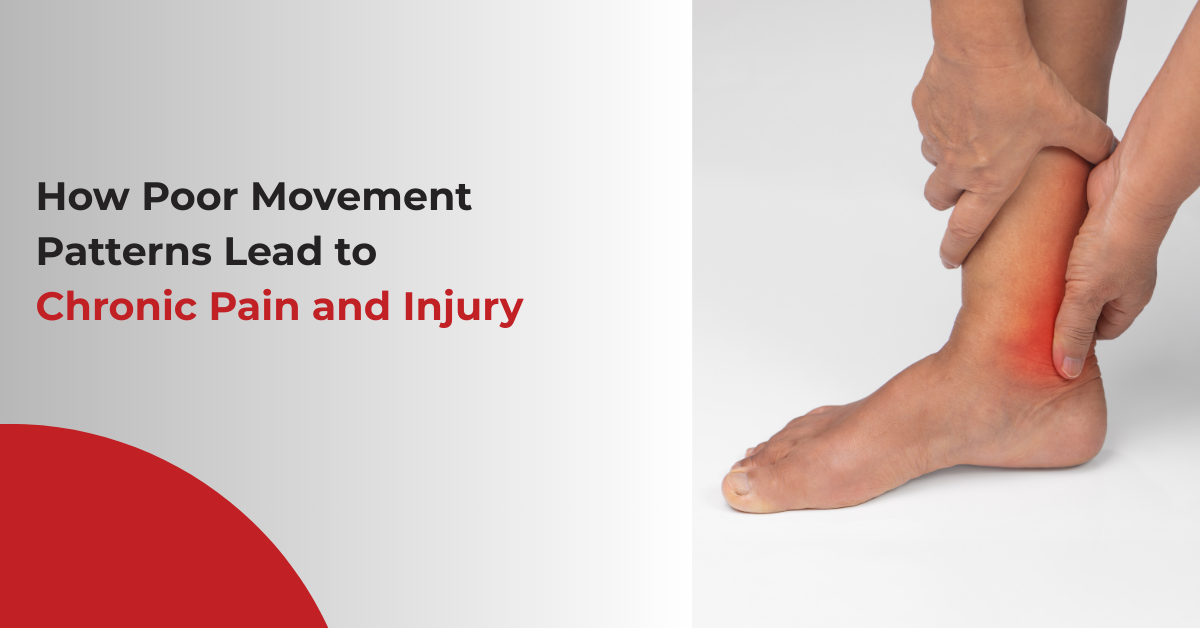
Pain does not always start with a sudden injury. In many cases, it develops slowly due to the way the body moves during everyday activities. Sitting, walking, lifting, training, or working with inefficient movement patterns can place repeated stress on muscles and joints, eventually leading to chronic pain or injury.
Understanding how poor movement patterns affect the body is an important step in preventing ongoing discomfort and improving long-term musculoskeletal health.
What Are Movement Patterns?
Movement patterns are the habitual ways your body performs common actions such as bending, reaching, squatting, walking, or rotating. These patterns are shaped by posture, strength, flexibility, coordination, and previous injuries.
When movement patterns are efficient, the body distributes load evenly across muscles and joints. When they are inefficient, certain areas are overloaded while others are underused. Over time, this imbalance can contribute to pain and injury.
How Poor Movement Patterns Develop
Poor movement patterns often develop gradually and may go unnoticed for years. Common contributing factors include:
- Prolonged sitting and sedentary habits
- Poor posture at work or during daily activities
- Previous injuries that were not fully rehabilitated
- Muscle weakness or imbalance
- Reduced joint mobility
- Repetitive movements at work or during exercise
Once established, these patterns can become automatic, even if they are contributing to discomfort.
How Poor Movement Leads to Chronic Pain
Chronic pain often results from repeated stress rather than a single event. When movement patterns are inefficient, the same tissues are exposed to excessive load again and again.
Increased Joint Stress
Restricted or poorly controlled movement can place excessive pressure on joints. For example, limited hip mobility may increase strain on the lower back or knees during walking or lifting. Over time, this added stress can contribute to joint irritation, stiffness, and pain.
Muscle Overuse and Fatigue
When certain muscles are required to compensate for weak or inactive areas, they can become overworked. This may lead to muscle tightness, fatigue, or recurring strains. Common examples include neck and shoulder tension related to poor posture or lower back pain linked to weak core support.
Reduced Load Tolerance
If the body is not moving efficiently, its ability to tolerate physical load is reduced. Everyday tasks such as lifting groceries, exercising, or even standing for long periods can begin to feel painful. This often leads to activity avoidance, which further weakens the body and perpetuates the cycle of pain.
The Link Between Movement Patterns and Injury
Injury risk increases when the body cannot absorb or control forces effectively. Poor movement patterns can compromise stability, coordination, and balance.
Repetitive Strain Injuries
Repetitive movements performed with poor mechanics can irritate tendons and soft tissues. Over time, this may lead to conditions such as tendon pain, shoulder impingement, or lower back strain.
Acute Injuries
Inefficient movement patterns can also increase the risk of sudden injuries. A lack of control or stability during sport or daily activities can result in muscle tears, joint sprains, or flare-ups of existing conditions.
Identifying Poor Movement Patterns
Many people are unaware that the way they move is contributing to their pain. Signs that poor movement patterns may be present include:
- Pain that returns despite rest
- Stiffness or discomfort after sitting or working
- Difficulty performing certain movements without pain
- Feeling unstable or weak during exercise
- Pain that shifts between different areas of the body
A professional assessment can help identify movement restrictions, muscle imbalances, and faulty movement habits that may be contributing to symptoms.
How Physiotherapy Can Help Improve Movement
Physiotherapy focuses on assessing how the body moves as a whole. Rather than treating pain in isolation, physiotherapists look for underlying movement issues that may be contributing to symptoms.
Physiotherapy Assessment and Treatment
Physiotherapy may involve:
- Detailed movement and postural assessment
- Identification of strength deficits and mobility restrictions
- Targeted exercise programs to retrain movement
- Hands-on therapy to improve mobility
- Education to support long-term injury prevention
At Next Phase Injury Therapy, physiotherapy is used to restore efficient movement, improve strength, and support lasting recovery.
The Role of Chiropractic Care in Movement Health
Chiropractic care focuses on joint and spinal movement. Restricted joint mobility can alter movement patterns and increase stress on surrounding tissues.
Supporting Joint Function
Chiropractic care may help by:
- Improving spinal and joint mobility
- Reducing stiffness that limits movement
- Supporting posture and alignment
- Enhancing overall movement efficiency
At Next Phase Injury Therapy, chiropractic care is used alongside movement-based rehabilitation to help the body move more freely and comfortably.
Where Pilates Fits Into Movement Correction
Reformer Pilates is often used as part of a rehabilitation or injury prevention program. Pilates focuses on controlled movement, core stability, and posture, which are essential for maintaining healthy movement patterns.
Benefits of Pilates for Movement Retraining
Pilates can help by:
- Improving core strength and control
- Enhancing postural awareness
- Supporting balanced muscle activation
- Reducing strain on joints during movement
Pilates is particularly effective once pain has settled and the focus shifts to rebuilding strength and resilience.
A Whole-Body Approach to Preventing Chronic Pain
Addressing poor movement patterns requires more than treating symptoms. A combined approach that focuses on mobility, strength, and movement quality is often the most effective way to prevent chronic pain and injury.
At Next Phase Injury Therapy, physiotherapy, chiropractic care, and movement-based rehabilitation work together to address the root cause of pain rather than just the symptoms.
When to Seek Professional Help
You may benefit from a professional assessment if:
- Pain has persisted for several weeks
- Injuries keep recurring
- Movement feels restricted or unstable
- Pain interferes with work, exercise, or daily activities
- You are unsure why pain keeps returning
Early intervention can prevent minor movement issues from developing into long-term problems.
Improving the Way You Move for Long-Term Health
Chronic pain and injury are often the result of how the body moves over time. By identifying and correcting poor movement patterns, it is possible to reduce pain, improve function, and lower the risk of future injury.
If you are experiencing ongoing discomfort or want to move better with confidence, a tailored assessment can help guide the right approach to recovery and long-term wellbeing.
References:
- Koźlenia, Dawid, and Jarosław Domaradzki. “Prediction and Injury Risk Based on Movement Patterns and Flexibility in a 6-Month Prospective Study among Physically Active Adults.” PeerJ, vol. 9, 18 May 2021, p. e11399, www.ncbi.nlm.nih.gov/pmc/articles/PMC8139277/, https://doi.org/10.7717/peerj.11399.
- “Joint Pain and Stiffness in the Morning and How to Reduce It | Brown University Health.” Brown University Health, 2019, www.brownhealth.org/be-well/joint-pain-and-stiffness-morning-and-how-reduce-it.
- National Institute of Neurological Disorders and Stroke. “Pain.” National Institute of Neurological Disorders and Stroke, 2023, www.ninds.nih.gov/health-information/disorders/pain.
- Chen, Jiatong, and Jasjit S. Sehdev. “Physiology, Pain.” PubMed, StatPearls Publishing, 2023, www.ncbi.nlm.nih.gov/books/NBK539789/.