

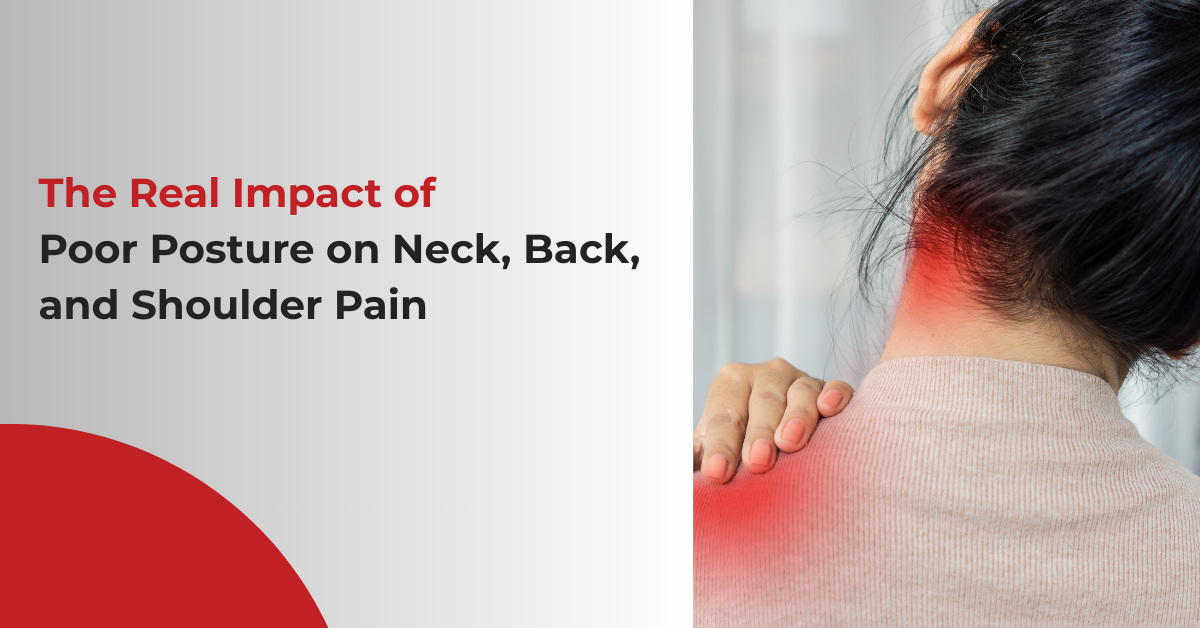
Poor posture is more than just slouching; it can have serious consequences for your musculoskeletal health. Over time, sustained bad habits in sitting, standing, or lifting can lead to chronic pain, reduced mobility, and even long-term injury.
At Next Phase Injury Therapy, we often see patients whose neck, back, or shoulder pain is directly linked to habitual posture issues. Understanding the effects of poor posture is the first step toward improving movement, reducing pain, and preventing ongoing problems.
Why Posture Matters
Your posture affects how your muscles, joints, and spine work together. Poor alignment increases stress on key structures, forcing some muscles to overwork while others weaken. This imbalance often contributes to:
- Neck stiffness and tension headaches
- Upper and lower back pain
- Shoulder discomfort or limited mobility
Good posture distributes load efficiently, reducing the risk of injury and promoting optimal movement.
Common Posture Problems and Their Consequences
Forward Head Posture
Forward head posture, often from prolonged screen use, places extra strain on neck muscles, cervical vertebrae, and upper back. Consequences may include:
- Neck pain and stiffness
- Tension headaches
- Shoulder rounding and discomfort
Rounded Shoulders
Slouching or hunching forward compresses the chest and overstretches upper back muscles, causing:
- Upper back tightness
- Shoulder impingement
- Reduced range of motion
Swayback or Slouched Lower Back
Extended sitting without lumbar support can flatten the natural curve of the lower back, leading to:
- Lower back pain
- Hip and glute weakness
- Increased risk of disc irritation
How Poor Posture Develops Over Time
Posture is influenced by:
- Prolonged sitting or desk work
- Repetitive movements without breaks
- Weak core or stabilising muscles
- Previous injuries
- Poor ergonomic setup at home or work
Without awareness or corrective strategies, these habits become automatic and contribute to chronic musculoskeletal issues.
Why Rest Alone Won’t Fix Posture-Related Pain
Simply resting or stretching may reduce temporary discomfort but won’t correct underlying imbalances. Pain often returns if:
- Weak or overused muscles are not strengthened
- Joint mobility is restricted
- Movement patterns are not retrained
Active rehabilitation is essential to restore long-term posture and prevent recurring pain.
H2: How Next Phase Injury Therapy Helps
A whole-body approach is the most effective way to address posture-related pain.
Physiotherapy
- Assess movement patterns and muscle imbalances
- Tailored exercises to strengthen postural muscles
- Techniques to improve joint mobility
Chiropractic Care
- Restore spinal alignment and joint function
- Reduce stiffness in neck, back, and shoulders
- Support improved posture during daily activities
Remedial Massage and Dry Cupping
- Reduce muscle tension from prolonged poor posture
- Improve circulation and soft tissue flexibility
- Complement rehabilitation exercises
Reformer Pilates
- Builds core stability and postural control
- Teaches controlled, efficient movement
- Bridges the gap between pain relief and full functional recovery
Simple Habits to Support Better Posture
Even small changes can have a big impact:
- Take regular movement breaks from sitting
- Adjust screen height and chair ergonomics
- Strengthen core and postural muscles
- Be mindful of standing, walking, and lifting posture
- Incorporate mobility exercises into your routine
Consistency is key. long-term change takes gradual, repeated effort.
When to Seek Professional Support
Professional assessment is recommended if:
- Pain persists despite rest or stretching
- Stiffness limits daily movement
- Headaches or shoulder pain are ongoing
- Work or exercise performance is affected
- You’re unsure how to improve posture safely
Early intervention can prevent long-term damage and help restore optimal movement.
Take the First Step Toward Better Posture
At Next Phase Injury Therapy, we combine physiotherapy, chiropractic care, remedial massage, and Reformer Pilates to address posture-related pain at its root.
Explore our services or book an appointment to start improving your posture, reduce pain, and move with confidence.
References:
- —. “The Prevalence of Bad Posture and Musculoskeletal Symptoms Originating from the Use of Gadgets as an Impact of the Work from Home Program of the University Community.” Heliyon, vol. 8, no. 10, Oct. 2022, p. e11059, https://doi.org/10.1016/j.heliyon.2022.e11059.
- “6 Rounded Shoulders Exercises to Correct Your Posture.” Healthline, 22 July 2020, www.healthline.com/health/rounded-shoulders-exercises.
- Upper Back Pain: What It Is, Causes, How It Feels & Treatment.” Cleveland Clinic.
https://my.clevelandclinic.org/health/symptoms/22866-upper-back-pain
- El-Tallawy, Salah N., et al. “Management of Musculoskeletal Pain: An Update with Emphasis on Chronic Musculoskeletal Pain.” Pain and Therapy, vol. 10, no. 1, 11 Feb. 2021, pp. 181–209, www.ncbi.nlm.nih.gov/pmc/articles/PMC8119532/, https://doi.org/10.1007/s40122-021-00235-2.