

Muscle tightness, stiffness, and restricted movement are common contributors to ongoing pain. When soft tissue becomes overloaded or irritated, recovery often requires more than rest alone.
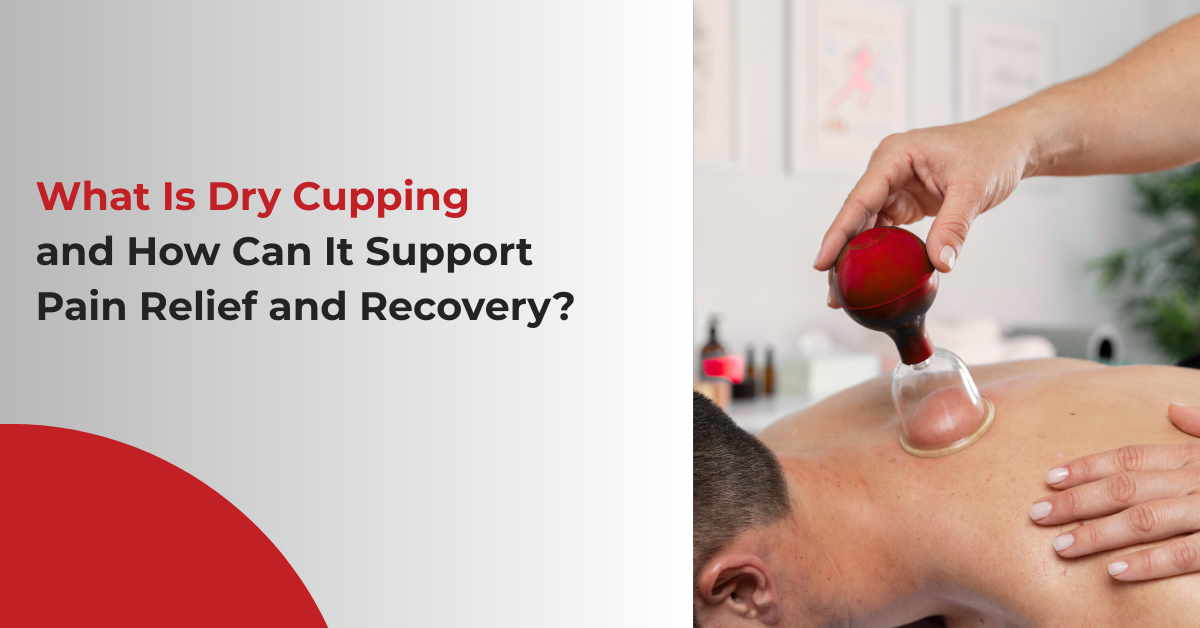
Dry cupping is a manual therapy technique used to support pain relief, improve tissue mobility, and enhance recovery when combined with physiotherapy, chiropractic care, and active rehabilitation.
What Is Dry Cupping?
Dry cupping involves placing specialised cups on the skin to create gentle suction. This suction lifts the skin and underlying tissue, helping improve circulation and reduce tension in muscles and connective tissue.
Unlike traditional cupping methods, dry cupping does not involve heat or skin puncture.
How Dry Cupping Helps the Body
Dry cupping works by influencing the soft tissues rather than the joints or bones.
Improving Blood Flow
The suction encourages increased circulation to tight or irritated areas, supporting the body’s natural healing processes.
Reducing Muscle and Fascial Tension
Tight muscles and restricted fascia can limit movement. Dry cupping helps release these restrictions and restore tissue mobility.
Supporting Pain Reduction
By decreasing tissue sensitivity and improving movement, dry cupping can help reduce discomfort linked to muscle overload and tension.
Conditions Dry Cupping May Help With
Dry cupping is commonly used to support treatment for:
- Neck and shoulder tension
- Lower back pain
- Sports and gym related muscle soreness
- Postural strain
- Chronic muscle tightness
It is most effective when combined with movement based therapy.
What About the Circular Marks?
Cupping may leave temporary circular marks on the skin. These are not bruises and are not painful. They usually fade within a few days and are a normal response to increased blood flow in the treated area.
Dry Cupping vs Remedial Massage
Both techniques target soft tissue, but they work differently.
Remedial massage uses direct pressure to relax muscles.
Dry cupping uses suction to lift and decompress tissue.
Many people benefit from using both techniques together as part of a comprehensive treatment plan.
How Dry Cupping Fits Into Injury Recovery
Dry cupping is rarely used on its own.
Physiotherapy focuses on restoring strength, mobility, and movement control.
Chiropractic care addresses joint restrictions affecting muscle function.
Dry needling may help release deeper trigger points.
Remedial massage supports muscle relaxation.
Reformer Pilates builds long term strength and stability.
Together, these services address pain from multiple angles.
Is Dry Cupping Safe?
When performed by trained practitioners, dry cupping is safe and well tolerated. A professional assessment ensures the technique is appropriate for your condition and goals.
Dry Cupping at Next Phase Injury Therapy
At Next Phase Injury Therapy, dry cupping is used as part of personalised treatment plans alongside physiotherapy, chiropractic care, remedial massage, dry needling, and Reformer Pilates.
Our team focuses on treating the cause of pain, improving movement, and supporting long term recovery.
Considering Dry Cupping for Muscle Tension or Pain?
If muscle tightness or stiffness is limiting your movement, dry cupping may help when combined with active rehabilitation.
Explore our physiotherapy, chiropractic care, remedial massage, dry needling, dry cupping, and Reformer Pilates services or book an appointment with Next Phase Injury Therapy to support your recovery.
References:
- —. “Cupping Therapy.” Nih.gov, StatPearls Publishing, 11 Feb. 2019, www.ncbi.nlm.nih.gov/books/NBK538253/.
- Cleveland Clinic. “Cupping: Back Pain, Neck Pain, Types, Benefits, Treatment.” Cleveland Clinic, 19 Aug. 2020. https://my.clevelandclinic.org/health/treatments/16554-cupping
- H, Robert. “What Exactly Is Cupping? – Harvard Health Blog.” Harvard Health Blog, 29 Sept. 2016, www.health.harvard.edu/blog/what-exactly-is-cupping-2016093010402.