
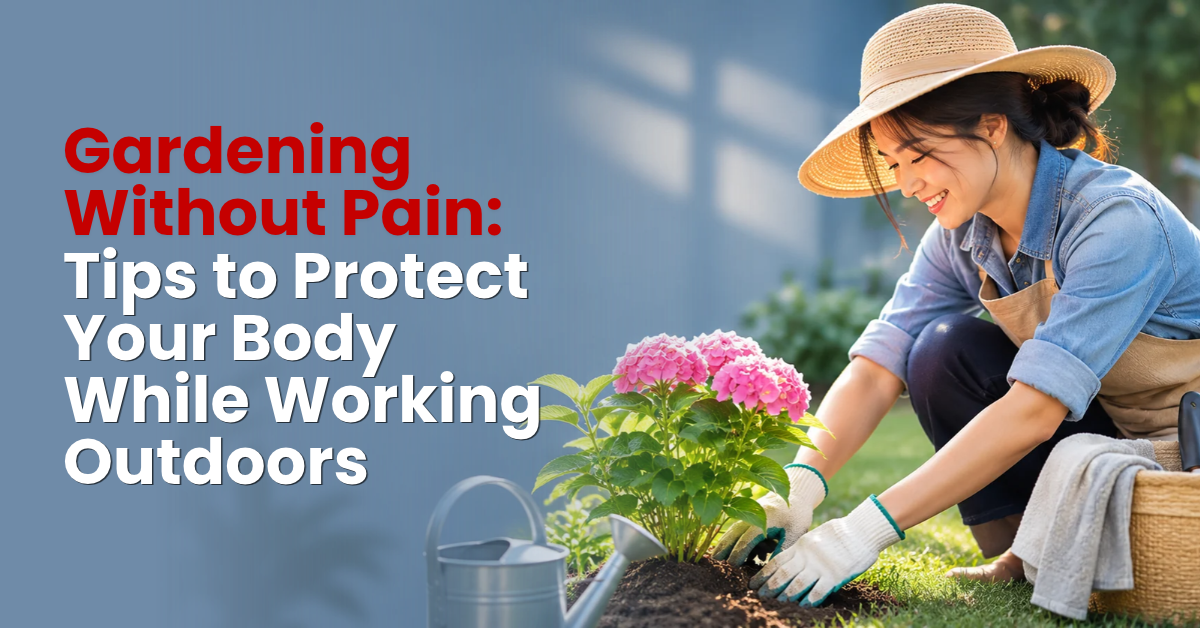
Gardening is a rewarding way to stay active, enjoy the outdoors and maintain a beautiful home environment. However, spending hours digging, planting, pruning and lifting can place considerable stress on your muscles and joints. Without proper preparation and movement techniques, these activities can lead to gardening injuries that affect your ability to work comfortably and enjoy everyday activities.
Many people underestimate the physical demands of gardening. Repeated bending, prolonged kneeling, twisting and carrying heavy objects can contribute to muscle strain, joint discomfort and back problems. Even relatively simple tasks can become uncomfortable when performed for extended periods without adequate rest.
Understanding how to protect your body while working outdoors can help reduce the risk of gardening injuries and make gardening a more comfortable experience. With the right techniques, equipment and physical preparation, you can maintain your garden while looking after your long-term musculoskeletal health.
Understanding Common Gardening Injuries
Gardening involves several physical movements that can place pressure on different parts of the body. Repeating these movements without sufficient recovery may contribute to gardening injuries, particularly among people who spend long periods working in the garden.
Some of the most common problems include:
- Lower back strain: Repeated bending, twisting and lifting can place additional stress on the muscles supporting your lower back.
- Shoulder discomfort: Reaching overhead, carrying heavy pots and prolonged pruning can contribute to shoulder muscle fatigue.
- Knee pain: Extended kneeling, squatting and getting up from low positions may irritate the knees.
- Wrist and hand strain: Repeated gripping, digging and using gardening tools can place pressure on the smaller joints and surrounding tissues.
- Neck stiffness: Looking down towards garden beds for extended periods can contribute to muscle tension and discomfort.
These problems may develop gradually rather than following one particular incident. Recognising early signs of discomfort can help you adjust your activities before minor problems become more disruptive.
1. Maintain Proper Posture While Gardening
Your posture plays an important role in protecting your muscles and joints during outdoor activities. Spending extended periods bent forward or twisting your body can increase physical stress, particularly around the spine and shoulders.
One of the most effective ways to reduce the risk of gardening injuries is to maintain comfortable body positioning throughout different gardening tasks.
Consider these practical adjustments:
- Keep your back in a comfortable, neutral position when reaching towards plants or garden beds.
- Bend your hips and knees rather than repeatedly rounding your lower back.
- Avoid twisting your spine while carrying objects. Turn your feet and move your whole body instead.
- Keep frequently used tools within easy reach to avoid unnecessary stretching.
- Change your working position regularly rather than remaining in one posture for too long.
If you notice discomfort while bending or reaching, stop and adjust your position. Small changes to your gardening habits can make a significant difference to your physical comfort.
2. Use Safe Lifting Techniques for Heavy Objects
Moving soil bags, carrying garden pots and lifting equipment are common gardening activities. However, lifting heavy objects incorrectly can place excessive pressure on the lower back, shoulders and other muscle groups.
Poor lifting habits are among the potential contributors to gardening injuries, especially when people attempt to move heavy items without considering their weight or position.
Follow these lifting techniques to protect your body:
- Check the weight first: Before lifting, assess whether the object is manageable. Avoid lifting anything that feels too heavy.
- Position yourself close: Stand close to the object instead of reaching forward to pick it up.
- Bend your knees and hips: Use your leg muscles to help lift while keeping your back in a comfortable position.
- Keep the object close: Holding heavy items close to your body reduces unnecessary reaching.
- Avoid twisting: Turn your feet rather than rotating your upper body while carrying a load.
For particularly heavy items, consider using a garden trolley or asking someone to help. Dividing large loads into smaller, manageable amounts can also reduce unnecessary physical strain.
3. Take Regular Breaks and Avoid Repetitive Movements
Gardening often involves performing the same movement repeatedly. Digging, trimming, pulling weeds and planting can all place repeated demands on particular muscles and joints.
Over time, these activities may contribute to repetitive strain injuries, especially when the same body parts are used continuously without sufficient recovery.
To reduce the likelihood of gardening injuries, consider introducing regular breaks into your gardening routine.
Helpful habits include:
- Take short breaks every 20 to 30 minutes, adjusting the frequency to your comfort and physical capacity.
- Alternate between different activities, such as planting, watering and pruning.
- Avoid completing all physically demanding tasks in one session.
- Gently move your shoulders, wrists, hips and legs between activities.
- Stop working if you experience increasing pain, weakness or unusual discomfort.
These gardening safety tips can help you manage physical demands more effectively while allowing your muscles and joints time to recover. For more practical advice on staying active, managing physical activity and reducing your risk of injury, read our guide to staying active and injury prevention tips.
4. Protect Your Back When Digging and Planting
Digging and planting frequently require forward bending, reaching and repetitive upper-body movements. These actions can place considerable demands on the muscles supporting your spine.
Understanding common lower back pain causes can help you recognise why certain gardening activities become uncomfortable.
Some contributing factors include:
- Repeated forward bending without changing position.
- Twisting while using a shovel or moving soil.
- Lifting heavy bags with poor technique.
- Working for extended periods without breaks.
- Limited physical conditioning or muscle endurance.
If you want to understand how to prevent back pain during gardening, start by reducing prolonged bending and adjusting the height of your working area to minimise the risk of gardening injuries.
Raised garden beds can help minimise the need to bend towards ground level. Long-handled tools may also reduce unnecessary reaching and awkward positioning.
When digging, use controlled movements and avoid relying entirely on your lower back. Distribute the effort across your legs and upper body where appropriate.
People who regularly experience lower back pain should consider seeking professional advice to identify suitable movement strategies and activities.
5. Choose Ergonomic Gardening Tools to Prevent Gardening Injuries
The tools you use can influence how much physical effort is required during gardening. Traditional equipment may force you into uncomfortable positions, particularly when handles are too short or difficult to grip.
Choosing suitable equipment can help reduce unnecessary stress and lower the risk of gardening injuries.
Consider investing in:
- Long-handled tools: These can reduce the need for repeated bending when working close to the ground.
- Lightweight equipment: Lighter tools may reduce the effort required during extended gardening sessions.
- Ergonomic handles: Comfortable grips can help minimise excessive pressure on your hands and wrists.
- Kneeling pads: Padded surfaces provide additional cushioning when working at ground level.
- Garden stools: These offer an alternative to prolonged kneeling or squatting.
Select tools that suit your height, strength and physical needs. Equipment should make gardening easier rather than encourage you to work in uncomfortable positions.
6. Prepare Your Body Before Starting
Just like other forms of physical activity, gardening requires preparation. Starting strenuous tasks without warming up may make your muscles feel stiff and less prepared for repeated movements.
A short warm-up can help prepare your body for physical activity and improve your awareness of movement.
Before gardening, consider:
- Walking gently for five minutes.
- Performing comfortable shoulder circles.
- Moving your wrists and ankles through their natural ranges.
- Gently bending and straightening your knees.
- Performing controlled hip movements.
- Stretching major muscle groups without forcing the movement.
Avoid aggressive stretching or movements that cause pain. The aim is to prepare your body gradually rather than push it beyond its comfortable range.
Regular physical activity outside gardening, including appropriate strengthening and mobility exercises, may also help improve your ability to manage everyday physical tasks.
7. Pay Attention to Knee, Shoulder and Wrist Discomfort
Although back problems receive considerable attention, other joints can also be affected by gardening activities.
Prolonged kneeling may aggravate existing knee problems, while repeated overhead movements can contribute to shoulder discomfort. Continuous gripping and twisting may also place additional demands on the wrists and hands.
To reduce the risk of gardening injuries, consider the following adjustments:
For your knees:
- Use a padded kneeling mat to reduce pressure on your joints and help prevent gardening injuries.
- Alternate between kneeling, sitting and standing.
- Avoid remaining in one position for extended periods.
- Use raised garden beds where practical to reduce bending and kneeling.
For your shoulders:
- Keep pruning activities within a comfortable reaching range to minimise the risk of gardening injuries.
- Avoid holding your arms overhead for long periods.
- Alternate between tasks that use different muscle groups.
For your wrists and hands:
- Choose tools with comfortable, appropriately sized handles.
- Avoid gripping tools more tightly than necessary.
- Take breaks from repetitive cutting and digging movements to reduce the likelihood of gardening injuries.
Persistent joint discomfort should not be ignored, particularly if it interferes with walking, lifting or everyday activities.
8. Understand the Difference Between Normal Fatigue and Pain
Feeling physically tired after gardening is not unusual, particularly after completing demanding outdoor activities. However, ongoing pain or unusual symptoms may indicate that your body needs additional attention and could signal gardening injuries.
Muscle pain after gardening may occur following unfamiliar or strenuous activity. Mild soreness can sometimes develop several hours after exercise or physical work.
However, certain symptoms deserve closer attention, including:
- Pain that becomes progressively worse.
- Persistent swelling around a joint.
- Reduced movement or flexibility.
- Numbness or tingling.
- Muscle weakness.
- Pain that interferes with sleeping or everyday activities.
If you experience these symptoms, stop the activity and consider seeking professional assessment.
Understanding the early warning signs can help reduce the risk of more serious gardening injuries and support a safer return to outdoor activities.
9. When Should You Consider Physiotherapy for Gardening Injuries?
If gardening-related discomfort continues despite changes to your routine, professional assessment may help identify contributing factors and suitable management strategies.
Physiotherapy for muscle pain can involve assessing movement patterns, muscle strength, joint mobility and physical function. A physiotherapist can help identify areas that may need attention and recommend an appropriate rehabilitation approach.
Depending on your individual needs, treatment may include:
- Movement and posture assessment.
- Individualised strengthening exercises.
- Mobility and flexibility exercises.
- Advice on lifting and movement techniques.
- Strategies for gradually returning to physical activities.
- Guidance on managing recurring muscle and joint discomfort.
For people experiencing repeated gardening injuries, physiotherapy may also help identify movement habits that contribute to ongoing problems.
At Next Phase Injury Therapy (NPIT), physiotherapy services support people experiencing musculoskeletal discomfort, injuries and movement difficulties. Professional guidance can help you understand your symptoms and develop an appropriate plan to improve physical function.
If pain persists or affects your daily activities, arranging an assessment can be a useful step towards understanding the problem.
10. Build a Gardening Routine That Supports Your Body
Preventing gardening injuries is not just about using the correct tools or lifting techniques. It also involves managing how much physical work you complete and allowing your body enough time to recover.
A well-planned routine can help reduce unnecessary physical stress.
Try incorporating these habits into your gardening schedule:
- Divide large gardening projects into smaller tasks.
- Avoid completing several demanding activities on the same day.
- Alternate between standing and seated activities.
- Keep frequently used tools close to your working area.
- Wear supportive footwear with suitable grip.
- Stay hydrated, particularly when gardening in warm weather.
- Avoid continuing activities that cause increasing discomfort.
Remember that your physical capacity may change depending on your age, fitness level, previous injuries and general health. Adjust your gardening activities accordingly rather than comparing your abilities with someone else’s.
Get Back to Gardening Comfortably with NPIT
Gardening should be an enjoyable activity, not something that leaves you struggling with back pain, knee discomfort or muscle strain. If gardening activities are causing ongoing discomfort or limiting your movement, professional physiotherapy may help.
At Next Phase Injury Therapy (NPIT), our physiotherapy team can assess gardening-related injuries and identify factors affecting your movement, strength and physical function.
Depending on your individual needs, our physiotherapy services may include:
- Injury assessment: Identify potential causes of back, shoulder, knee and wrist discomfort.
- Personalised exercise programmes: Improve muscle strength, flexibility and movement control.
- Pain management: Develop suitable strategies to manage musculoskeletal discomfort.
- Movement and posture advice: Learn safer techniques for lifting, bending, kneeling and completing everyday gardening tasks.
- Rehabilitation support: Work towards returning to gardening and other daily activities comfortably.
Whether you are experiencing gardening-related back pain, joint discomfort or recurring muscle strain, our team can help you understand your condition and identify appropriate treatment options.
Don’t let gardening injuries stop you from enjoying your outdoor activities. Contact Next Phase Injury Therapy to discuss your needs and arrange a physiotherapy assessment.
Book your physiotherapy appointment with NPIT today.
Final Thoughts
Gardening should be an enjoyable activity, not something that leaves you dealing with ongoing pain. By improving your posture, using appropriate equipment, lifting safely and taking regular breaks, you can reduce the physical demands associated with outdoor work.
Although gardening injuries can affect your back, knees, shoulders and wrists, many common problems can be addressed through better movement habits and appropriate activity management.
Pay attention to how your body responds to different gardening tasks. If discomfort persists, consider professional advice from a qualified physiotherapist.
At Next Phase Injury Therapy, the team can help assess musculoskeletal concerns and guide you towards suitable treatment and rehabilitation options. Taking care of your body today can help you continue enjoying gardening and other everyday activities comfortably.
FAQs
What are the most common gardening injuries?
Common gardening injuries include lower back strain, shoulder pain, knee discomfort, wrist strain and muscle injuries. These problems often result from repetitive movements, prolonged bending, kneeling and incorrect lifting techniques.
How can I prevent back pain while gardening?
To prevent back pain, maintain proper posture, bend your hips and knees when lifting, avoid twisting your spine, use raised garden beds and take regular breaks. These habits can help reduce the risk of gardening injuries.
Why do my muscles hurt after gardening?
Muscle pain after gardening can result from repetitive movements, prolonged physical activity and using muscles that are not accustomed to certain tasks. Gradually increasing activity and allowing adequate recovery may help reduce discomfort.
When should I see a physiotherapist for gardening injuries?
Consider seeing a physiotherapist if gardening-related pain persists, limits your movement, or affects everyday activities. A physiotherapist can assess your condition and recommend suitable exercises, rehabilitation and movement strategies.
What exercises can help reduce the risk of gardening injuries?
Gentle walking, shoulder mobility exercises, controlled squats, hip mobility exercises and appropriate core-strengthening activities can help prepare your body for gardening. Choose exercises that suit your physical ability and seek professional guidance if you have existing pain or injuries.
Refrences:
- https://www.healthdirect.gov.au/healthy-living/physical-activity/how-to-improve-your-posture
- https://www.healthdirect.gov.au/symptoms/aches-and-pains/low-back-pain
- https://www.betterhealth.vic.gov.au/health/healthyliving/gardening-safety
- https://rsi.org.au/index.php/living-with-rsi/gardening/
Information on this page is general in nature and is not a substitute for individualised advice from a registered health practitioner. Our practitioners are registered with AHPRA.