
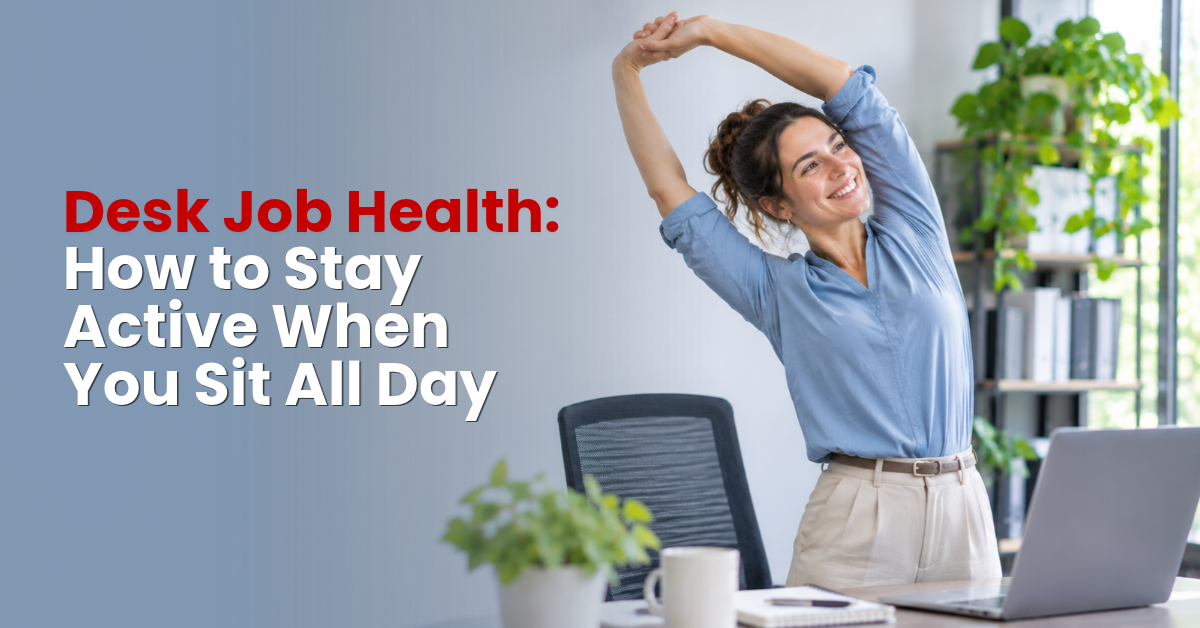
Working at a desk has become a normal part of modern life. Whether you spend your day answering emails, attending meetings, managing projects or working remotely, prolonged sitting can gradually become part of your daily routine. Maintaining good desk job health is important because spending hours in the same position can affect your movement habits, physical comfort and overall wellbeing, even when your work does not appear physically demanding.
Maintaining good desk job health involves more than having a comfortable office chair. It also means finding opportunities to move throughout the day, changing positions regularly, incorporating simple office worker exercises and organising your workstation to support comfortable working positions.
For many office workers, the challenge is finding ways to stay active without interrupting productivity. Fortunately, small workplace movement tips can make a meaningful difference to how much movement you incorporate into your working day.
How Sitting All Day Can Affect Your Health
Prolonged sitting is a common feature of a sedentary lifestyle. When you remain seated for several hours, your muscles are used less frequently, your body spends less energy and you may remain in relatively fixed positions for extended periods.
While sitting is not inherently harmful, spending most of your working day sitting without regular movement can contribute to several health and physical comfort concerns.
Prolonged sitting can affect more than just your posture. Learn more about how sitting all day affects your muscles and joints and why incorporating regular movement into your daily routine can help support physical comfort.
Musculoskeletal Discomfort
Maintaining the same sitting posture for an extended period can place sustained demands on the muscles and joints around your neck, shoulders, back and hips. Some office workers experience stiffness or discomfort after spending several hours working at a computer.
The lower back may become uncomfortable when sitting positions are maintained without movement, particularly if your workstation encourages slouching or requires you to reach forward frequently.
Similarly, keeping your shoulders elevated while using a keyboard or mouse can contribute to tension around the neck and upper back.
Reduced Movement and Muscle Activity
When you sit for long periods, your muscles have fewer opportunities to contract and work through their normal range of motion. The hips, legs and back may remain in relatively fixed positions throughout the day.
Over time, limited movement can make it harder to maintain an active routine, particularly when your commute and activities outside work also involve sitting.
The Health Effects of a Sedentary Lifestyle
Prolonged sitting has also been associated with broader health risks, including cardiovascular disease, type 2 diabetes and other chronic health conditions.
According to workplace health guidance, reducing sedentary behaviour is important even for people who exercise regularly outside working hours. A gym session before or after work does not necessarily compensate for spending the remainder of the day sitting continuously.
This is why improving desk job health should involve both planned physical activity and regular opportunities to move throughout the working day.
Why Regular Movement Breaks Are Important
One of the simplest ways to reduce prolonged sitting is to introduce regular movement breaks.
Rather than waiting until your back feels stiff or your shoulders become uncomfortable, try to change your position and move around periodically. Short movement breaks allow your muscles and joints to experience different positions and activities throughout the day.
Change Your Position Every 30 Minutes
A practical starting point is to break up sitting approximately every 30 minutes. You do not necessarily need a long break or a structured exercise session. Standing up, walking around your office, getting a glass of water or stretching briefly can help interrupt prolonged periods of sitting.
The key is consistency. A few minutes of movement performed regularly throughout the day may be easier to maintain than relying on one longer activity break.
Incorporate Movement Into Your Work Tasks
Workplace movement tips do not always require additional time away from your responsibilities. You can incorporate physical activity into everyday tasks by:
- Walking to speak with a colleague instead of sending an email.
- Standing while taking phone calls.
- Walking to collect documents or use the printer.
- Using the stairs when practical.
- Taking walking meetings when the situation allows.
- Standing while reviewing documents.
- Taking your lunch break away from your desk.
These small adjustments help reduce the amount of time spent sitting continuously while making movement a more natural part of your working routine.
Simple Office Worker Exercises You Can Do During the Day
Incorporating workplace exercises can help you move areas of your body that may remain relatively still during desk-based work. These exercises should be comfortable, controlled and appropriate for your individual mobility and physical condition.
You do not need specialised equipment to perform many simple movements.
1. Seated Shoulder Rolls
Shoulder rolls help you move your shoulders after periods of typing or using a mouse.
- Sit or stand comfortably with your arms relaxed.
- Slowly roll both shoulders forwards.
- Move them upwards towards your ears.
- Roll them backwards and down.
- Repeat several times in a comfortable range.
Avoid forcing the movement or shrugging aggressively. The aim is to introduce gentle movement rather than create tension.
2. Standing Hip Flexor Stretch
Sitting for extended periods keeps your hips in a flexed position. A gentle standing stretch may help you move your hips into a different position.
- Stand with one foot slightly behind the other.
- Keep your torso upright.
- Gently bend your front knee while maintaining a comfortable position with your rear leg.
- Move your hips forwards slightly until you feel a gentle stretch around the front of your hip.
- Hold briefly, then change sides.
Do not force the stretch or arch your lower back excessively.
3. Standing Calf Raises
Calf raises are a simple way to activate your lower leg muscles while standing near your workstation.
- Stand with your feet approximately hip-width apart.
- Hold a stable surface for balance if necessary.
- Slowly raise your heels off the floor.
- Pause briefly at the top.
- Lower your heels with control.
Repeat several times, adjusting the number of repetitions to your comfort and ability.
4. Gentle Standing Back Extension
If you have been sitting for a prolonged period, gently changing your spinal position may help reduce the feeling of stiffness.
- Stand upright with your feet comfortably apart.
- Place your hands on your hips if comfortable.
- Gently extend your upper body backwards.
- Keep the movement controlled and avoid forcing your lower back.
- Return to a neutral standing position.
If the movement causes pain, dizziness or increased discomfort, stop and seek appropriate advice.
5. Walking Breaks
Walking remains one of the easiest workplace exercises to incorporate into your daily routine.
Even a short walk around your workplace, down a hallway or outside during your lunch break can help you break up sedentary time.
You can also combine walking with practical work tasks, such as collecting documents, filling your water bottle or attending a walking meeting.
How to Organise Your Workstation for Better Desk Job Health
Office ergonomics plays an important role in supporting comfortable working positions. Your workstation should allow you to work without unnecessary reaching, twisting or maintaining awkward positions for extended periods.
However, there is no single perfect sitting posture that needs to be maintained throughout the entire day. Regularly changing your position is equally important.
Adjust Your Chair
Your chair should support a comfortable sitting position while allowing your feet to rest on the floor or an appropriate footrest.
Try to maintain:
- Feet supported comfortably.
- Knees approximately level with or slightly below your hips.
- A comfortable position for your lower back.
- Relaxed shoulders.
- Elbows close to your body when using the keyboard.
Avoid sitting at the very edge of your chair for extended periods or leaning forwards unnecessarily.
Position Your Monitor
Your computer screen should be positioned to reduce the need to constantly look down or turn your neck.
For many desk workers, placing the monitor directly in front of them at a comfortable viewing distance helps reduce unnecessary neck movement.
If you work primarily on a laptop, consider using a separate keyboard and mouse with a laptop stand or external monitor when practical. This can make it easier to position the screen and keyboard independently.
Keep Your Keyboard and Mouse Within Reach
Your keyboard and mouse should be positioned so you can use them without reaching excessively.
Keep frequently used items close to your body and avoid placing your mouse too far to the side. Excessive reaching may encourage your shoulders to move forwards or remain elevated.
Consider a Sit-Stand Workstation
A height-adjustable desk can provide opportunities to alternate between sitting and standing during the day.
However, standing continuously is not necessarily better than sitting continuously. The aim is to vary your working positions and avoid remaining in one posture for too long.
If you use a sit-stand workstation, gradually introduce standing periods and continue incorporating walking and movement breaks.
Building a More Active Workplace Routine
Improving desk job health does not require a complete lifestyle overhaul. The most effective changes are often the ones you can maintain consistently.
Consider developing a simple daily routine:
Morning
Start your working day with a short walk or a few gentle movements before sitting down. This can help establish a habit of movement before your workload becomes busy.
During Work
Set a reminder to stand, stretch or walk approximately every 30 minutes. Use natural breaks in your work, such as finishing a task or attending a meeting, as opportunities to change your position.
Lunch Break
Avoid spending your entire lunch break at your desk. If possible, take a short walk outside or around your workplace before returning to work.
Afternoon
When concentration begins to decline, take a movement break rather than remaining seated and attempting to push through fatigue.
You could walk to refill your water bottle, perform a few gentle workplace exercises or change your workstation position.
After Work
Try to include some physical activity outside your working hours. Walking, cycling, swimming, gym-based exercise or other activities you enjoy can help support your overall physical activity levels.
When Desk Job Discomfort May Require Physiotherapy
Although changing your workstation and incorporating movement breaks can help support physical comfort, persistent discomfort should not be ignored.
If you regularly experience neck pain, shoulder tension, lower back discomfort, headaches or stiffness that interferes with your daily activities, a physiotherapist can assess your symptoms and movement patterns.
Physiotherapy may help identify contributing factors such as limited mobility, muscular weakness, movement habits or workstation-related demands.
Depending on your individual needs, treatment may include:
- Movement and mobility assessments.
- Exercise programs targeting strength and flexibility.
- Advice on comfortable working positions.
- Education about movement breaks and workplace habits.
- Gradual rehabilitation to help you return to normal activities.
At Next Phase Injury Therapy, our physiotherapy team can help you understand your symptoms and develop an appropriate plan to improve movement and physical comfort.
Supporting Your Recovery With Allied Health Services
Different approaches may be appropriate depending on your symptoms and individual goals.
Physiotherapy can help assess movement-related discomfort and provide targeted rehabilitation exercises.
Chiropractic care may provide an additional assessment and treatment approach for certain musculoskeletal concerns.
Clinical Pilates can help develop strength, control and movement awareness through individualised exercises.
Remedial Massage may help address muscular tension and discomfort as part of a broader approach to managing physical symptoms.
The most appropriate treatment depends on your assessment, symptoms and overall health.
Take the Next Step Towards Better Desk Job Health
Working at a desk does not mean you have to remain inactive throughout the day. Regular movement breaks, simple workplace exercises and a comfortable workstation can help you develop healthier movement habits.
Start with small changes that fit naturally into your routine. Stand up regularly, walk when practical, change your sitting position and make time for physical activity outside work.
If persistent discomfort is affecting your ability to work comfortably, professional assessment may help identify the factors contributing to your symptoms.
At Next Phase Injury Therapy, our team provides allied health services to support your movement, recovery and physical wellbeing.
Contact our Yagoona clinic to discuss your symptoms and find out how our team can help you stay active and comfortable throughout your working day.
FAQs
What happens to your body when you sit all day?
Sitting for prolonged periods reduces opportunities for muscle activity and movement. It may contribute to stiffness, muscular discomfort and a sedentary lifestyle. Extended sedentary behaviour is also associated with increased risks of several chronic health conditions, even among people who exercise regularly.
How often should office workers take movement breaks?
A practical approach is to stand up and move approximately every 30 minutes. Short breaks can include walking, stretching, changing your working position or performing everyday tasks away from your desk. The exact frequency may depend on your work, symptoms and individual needs.
What exercises can I do at my desk?
Simple workplace exercises include shoulder rolls, gentle neck movements, standing calf raises, hip stretches and short walking breaks. These movements can help introduce variety into your working day, but they should be performed comfortably and should not aggravate existing symptoms.
Is standing better than sitting all day?
Standing for prolonged periods can also cause discomfort and fatigue. Rather than replacing sitting with continuous standing, aim to alternate between sitting, standing and walking throughout your working day.
Can physiotherapy help with desk job-related pain?
Physiotherapy can assess movement-related discomfort associated with desk-based work and help identify contributing factors. Treatment may include exercise, mobility work, rehabilitation and advice about workstation setup and movement habits.
References
SafeWork NSW – Sedentary Work
https://www.safework.nsw.gov.au/safety-starts-here/physical-safety-at-work-the-basics/sedentary-work
Safe Work Australia – Sitting and Standing
https://www.safeworkaustralia.gov.au/safety-topic/hazards/sitting-and-standing
Healthdirect Australia – Wellbeing at Work
https://www.healthdirect.gov.au/healthy-living/occupational-health/wellbeing-at-work
WorkSafe Victoria – Office Health and Safety
https://www.worksafe.vic.gov.au/office-health-and-safety-common-hazards-office-work
Information on this page is general in nature and is not a substitute for individualised advice from a registered health practitioner. Our practitioners are registered with AHPRA.