
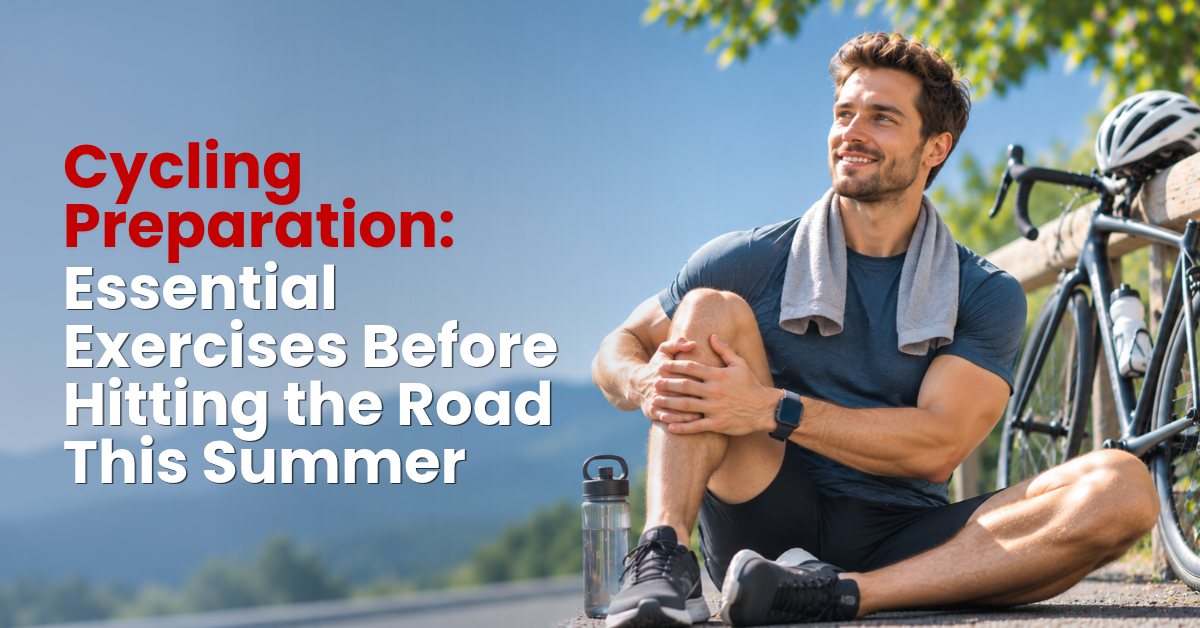
As summer approaches across Sydney, longer daylight hours and warmer weather create the ideal conditions for pulling your bike out of storage and taking to the roads or bike paths. Whether you are commuting along urban routes, training for endurance rides, or taking up cycling for fitness, incorporating the right cycling exercises into your routine can help prepare your body for the physical demands of riding and support a stronger, more comfortable cycling experience.
While cycling is often celebrated as a low-impact cardiovascular workout, maintaining a prolonged, static posture while generating repetitive power requires specific conditioning. Incorporating targeted cycling exercises into your weekly routine is the single most effective way to improve your riding efficiency, protect your joints, and build long-term stamina for the warmer months ahead.
Cycling Exercises: Understanding the Physical Demands of Cycling
To understand why off-bike conditioning is so vital, it helps to examine the biomechanics of cycling. Riding keeps your body in a sustained, forward-flexed posture. While your legs generate power through repetitive hip and knee flexion, your upper body and lower back work silently to stabilize your torso.
Without targeted exercises for cyclists, this uneven balance between dynamic lower-body pushing and static spinal holding can lead to posture-related tightness, lower back aching, and knee discomfort.
- Lower Body Quad Dominance: Pushing down on the pedals heavily engages the quadriceps and glutes. Over time, without proper balance and targeted cycling stretches, the hip flexors become short and tight.
- Core and Lumbar Strain: Holding a bent-over posture requires substantial core stability. If deep core abdominal muscles fatigue, your lower back absorbs excessive shear stress.
- Upper Body and Neck Tension: Supporting your torso on the handlebars strains the muscles surrounding the shoulders, upper back, and neck, especially on longer rides.
Why Cyclists Benefit from Strength and Mobility Training
Relying solely on time spent in the saddle to build cycling fitness often leads to movement compensations and plateaued performance. Off-bike conditioning acts as a protective buffer, correcting muscular imbalances before they turn into overuse injuries.
1. Developing Targeted Leg Strength
Power on the pedals comes from your hips, glutes, and thighs. Targeted strength training builds the force output necessary for tackling steep hills and maintaining higher speeds. Strengthening the hamstrings and glutes balances quad dominance, supporting smooth pedal strokes through all 360 degrees of rotation.
2. Enhancing Core Stability
Your core serves as the anchor point for your power output. When your pelvic region and spine are stable, force transfers efficiently down to your legs rather than dissipating through a shifting torso. A resilient core also prevents slouching late in a ride, protecting your lower back from fatigue.
3. Improving Hip Mobility and Thoracic Extension
Prolonged riding keeps the hips flexed and the upper back rounded. Off-bike movement focused on restoring hip mobility ensures your hips can move through a full range of motion without pulling on your lower back. Opening up the chest and upper spine balances out your riding position.
Essential Warm-Up Drills and On-Bike Preparation
Before setting off on any ride, preparing your muscles and joints with a structured cycling warm up ensures your nervous system is ready for action.
| Prep Phase | Target Area | Key Focus | Primary Benefit |
| Warm-Up | Cardiovascular & Nervous System | 5–10 mins dynamic movements & light spin | Elevates muscle temp & prepares joints |
| Mobility | Hips, Calves & Thoracic Spine | Dynamic cycling stretches | Improves pedal stroke fluid motion |
| Strength | Glutes, Core & Quadriceps | Off-bike cycling exercises | Increases force output & stability |
| Setup | Bike Geometry & Contact Points | Professional bike fit | Optimizes aerodynamics & prevents strain |
The Role of Dynamic Stretching Before Riding
A complete cycling warm up should focus on dynamic movements rather than static holds. Performing leg swings, bodyweight lunges with a torso twist, and dynamic cat-cow spinal stretches increases blood flow, lubricates joint capsules, and prepares your muscles for force generation. Dynamic preparation is a critical component of cycling injury prevention.
Key Exercises Every Cyclist Should Practice
Integrating specific cycling exercises into your strength routine 2 to 3 times per week builds the structural resilience needed for longer, faster rides.
1. Lower Body Power Builders
- Bulgarian Split Squats: Unilateral exercises mirror the single-leg nature of pedaling, building balanced leg strength across both hips while improving joint stability.
- Romanian Deadlifts: Essential for strengthening the hamstrings and glutes, counteracting quad-dominant pedaling.
2. Core and Pelvic Alignment
- Dead Bugs: Excellent for building deep core stability without stressing the lower back, training your abs to stabilize your pelvis while your legs move.
- Side Planks: Strengthen the obliques and lateral hips, preventing pelvic rocking in the saddle.
3. Upper Body and Postural Reset
- Prone Cobra & Y-Raises: Target the upper back and shoulder retractors, counteracting the rounded shoulders of your riding position.
The Importance of Bike Setup and Gradual Training Progression
Conditioning off the bike must work hand-in-hand with proper bike mechanics. A poorly adjusted bike forces your body into awkward angles, neutralizing the benefits of off-bike strength work.
Getting Your Bike Fit Right
An optimal bike fit ensures your saddle height, handlebar reach, and cleat alignment match your individual flexibility and limb proportions. A saddle that is too low places excessive load on your knee caps, while a saddle set too high causes your hips to rock side-to-side, overloading your lower back.
Preparing for Longer Rides
Building cycling endurance requires a patient, phased approach to distance and intensity.
- Follow the 10% Rule: Increase your total weekly distance or riding duration by no more than 10% per week to give your tendons and joints time to adapt.
- Pace Your Effort: On longer rides, maintain a smooth, steady cadence (80–90 RPM) rather than pushing heavy gears at low speeds, which overloads the knees.
- Prioritise Cycling Recovery: Muscle tissue repairs and adapts during rest, not during the ride itself. Ensure adequate sleep, proper hydration, and structured rest days between long rides.
Supporting Your Ride with Recovery and Allied Healthcare
Even with ideal training progression, sustained riding can cause localized muscle tightness and minor joint stiffening. Supporting your body with targeted therapies keeps your tissue healthy and speeds up cycling recovery.
- Low-Impact Core Conditioning: Integrating Clinical Pilates into your weekly schedule corrects subtle spinal posture imbalances and rebuilds deep abdominal control.
- Soft Tissue Mobilisation: Regular sessions of Remedial Massage help release stubborn trigger points in the quads, calves, and lower back, restoring tissue elasticity and blood flow.
- Targeted Clinical Support: If you encounter persistent knee tightness, shoulder discomfort, or hip pain during or after riding, consulting a practitioner for Physiotherapy provides an objective biomechanical assessment. For competitive cyclists or high-volume riders, specialized Sports Injury Physiotherapy offers targeted return-to-sport protocols.
About Next Phase Injury Therapy: Your Local Yagoona Clinic
At Next Phase Injury Therapy, we believe that staying active and pain-free on the road should be accessible to every cyclist. Located at 444 Hume Hwy in Yagoona, our modern clinic brings multidisciplinary allied healthcare under one roof combining physiotherapy, chiropractic care, remedial massage, clinical Pilates, and exercise rehabilitation.
Our experienced team takes a comprehensive approach to cycling performance and injury management. We don’t just treat localized pain; we evaluate your overall movement patterns, posture, and muscle balance to resolve the root causes of discomfort.
Whether you are preparing for a long summer cycling event, recovering from an acute injury, or looking for tailored advice on cycling exercises, our Yagoona clinic is equipped to help you ride stronger and recover faster. We are open 7 days a week from 8am to 8pm, with convenient parking at the rear of the clinic.
Ready to optimize your ride this summer?
Don’t let stiffness or injury slow you down on the road. Book Your Assessment Online Today or call our Yagoona clinic team on (02) 9791 9599 to set up your personalized physical assessment.
FAQs
What exercises should cyclists do?
Effective exercises for cyclists should focus on building single-leg strength, core stability, and upper body postural endurance. Key movements include Bulgarian split squats, Romanian deadlifts, dead bugs, side planks, and thoracic extension drills to balance out the forward riding posture.
Should I stretch before cycling?
Before riding, prioritize a dynamic cycling warm up rather than static stretching. Dynamic movements like leg swings, lunges with a twist, and high knees increase circulation and prepare your joints for motion. Save static cycling stretches for after your ride when your muscles are warm to aid relaxation and flexibility.
How can I prepare for a long bike ride?
Preparing for a long ride requires combining a gradual increase in weekly mileage, ensuring a professional bike fit, fueling properly with carbohydrates and hydration, and maintaining off-bike strength and mobility conditioning to support your lower back and core.
References
Better Health Channel (Victorian Department of Health)
https://www.betterhealth.vic.gov.au/health/healthyliving/cycling-health-benefits
Sports Medicine Australia (SMA)
https://sma.org.au/resources-advice/
Exercise & Sports Science Australia (ESSA)
https://www.essa.org.au/
Information on this page is general in nature and is not a substitute for individualised advice from a registered health practitioner. Our practitioners are registered with AHPRA.