
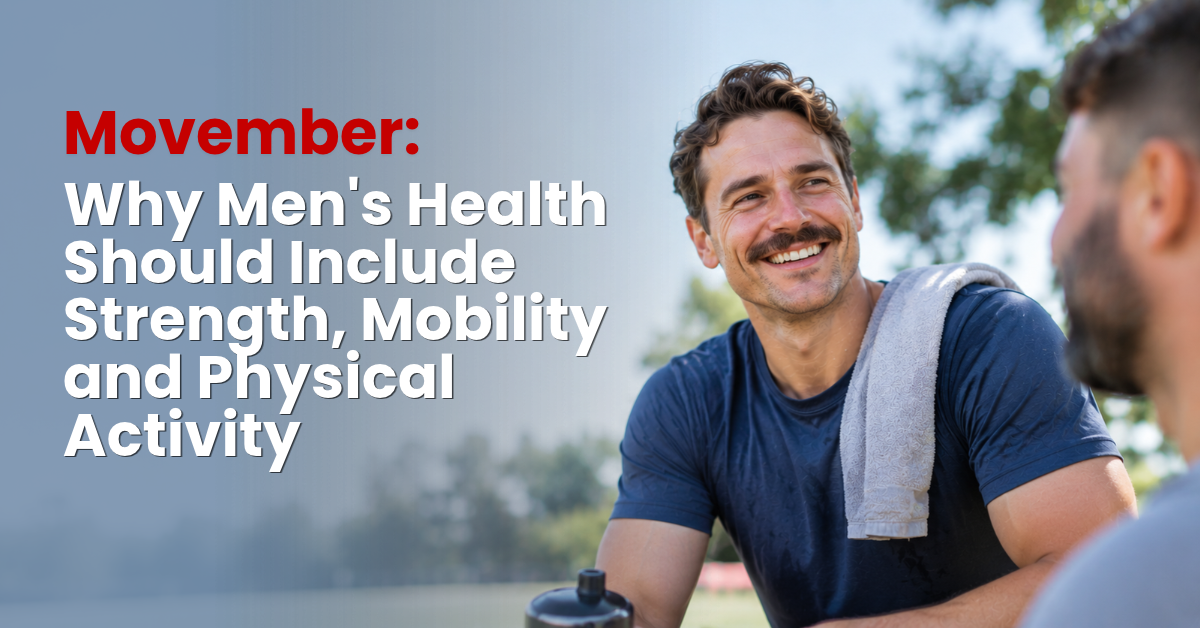
Men’s health involves more than managing illness or addressing physical problems when they occur. Maintaining an active lifestyle, building muscle strength and improving mobility are all important parts of supporting long-term physical wellbeing. However, busy schedules, sedentary work and inconsistent exercise habits can make it difficult for many men to prioritise their physical health.
Movember, observed throughout November, provides an opportunity to raise awareness of men’s health and encourage conversations about physical and mental wellbeing. It is also a useful reminder to consider everyday habits that support a healthier lifestyle.
Developing a balanced approach to men’s health and fitness does not necessarily require complicated workout routines or spending hours at the gym. Regular movement, appropriate strength training and flexibility exercises can help men maintain physical function and manage the demands of everyday activities.
In this guide, we explore why physical activity matters, how strength and mobility contribute to men’s wellbeing, and when physiotherapy may help address movement limitations or support recovery from injuries.
Why Is Physical Activity Important for Men’s Health?
Physical activity plays an important role in maintaining general health and supporting the body’s ability to perform everyday tasks. Whether walking, swimming, cycling or participating in strength training, regular movement helps maintain physical fitness and supports several body systems.
For men who spend long hours sitting at a desk or driving, limited movement can contribute to reduced physical conditioning, stiffness and muscular weakness over time.
Making men’s health and fitness a regular priority can help support:
- Muscle function: Regular activity helps maintain muscle strength and supports everyday movements.
- Cardiovascular health: Activities such as walking, cycling and swimming support heart and circulation health.
- Joint mobility: Moving regularly helps maintain comfortable joint movement and flexibility.
- Physical endurance: Consistent exercise helps improve the body’s ability to manage prolonged activity.
- General wellbeing: Physical activity can support sleep quality, energy levels and mental wellbeing.
An active lifestyle is particularly important as men get older, as muscle strength, balance and mobility can change over time.
The goal is not necessarily to become an athlete. Instead, developing sustainable exercise habits can help men maintain independence, physical function and confidence in their daily activities.
Why Strength Training Is Important for Men
Strength training is an important part of maintaining muscle function and supporting the physical demands of everyday life. As men age, maintaining muscle strength becomes increasingly important for activities such as lifting, climbing stairs, carrying shopping and getting up from a seated position.
Incorporating strength training for men into a weekly routine can help develop muscular strength, improve physical conditioning and support functional movement.
Benefits of Regular Strength Training
- Maintaining muscle strength
Resistance exercises encourage muscles to work against an external load, helping develop and maintain strength. Exercises such as squats, lunges, push-ups and resistance-band movements can target different muscle groups.
- Supporting bone health
Weight-bearing and resistance exercises place appropriate mechanical demands on bones. When performed regularly and safely, they can contribute to maintaining bone strength.
- Improving everyday movement
Building stronger legs, hips, arms and core muscles can make everyday activities easier. For example, improved lower-body strength can support movements such as standing, walking and climbing stairs.
- Supporting balance and stability
Strengthening the muscles around the hips, knees and trunk can contribute to better movement control and stability during daily activities.
Simple Strength Exercises for Men
You do not need an advanced gym routine to begin improving your physical conditioning. Consider these exercises:
- Bodyweight squats: Strengthen the thighs and glutes while practising a movement used in everyday activities.
- Push-ups: Target the chest, shoulders and triceps while engaging the core.
- Glute bridges: Strengthen the gluteal muscles and support hip stability.
- Resistance-band rows: Target the upper back and help develop pulling strength.
- Planks: Challenge the abdominal muscles and improve trunk stability.
Start with a manageable number of repetitions and focus on correct technique. Your men’s health and fitness routine should gradually progress according to your ability, recovery and exercise experience.
Why Mobility and Flexibility Should Not Be Overlooked
Strength is only one part of physical fitness. Mobility and flexibility are equally important because they help the body move through comfortable ranges of motion.
Men who spend extended periods sitting may notice stiffness around their hips, shoulders, neck and lower back. Over time, limited movement can make certain daily activities and exercise movements feel more difficult.
Mobility training focuses on how comfortably and effectively your joints move, while flexibility exercises generally target the ability of muscles and surrounding tissues to lengthen.
Including mobility work in a men’s health and fitness routine can help support comfortable movement and complement strength conditioning.
Useful Mobility and Flexibility Exercises
- Hip Flexor Stretch
Spend long periods sitting? A gentle hip flexor stretch can help maintain comfortable movement around the front of your hips.
Kneel on one knee, position the opposite foot in front and gently move your hips forward while keeping your upper body upright. Hold for 20–30 seconds before changing sides.
- Cat-Cow Stretch
Start on your hands and knees. Slowly round your back towards the ceiling, then gently move into a comfortable extended position.
This movement encourages controlled spinal movement and can be useful as part of a mobility routine.
- Shoulder Circles
Move your shoulders slowly forwards and backwards through a comfortable range. This simple movement can help prepare the shoulder area for upper-body activity.
- Hamstring Stretch
Sit with one leg extended and the other bent. Gently lean forwards from your hips until you feel a mild stretch along the back of your extended leg.
Hold for 20–30 seconds without forcing the movement.
These exercises can be incorporated into regular mobility training sessions, particularly before or after periods of prolonged sitting.
How Regular Movement Supports Men’s Physical Wellbeing
An effective approach to men’s health and fitness should include more than occasional gym sessions. Daily movement is also important for maintaining physical activity levels and supporting general health.
Many men spend a significant part of their working day sitting, whether at a desk, in a vehicle or during meetings. Finding opportunities to move throughout the day can help reduce prolonged periods of inactivity.
Consider these practical ways to become more active:
- Walk regularly: Take short walks during breaks or after meals.
- Use the stairs: Choose stairs instead of lifts when practical.
- Try cycling or swimming: These activities provide opportunities to improve cardiovascular fitness.
- Take movement breaks: Stand up and move around after extended periods of sitting.
- Choose enjoyable activities: Football, tennis, hiking and other recreational activities can make exercise habits easier to maintain.
The World Health Organization recommends that adults aim for at least 150–300 minutes of moderate-intensity aerobic physical activity per week, or 75–150 minutes of vigorous-intensity activity, alongside muscle-strengthening activities involving major muscle groups on at least two days per week.
These recommendations provide a useful starting point for developing an active lifestyle. However, activity levels should be adjusted according to individual health, fitness and physical capabilities.
Common Physical Challenges That Can Affect Men
Several factors can influence men’s physical health, particularly when exercise is inconsistent or work involves prolonged sitting and repetitive movements.
Understanding these challenges can help men recognise when they may benefit from changing their exercise habits or seeking professional guidance.
Muscle weakness: Limited resistance training can contribute to reduced muscular strength, making everyday physical activities more demanding.
Reduced mobility: Prolonged sitting and limited movement can contribute to stiffness around the hips, shoulders and back.
Back and neck discomfort: Desk-based work, driving and prolonged static postures may contribute to discomfort and movement difficulties.
Sports-related injuries: Recreational sports and exercise can place physical demands on muscles, joints and tendons, particularly when activity levels increase too quickly.
Poor exercise consistency: Starting an intensive workout routine without gradually building physical capacity can make it harder to maintain regular exercise habits.
Improving men’s physical health involves understanding these factors and developing realistic habits that support strength, mobility and recovery.
Exercise is not a guarantee against injuries or physical discomfort, but appropriate conditioning and gradual progression can help prepare the body for everyday and recreational activities.
How Physiotherapy Can Support Men’s Health and Fitness
Sometimes, exercise alone may not address specific movement restrictions, muscle weakness or discomfort. Previous injuries, joint problems and individual physical limitations can affect how comfortably someone performs certain activities.
Physiotherapy can help assess these concerns and provide an individualised approach to improving physical function.
At Next Phase Injury Therapy (NPIT), physiotherapy can support men who want to manage physical discomfort, improve movement and work towards their activity goals.
1. Identifying Movement Limitations
A physiotherapist can assess joint mobility, muscle strength, flexibility and movement patterns to identify areas that may need attention.
This can be particularly useful for men experiencing recurring back discomfort, restricted shoulder movement or difficulty performing certain exercises.
2. Developing Individualised Exercise Programs
Not everyone requires the same exercise routine. A physiotherapist can recommend suitable exercises based on your current physical condition, activity level and goals.
These may include strengthening exercises, mobility work, balance training and gradual conditioning.
Learn more about Physiotherapy at Next Phase Injury Therapy.
3. Improving Core Strength and Movement Control
Clinical Pilates can be another option for men looking to improve core stability, balance, flexibility and controlled movement.
Exercises can be adapted to different fitness levels and may complement an existing physical conditioning routine.
Explore Clinical Pilates at NPIT.
4. Supporting Recovery and Managing Muscle Tension
For men experiencing muscle tightness or discomfort, remedial massage may be considered as part of an appropriate treatment plan.
It can help address soft-tissue concerns and complement other rehabilitation approaches when clinically suitable.
Find out more about Remedial Massage at NPIT.
5. Addressing Joint and Spinal Concerns
Chiropractic care may also be considered for certain musculoskeletal concerns following an appropriate assessment.
Depending on individual needs, a practitioner can discuss suitable treatment options and whether chiropractic care is appropriate.
Learn more about Chiropractic at NPIT.
Practical Men’s Health Tips for Building a Sustainable Routine
Improving men’s health and fitness does not require making several major lifestyle changes at once. Starting with manageable activities and building consistency can make it easier to maintain long-term exercise habits.
Here are some practical men’s health tips to consider:
- Set realistic goals: Begin with achievable targets based on your current fitness level.
- Combine different activities: Include aerobic exercise, resistance training and mobility work.
- Prioritise recovery: Allow sufficient time between demanding exercise sessions.
- Maintain proper technique: Learn the correct movement patterns before increasing resistance or intensity.
- Stay consistent: Regular activity is more sustainable than occasional intensive workouts.
- Pay attention to discomfort: Do not ignore persistent pain or changes in your ability to move.
Remember that exercise for men should be appropriate for individual needs. If you have an existing injury, ongoing pain or a health concern that affects physical activity, seek professional advice before starting a new routine.
Make Men’s Health a Priority This Movember
Movember is an opportunity to encourage conversations about men’s health and remind men to take a more active role in their overall wellbeing.
Building a balanced approach to men’s health and fitness means looking beyond occasional workouts. Strength training, mobility exercises, regular movement and appropriate recovery all contribute to maintaining physical function.
At Next Phase Injury Therapy (NPIT), our physiotherapy team can help assess movement limitations, support injury rehabilitation and develop exercise recommendations based on your individual needs and goals.
Whether you want to improve muscle strength, maintain mobility, return to physical activity or address an existing injury, professional guidance can help you take practical steps towards better physical wellbeing.
This Movember, make your health a priority. Contact Next Phase Injury Therapy in Yagoona to discuss your physiotherapy and physical wellbeing goals.
FAQs
Why is strength training important for men’s health?
Strength training helps develop and maintain muscle strength, supports everyday movement and contributes to physical conditioning. It can also help improve balance and stability when combined with appropriate exercises.
How much physical activity should men aim for?
The World Health Organization recommends 150–300 minutes of moderate-intensity aerobic activity or 75–150 minutes of vigorous-intensity activity per week. Adults should also include muscle-strengthening activities involving major muscle groups on at least two days per week.
Can physiotherapy help improve physical fitness?
Yes. Physiotherapy can help assess movement, strength, flexibility and physical limitations. A physiotherapist can recommend suitable exercises and develop an individualised program to support movement and physical function.
Should men include mobility exercises in their fitness routines?
Yes. Mobility exercises can help maintain comfortable joint movement and complement strength training. Movements targeting the hips, shoulders and spine can be particularly useful for people who spend long periods sitting.
Is exercise important as men get older?
Yes. Regular physical activity can help maintain muscle strength, balance, mobility and cardiovascular fitness as men age. Exercise routines should be adapted to individual abilities, health conditions and physical goals.
References:
https://www.who.int/europe/news-room/fact-sheets/item/physical-activity
https://www.nhs.uk/live-well/exercise/how-to-improve-strength-flexibility/
https://www.cdc.gov/physical-activity-basics/guidelines/adults.html
https://doi.org/10.1136/bjsports-2020-102955
Information on this page is general in nature and is not a substitute for individualised advice from a registered health practitioner. Our practitioners are registered with AHPRA.