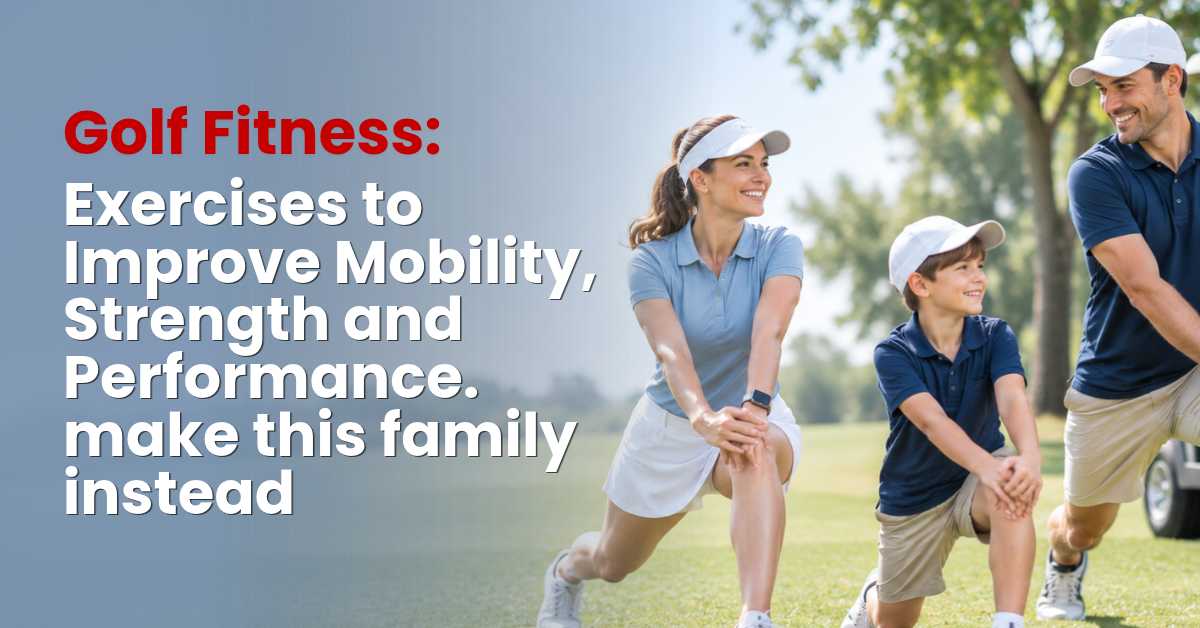
Golf requires more than accurate technique. Every swing involves coordination between your hips, spine, shoulders and arms, while walking the course and repeating rotational movements place additional demands on your body. Developing strength, flexibility, balance and mobility can help you manage these demands and improve your overall physical performance.
Whether you play golf socially or compete regularly, incorporating golf fitness exercises into your routine can help build the physical foundation needed for controlled movement and a consistent swing. Strengthening important muscle groups and improving joint mobility may also help reduce some physical limitations associated with repetitive golfing movements.
In this guide, we cover practical exercises to improve mobility, strength and balance, the importance of warming up, and how physiotherapy can support your golf performance.
Why Is Fitness Important for Golf?
A golf swing involves several body movements working together. Your hips and pelvis rotate, your spine transfers movement through your trunk, and your shoulders and arms help control the club.
Restricted movement or reduced strength in one area can affect how other parts of your body compensate. This may influence your swing technique and place additional physical demands on certain muscles and joints.
Regular golf fitness exercises can help develop:
- Rotational mobility: Supports comfortable rotation through your hips and upper body.
- Core stability: Helps maintain trunk control and transfer force between your upper and lower body.
- Muscular strength: Supports posture and control throughout repeated swings.
- Balance and coordination: Helps maintain a stable stance during different stages of the swing.
- Muscular endurance: Helps your body cope with walking the course and playing for extended periods.
Golf also involves repetitive movements that can place stress on the lower back, shoulders, wrists, elbows and hips. Developing a consistent fitness routine can help prepare your body for these demands and support comfortable movement on and off the course.
Best Golf Fitness Exercises to Improve Mobility and Strength
A balanced exercise routine should target the main muscle groups involved in golf. These golf fitness exercises focus on rotational movement, core strength, lower-body stability and flexibility.
1. Standing Torso Rotations
Standing torso rotations help develop upper-body rotational movement, which is important for golf swing mechanics.
How to perform:
- Stand with your feet shoulder-width apart.
- Place your hands across your chest.
- Keep your hips facing forward.
- Slowly rotate your upper body to one side.
- Return to the starting position and repeat on the opposite side.
Recommended repetitions: 10–12 on each side.
This movement encourages controlled trunk rotation and can help improve your ability to turn comfortably during a swing.
2. Hip Flexor Stretch
Your hips play an important role in generating and controlling movement during golf. Restricted hip mobility can affect pelvic positioning and make rotation more difficult.
How to perform:
- Begin in a half-kneeling position with one knee on the floor.
- Place your opposite foot in front.
- Gently move your hips forward while keeping your upper body upright.
- Hold the stretch without forcing the movement.
- Switch sides.
Recommended duration: 20–30 seconds per side.
This stretch can support hip flexibility and help maintain comfortable positioning throughout your swing.
3. Glute Bridges
The gluteal muscles help stabilise the pelvis and support lower-body strength. Strengthening these muscles can contribute to better movement control.
How to perform:
- Lie on your back with your knees bent and feet flat.
- Keep your arms relaxed beside your body.
- Gently tighten your abdominal muscles.
- Push through your heels and lift your hips.
- Pause briefly before lowering slowly.
Recommended repetitions: 10–15.
Glute bridges are useful golf exercises because they strengthen muscles that support hip movement and pelvic stability.
4. Bird-Dog Exercise
The bird-dog exercise develops core stability, coordination and controlled movement.
How to perform:
- Start on your hands and knees with your back in a neutral position.
- Extend your right arm forward and left leg backwards.
- Keep your hips level without arching your lower back.
- Hold briefly.
- Return to the starting position and switch sides.
Recommended repetitions: 8–10 per side.
This exercise helps develop the trunk control needed to maintain stability while your arms and legs move independently.
5. Bodyweight Squats
Strong legs help golfers maintain their stance, balance and posture throughout the swing. Squats strengthen the quadriceps, glutes and other lower-body muscles.
How to perform:
- Stand with your feet shoulder-width apart.
- Keep your chest lifted and back in a comfortable neutral position.
- Bend your knees and hips as if sitting in a chair.
- Lower yourself within a comfortable range.
- Push through your feet to stand again.
Recommended repetitions: 10–12.
Adding squats to your golf fitness exercises routine can help develop lower-body strength and stability.
6. Side Plank
The side plank targets the muscles along the sides of your abdomen, which contribute to lateral trunk stability and rotational control.
How to perform:
- Lie on your side with your elbow beneath your shoulder.
- Keep your legs together or stagger your feet.
- Lift your hips off the floor.
- Maintain a straight line through your shoulders, hips and legs.
- Hold before lowering slowly.
Recommended duration: 15–30 seconds per side.
Start with shorter holds and gradually increase the duration as your strength improves.
Golf Flexibility and Mobility Exercises for a Better Swing
Your shoulders, thoracic spine and hips contribute to the rotation needed for a controlled golf swing. Regular golf flexibility exercises can help maintain comfortable movement and address restrictions that may affect your swing technique.
Consider including these movements:
- Open-book rotations: Lie on your side with your knees bent. Slowly rotate your upper arm and chest towards the opposite side while keeping your knees together.
- Cat-cow movements: Start on your hands and knees, alternating gently between rounding and extending your spine.
- Shoulder circles: Move your shoulders through slow, controlled circles.
- 90/90 hip rotations: Sit with both knees bent and rotate your legs from one side to the other within a comfortable range.
These movements can form part of your golf mobility exercises routine, helping prepare your body for the rotational demands of playing.
Mobility is not simply about stretching further. It also involves having sufficient strength and control throughout your available range of motion.
The Importance of Warming Up Before Playing Golf
Starting a game without preparing your body can make the first few swings uncomfortable, particularly if you have been sitting for extended periods.
A proper warm-up gradually increases movement and prepares your muscles and joints for physical activity. Your golf warm up exercises should focus on dynamic movements rather than relying entirely on long static stretches.
A Simple Pre-Golf Warm-Up Routine
| Exercise | Duration |
| Brisk walking | 3–5 minutes |
| Arm circles | 30 seconds |
| Standing torso rotations | 10 repetitions |
| Hip circles | 10 repetitions |
| Leg swings | 10 per leg |
| Controlled practice swings | 5–10 swings |
Start gently and gradually increase your range of movement and speed as your body feels ready.
These golf warm up exercises help prepare your shoulders, hips, trunk and legs for playing. Avoid forcing movements into uncomfortable positions. If you experience pain, stop and seek appropriate advice.
How Golf Fitness Can Support Injury Prevention
Although golf is generally considered a lower-impact sport, repetitive swinging and prolonged activity can contribute to physical discomfort and overuse injuries.
Common golf-related complaints include:
- Lower back pain associated with repeated trunk rotation.
- Shoulder discomfort related to repetitive arm movements.
- Elbow pain associated with gripping and swinging.
- Wrist discomfort caused by repeated loading.
- Hip stiffness affecting comfortable movement.
Consistent golf fitness exercises can help develop strength, mobility, balance and movement control. These qualities may support golf injury prevention, although exercise alone cannot guarantee that injuries will be avoided.
A suitable golf fitness training routine should gradually increase in difficulty and consider your fitness level, previous injuries and playing frequency. Technique, training volume and recovery are also important.
If you experience persistent pain, reduced movement or recurring discomfort during or after golf, consider seeking an assessment from a qualified health professional.
How Physiotherapy Can Help Improve Golf Performance
Every golfer has different physical abilities and movement requirements. Some may experience restricted hip rotation, while others have reduced core strength, shoulder mobility or balance.
Physiotherapy can help identify these limitations through an individual assessment of movement, strength, flexibility and joint function.
At Next Phase Injury Therapy (NPIT), physiotherapy can support golfers through an approach that considers their physical condition, activity levels and performance goals.
1. Movement and Mobility Assessment
A physiotherapist can assess how your hips, spine, shoulders and other joints move. This helps identify restrictions that may affect your ability to rotate comfortably or maintain your posture during a swing.
2. Individualised Exercise Programs
Following an assessment, your physiotherapist can recommend targeted golf fitness exercises to address specific areas of weakness or reduced mobility. These may include strengthening, flexibility, balance and rotational movements.
3. Strength and Stability Development
Building strength in your core, hips and legs can improve movement control and support the physical demands of golf.
Clinical Pilates may also be incorporated into an exercise program where appropriate. It focuses on core stability, balance, strength and controlled movement.
Learn more about Clinical Pilates at Next Phase Injury Therapy.
4. Managing Existing Pain and Injuries
If golf has contributed to back, shoulder or joint discomfort, physiotherapy can help assess the problem and develop an appropriate rehabilitation plan.
Depending on your needs, your care may also involve chiropractic treatment or remedial massage as part of a broader approach to managing muscle tension and movement-related concerns.
Build a Consistent Golf Fitness Routine
Improving your physical performance does not require complicated workouts. Consistency is often more useful than completing an intense session occasionally.
Consider these practical tips:
- Train consistently: Include two or three strength and mobility sessions per week, depending on your recovery and playing schedule.
- Prioritise technique: Focus on controlled movements rather than rushing through repetitions.
- Allow recovery: Give your muscles sufficient time to recover between demanding sessions.
- Monitor discomfort: Pay attention to persistent pain, stiffness or changes in movement.
- Progress gradually: Increase exercise intensity as your strength and confidence develop.
Combining appropriate golf fitness exercises with regular practice can help build a stronger physical foundation for playing. Improvements in flexibility, strength and coordination take time, so choose a routine that matches your current ability.
Improve Your Golf Performance with Support from NPIT
Golf places repeated physical demands on your body, making mobility, strength, balance and coordination important parts of your preparation.
If you experience restricted movement, recurring discomfort or difficulty maintaining your physical performance, a professional assessment can help identify what may be affecting your movement.
At Next Phase Injury Therapy (NPIT), our physiotherapy team can assess your movement, identify areas that may need attention and develop an individualised plan based on your physical needs and goals.
Whether you want to improve mobility, rebuild strength or manage a golf-related injury, our team can help you work towards moving more comfortably and confidently.
Book an appointment with Next Phase Injury Therapy in Yagoona to discuss your movement and rehabilitation goals.
FAQs
What exercises improve golf performance?
Exercises that develop rotational mobility, core stability, lower-body strength and balance can support golf performance. Standing torso rotations, glute bridges, bird-dogs, squats and side planks are useful examples.
How should I warm up before playing golf?
Start with three to five minutes of brisk walking, followed by dynamic movements such as arm circles, hip rotations, leg swings and torso rotations. Finish with gentle practice swings, gradually increasing your range of movement.
Does flexibility help improve a golf swing?
Yes. Sufficient flexibility and mobility can help you rotate your hips, spine and shoulders more comfortably during a swing. This can support movement coordination and a comfortable swing position. However, flexibility should be combined with strength and movement control.
How often should I do golf fitness exercises?
Many golfers can benefit from two or three strength and mobility sessions per week, depending on their fitness level, playing schedule and recovery needs.
Can physiotherapy help with golf-related injuries?
Yes. Physiotherapy can assess golf-related pain and movement restrictions, identify contributing physical factors and develop an individualised rehabilitation program. Treatment may include mobility exercises, strengthening and movement retraining.
References:
- https://pubmed.ncbi.nlm.nih.gov/30245478/
- https://pubmed.ncbi.nlm.nih.gov/37425113/
- https://pubmed.ncbi.nlm.nih.gov/31469762/
- https://pubmed.ncbi.nlm.nih.gov/30326790/
- https://pubmed.ncbi.nlm.nih.gov/38508702/
Information on this page is general in nature and is not a substitute for individualised advice from a registered health practitioner. Our practitioners are registered with AHPRA.