
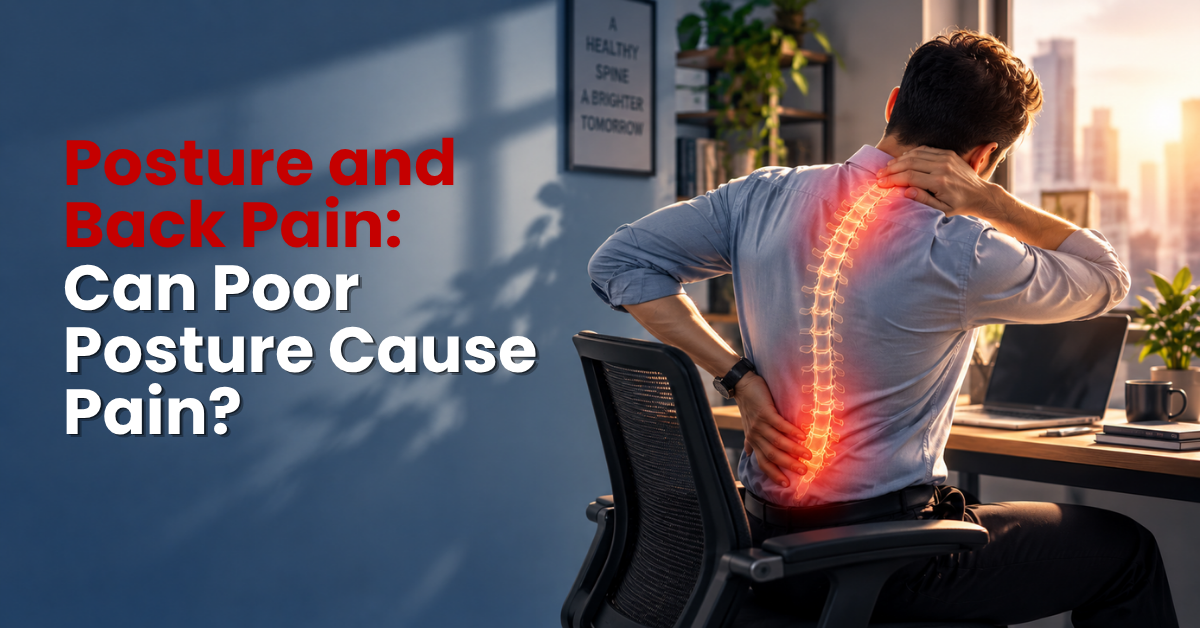
Sit up straight. Pull your shoulders back. Stop slouching. Posture gets blamed for a lot of back pain. But the relationship is not as simple as good posture versus bad posture. The relationship between posture and back pain can vary from person to person and depends on more than spinal position alone.
A long day at a desk can leave your lower back stiff. Sitting in one position for hours may make your body feel tight. Certain postures may aggravate symptoms when your back is already sensitive. But posture is only one piece of the picture. Understanding posture and back pain can help you focus on practical movement habits rather than trying to maintain one perfect position.
Strength, mobility, activity levels, movement habits, sleep, stress and how much load your body is used to can all influence back pain. So instead of asking what the perfect posture is, it may be more useful to ask how often you are moving and whether your body is prepared for what you ask it to do.
Can Poor Posture Cause Back Pain?
Poor posture can contribute to back discomfort for some people, especially when a position is held for a long time. But posture alone does not explain every case of back pain. You can sit upright and still develop back pain. You can also slouch sometimes without damaging your spine. This is why posture and back pain should be considered alongside other factors that influence how your body responds to daily activity.
Problems may develop when you remain in the same position for long periods, certain positions repeatedly aggravate an already sensitive back, your work setup limits movement, or your back is not accustomed to the loads placed on it.
Posture matters, but movement variety and physical capacity matter too. For many people, addressing posture and back pain involves improving movement habits rather than simply correcting sitting or standing alignment.
Posture and Lower Back Pain
Lower back pain is particularly common in people who spend long periods sitting. Research suggests low back pain in office workers may be associated with a combination of sitting duration, posture and sitting behaviour, particularly long periods of static sitting without enough movement breaks. The connection between posture and back pain may be particularly relevant when long periods of sitting are part of your daily routine.
When sitting for long periods, some people experience lower back stiffness, tightness around the hips, aching after getting up or pain that increases throughout the workday. Changing position regularly is often more useful than trying to hold one rigid posture all day. Simple position changes can make managing posture and back pain more practical during a typical working day.
Is There a Perfect Sitting Posture?
Probably not. There is no single sitting position everyone needs to maintain to protect their back. A comfortable setup involves feet supported, hips and knees in a relaxed position, screen positioned without constant twisting, and keyboard within easy reach. But even a well-designed ergonomic setup does not replace movement. The best sitting position is often the one you change regularly. When managing posture and back pain, regular movement can be more useful than constantly monitoring whether your posture is perfectly aligned.
Why Posture Is Only One Factor
Back pain is rarely explained by one factor alone. Looking at posture and back pain in isolation can overlook other factors that influence symptoms and recovery.
Other contributors include:
- Activity levels: sudden increases in activity or long periods of inactivity both affect how the back responds to load
- Strength: the back works with the abdominal muscles, hips and glutes; reduced strength can make certain activities feel more demanding
- Mobility: reduced movement through the hips or spine can affect how the body performs bending, lifting and walking
- Sleep and stress: poor sleep and stress influence pain sensitivity and muscle tension, affecting how the nervous system responds to load
- Previous injury: earlier back pain episodes can influence movement confidence and response to new symptoms
Movement Habits Matter More Than Perfect Alignment
Normal movement includes bending, twisting, extending and shifting position. Your spine is designed to do all of these. A practical approach to posture and back pain is to build the strength and confidence needed to move comfortably in different positions.
The goal is not to avoid movement it is to build enough mobility, strength and confidence to tolerate it comfortably.
Useful habits include changing sitting position regularly, taking short walking breaks, keeping physically active outside work, and gradually strengthening the trunk and lower body. There is no need to monitor every centimetre of your posture throughout the day.
How to Relieve Back Pain From Sitting
If sitting aggravates your lower back, the answer is not to stop sitting entirely. If you experience posture and back pain while working at a desk, regular movement breaks may be more useful than trying to sit in one fixed position.
It may help to change position regularly, take short movement breaks, walk during breaks, adjust your workstation, keep exercising outside work, and gradually strengthen your back, hips and trunk. If pain keeps returning, affects work or sleep, or travels into the leg, a professional assessment is worthwhile.
When Back Pain Should Be Assessed
Consider seeing a physiotherapist if back pain is not improving, keeps returning, affects work or sleep, travels into the leg, or you have pins and needles, numbness or weakness. If you are becoming fearful of movement, that is also a useful reason to seek help early. Persistent posture and back pain symptoms that interfere with daily activities are also worth discussing with a physiotherapist.
Seek urgent medical care if back pain comes with loss of bladder or bowel control, numbness around the groin or saddle area, progressive weakness, fever or significant trauma.
How Physiotherapy Can Help
Physiotherapy for posture-related back pain looks beyond the visible posture to assess how the body actually moves. Assessment of posture and back pain can help identify which factors may be contributing to your symptoms.
A physiotherapy plan may include education, mobility exercises, core and trunk strengthening, movement retraining and manual therapy where appropriate. Clinical Pilates may be included for supervised strength, control and movement work tailored to your assessment. Where joint stiffness is contributing to symptoms, chiropractic care or manual therapy may support the rehabilitation plan.
The aim is not to force everyone into the same posture. For posture and back pain, the goal is to find practical strategies that help you move comfortably and tolerate everyday activities. It is to identify what your body needs to move more comfortably and tolerate daily activity.
Posture and Back Pain Support at Next Phase Injury Therapy
At Next Phase Injury Therapy in Yagoona, our physiotherapists work with people experiencing lower back pain, posture-related discomfort and pain associated with prolonged sitting or desk work. Our approach to posture and back pain considers your individual movement habits, physical capacity and daily demands.
We work with you to:
- Assess the factors contributing to your back pain, not just your posture
- Build a practical mobility and strengthening plan suited to your work and lifestyle
- Help you move with more confidence and less pain day to day
Book an appointment with Next Phase Injury Therapy in Yagoona. We’re open 8am to 8pm, seven days a week. Yes, even Sundays.
FAQs
Can poor posture cause back pain?
Poor posture may contribute to back pain for some people, particularly when a position is held for long periods. However, posture is only one factor activity levels, mobility, strength, sleep and stress can all influence back pain.
What is the best posture for preventing back pain?
There is no single posture that prevents back pain. Regular position changes, frequent movement, and maintaining general strength and activity are usually more practical than trying to hold one perfect posture all day.
Can physiotherapy improve posture and back pain?
Yes. Physiotherapy assesses spinal movement, mobility, strength and work habits, then builds a treatment plan that may include exercise rehabilitation, mobility work, strengthening and manual therapy where appropriate. This approach to posture and back pain focuses on practical improvements that can be incorporated into your everyday routine.
Can sitting all day cause lower back pain?
Long periods of sitting may contribute to lower back discomfort, particularly when movement breaks are limited. Changing position regularly and staying active throughout the day may help reduce stiffness and improve movement tolerance.
How can I improve my posture at a desk?
Set up a comfortable workstation, keep frequently used items within reach, and position your screen to avoid repeated twisting. Most importantly, change position regularly rather than holding one posture for the entire day. These habits can also help when managing posture and back pain during your workday.
How can I relieve back pain from sitting?
Short movement breaks, walking, changing position, exercise and gradually improving mobility and strength may help. These strategies can be useful for managing posture and back pain associated with prolonged sitting. If pain persists or worsens, an assessment is a worthwhile next step.
References
- Australian Commission on Safety and Quality in Health Care. Low Back Pain Clinical Care Standard. https://www.safetyandquality.gov.au/clinical-care-standards/low-back-pain
- Australian Commission on Safety and Quality in Health Care. Quick Guide for Physiotherapists: Low Back Pain Clinical Care Standard. https://www.safetyandquality.gov.au/publications-and-resources/resource-library/quick-guide-physiotherapists-low-back-pain-clinical-care-standard
- van Niekerk, Sjan-Mari, et al. “Low Back Pain and Sitting Time, Posture and Behavior in Office Workers: A Scoping Review.” Work, 2025, https://pubmed.ncbi.nlm.nih.gov/40111906/
- Ognibene, Gregory T., et al. “Sit-Stand Workstations and Impact on Low Back Discomfort: A Systematic Review and Meta-Analysis.” Journal of Occupational and Environmental Medicine, vol. 58, no. 3, 2016, pp. 287–294, https://pubmed.ncbi.nlm.nih.gov/29115188/
- Foster, Nadine E., et al. “Prevention and Treatment of Low Back Pain: Evidence, Challenges, and Promising Directions.” The Lancet, vol. 391, no. 10137, 2018, pp. 2368–2383, https://doi.org/10.1016/S0140-6736(18)30489-3.
Information on this page is general in nature and is not a substitute for individualised advice from a registered health practitioner. Our practitioners are registered with AHPRA.