
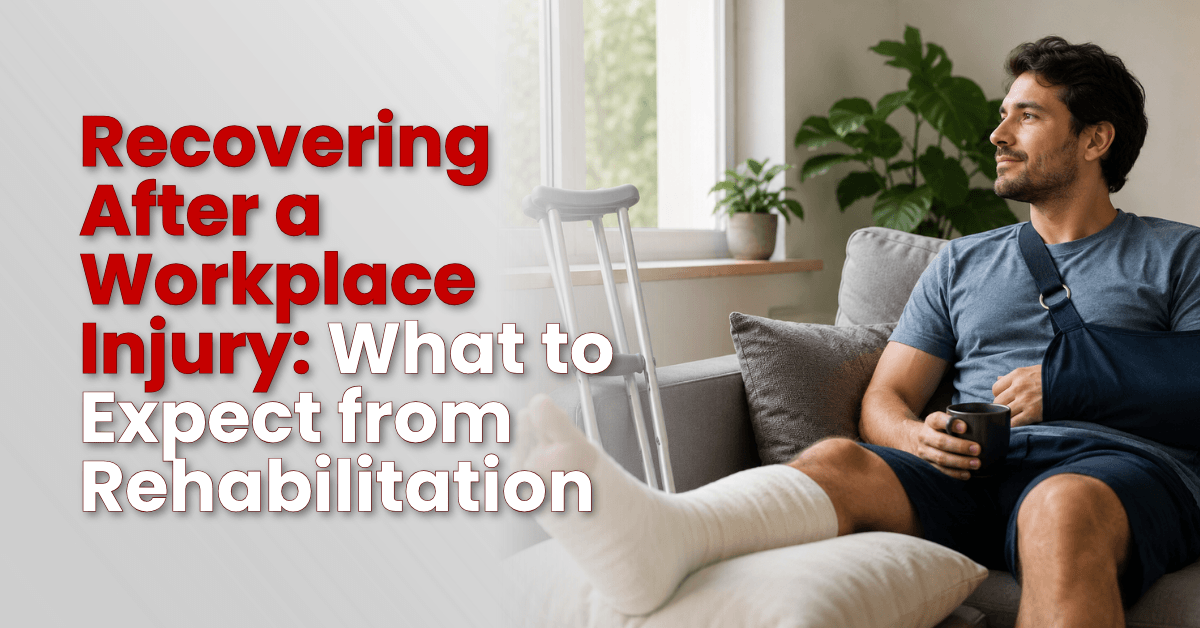
Doing your back in while lifting stock, tweaking a shoulder on the tools, or landing awkwardly after a slip at work can throw your whole routine out of place. One minute you’re getting on with the job, the next you’re speaking with your employer and trying to work out what happens now.
If you’ve never been through workplace injury rehabilitation before, the process can feel like a bit of a mystery. At Next Phase Injury Therapy in Yagoona, we see workers from warehouses, trades, healthcare, retail and everywhere in between across NSW, and the questions are often similar: What should I do first? How long will this take? And how do I get back to doing my job properly?
Here’s a straightforward, no-nonsense look at what to expect from work injury rehabilitation, from your first appointment through to returning to work.
What Counts as a Workplace Injury?
Workplace injuries aren’t just the dramatic ones. Some common presentations we see include:
- A back injury at work from lifting, bending or twisting
- A shoulder injury at work, including rotator cuff strain from repetitive overhead tasks
- A neck injury at work from awkward postures, vibration exposure or prolonged hunched positions
- Knee, ankle and foot injuries from slips, trips and falls
- Manual handling injury recovery following repetitive lifting, carrying or awkward movements
- Repetitive strain injuries from process or desk-based work
- Injuries from machinery use or vehicle-related incidents
Some injuries happen suddenly. Others build up gradually over weeks or months. Either way, early assessment can make it easier to understand what is going on and plan the right next steps for workplace injury recovery.
Injured at Work in NSW? What to Do First
Before claim-funded rehabilitation can start, there is usually a process to work through:
- Report the injury to your employer as soon as possible, even if it seems minor.
- See your GP for an assessment and a Certificate of Capacity, if required.
- Speak with your employer or insurer about your claim details and treatment approval.
- Start treatment with an appropriate treating practitioner once your claim and treatment approval are underway.
If this feels like a lot of admin on top of being in pain, you’re not wrong. Our team deals with insurers and case managers regularly, so if you’re unsure what step you’re up to, we can help point you in the right direction. For the official rules on notifying your employer and lodging a claim in NSW, SIRA’s guide on what to do after an injury and the Independent Review Office are the most reliable sources.
Employee Responsibilities After a Workplace Injury
Alongside your employer’s and insurer’s obligations, there are a few things generally expected of you as an injured worker in NSW. In broad terms, this can include:
- Notifying your employer of the injury as soon as possible
- Attending medical appointments and providing Certificates of Capacity when requested
- Participating reasonably in treatment and any return to work plan
- Keeping your employer and insurer updated on your progress
- Cooperating with reasonable requests for information related to your claim
This is general guidance rather than a complete legal summary, and requirements can vary depending on your circumstances. If you want the full picture of your obligations, SIRA and the Independent Review Office are the best places to check.
What Actually Happens During Rehabilitation
Your first appointment is about getting the full picture. Your practitioner will ask how the injury happened, what movements or tasks aggravate it, and what your day-to-day job involves. They may assess your strength, movement and pain levels, then build a treatment plan around your injury and work demands, not a generic template.
From there, rehabilitation often moves through three broad phases.
Phase 1: Calming Things Down
In the early stages, the priority is helping to manage pain, protect the injured area and keep you moving safely where appropriate. This might involve manual therapy, dry needling where suitable, gentle mobility work, or advice on modifying activities at home and at work.
Phase 2: Rebuilding Strength and Movement
Once symptoms begin to settle, treatment usually shifts towards improving movement, rebuilding strength and gradually reintroducing load. This may involve targeted exercise, hands-on treatment and a structured plan to help the injured area tolerate more of what your work requires.
Phase 3: Getting You Back to the Job
The final phase is about function, not just symptoms. Your practitioner may incorporate movements and tasks that mirror your actual job, whether that’s lifting, standing for long periods, repetitive tasks or physical labour, with the aim of helping your body cope with the physical demands of work.
What to Expect in Your Rehab Sessions
Depending on your injury, work injury physiotherapy at Next Phase Injury Therapy may include:
- Manual therapy and mobilisation to help ease stiffness and support movement
- Dry needling, where appropriate, to help manage muscle tightness
- Shockwave therapy, where appropriate, for some persistent tendon or soft tissue presentations
- Exercise rehabilitation to help rebuild strength, control and endurance
- Remedial massage to support soft tissue recovery alongside active treatment
Every plan is tailored to your injury type, your recovery goals and the physical demands of your particular job. If you’re after work injury treatment in Yagoona, our clinic is set up to work directly with your employer, insurer and treating GP throughout the process.
Returning to Work Safely, Not Just Fast
A good rehab program isn’t just focused on getting you back to work quickly. It should support a safe, sustainable return to work. That may involve a graduated return to work, where you ease back in on modified or reduced duties before working up to your full role.
This may involve your physiotherapist communicating with your employer and insurer to help support suitable duties and realistic milestones. Safe Work Australia’s national guidance on return to work highlights the importance of everyone involved, including the worker, employer, treating practitioner and insurer, working together rather than in isolation.
If you’re unable to return to your pre-injury duties, it doesn’t necessarily mean recovery has stalled. Depending on your workplace and your capacity, your case manager or workplace rehabilitation provider may look at modified duties, a gradual increase in hours or tasks, or in some cases a work trial with a different (host) employer while you build back capacity. These arrangements are managed through your insurer and workplace rehabilitation provider, so it’s worth raising the conversation with them if your usual employer can’t accommodate your current capacity.
At Next Phase Injury Therapy, we take a similar collaborative approach, helping with workplace communication where appropriate so you are not left managing that side of things alone.
How Long Does Recovery Actually Take?
Honestly, it depends, and every case is different. A mild strain might settle in a couple of weeks. A more significant injury, or one involving surgery, can take months of structured rehab.
Research does suggest that starting treatment earlier is generally associated with better outcomes. A Victorian study of injured workers found that those treated by physiotherapists trained in early intervention returned to work sooner, on average, than those who received care later. This does not guarantee a particular result for any individual, but it is part of why early assessment can be helpful.
Frequently Asked Questions About Workplace Injury Rehabilitation
What should I expect from workplace injury rehabilitation?
In general, expect an initial assessment of your injury and job demands, followed by a staged plan that moves from managing pain and protecting the area, to rebuilding strength and movement, to preparing you for the physical demands of your specific job. The exact approach depends on your injury and how it responds to treatment.
What should I do if I get injured at work in NSW?
Seek first aid or medical treatment if needed, then let your employer know as soon as possible. See your GP for an assessment and a Certificate of Capacity, and speak with your employer or insurer about your claim. Starting treatment with a physiotherapist or chiropractor can generally begin once your claim and treatment approval are underway.
How long do you have to report a work injury in NSW?
Under NSW workers compensation legislation, you’re expected to notify your employer as soon as possible after a workplace injury occurs, rather than within a fixed number of days. Separately, a workers compensation claim generally needs to be lodged within six months of the injury, with extensions available in some circumstances. For the exact rules that apply to your situation, SIRA or the Independent Review Office can give you the most current guidance.
What happens if I am unable to return to pre-injury duties?
This varies depending on your injury, your workplace and your claim. Options can include modified or suitable duties, a gradual increase in hours or tasks, or in some cases a work trial with another employer while your capacity improves. Your insurer, employer and workplace rehabilitation provider are usually involved in working through these options with you.
Can physiotherapy help with returning to work after injury?
Physiotherapy can generally support recovery by helping to reduce pain, restore movement and rebuild strength and capacity relevant to your job. It’s typically one part of a broader return to work plan alongside your GP, employer and insurer, and individual results vary depending on the injury.
What are employee responsibilities after a workplace injury?
In broad terms, this can include reporting the injury promptly, attending medical appointments, providing requested documentation such as a Certificate of Capacity, and participating reasonably in treatment and return to work planning. This is general information rather than a full legal summary, so check with SIRA or the Independent Review Office for complete details relevant to your circumstances.
Recovering After a Workplace Injury at Next Phase Injury Therapy
Getting hurt at work is stressful enough without having to figure out the recovery process on your own. At Next Phase Injury Therapy, our physiotherapists and chiropractors provide workplace injury rehabilitation for workers across Yagoona and greater Sydney, building recovery plans around your injury, your job and your goals.
We can also help with communication with your employer and insurer where appropriate, so your treatment and return-to-work plan are easier to understand.
If you’ve been injured at work, explore our WorkCover physiotherapy and physiotherapy services in Yagoona, or book an appointment with our team today. We’re open 8am to 8pm, seven days a week, including Sundays.
This article provides general information only and is not a substitute for individual clinical assessment, medical advice or workers compensation advice. Recovery times, treatment approval, employee obligations and outcomes vary from person to person and depend on the specific injury, claim status and insurer requirements. Please speak with a qualified health practitioner, your employer, your insurer, or contact SIRA or the Independent Review Office for advice tailored to your situation.
References
- Safe Work Australia. National Return to Work Strategy 2020–2030. Safe Work Australia, Commonwealth of Australia, 2020, www.safeworkaustralia.gov.au/workers-compensation/national-return-work-strategy.
- State Insurance Regulatory Authority (SIRA). Guidelines for Workplace Return to Work Programs. NSW Government, 2021, www.sira.nsw.gov.au.
- State Insurance Regulatory Authority (SIRA). What to Do After an Injury. NSW Government, www.sira.nsw.gov.au/workers-compensation/what-to-do-after-an-injury.
- Independent Review Office (IRO). Reporting an Injury and Making a Claim for Workers Compensation. NSW Government, www.iro.nsw.gov.au/faq/reporting-injury-and-making-claim-workers-compensation.
- Alavinia, Seyed Mohammad, et al. “Evaluation of the Early Intervention Physiotherapist Framework for Injured Workers in Victoria, Australia: Data Analysis Follow-Up.” Healthcare, vol. 11, no. 15, 2023, p. 2205, doi.org/10.3390/healthcare11152205.
Information on this page is general in nature and is not a substitute for individualised advice from a registered health practitioner. Our practitioners are registered with AHPRA.


