
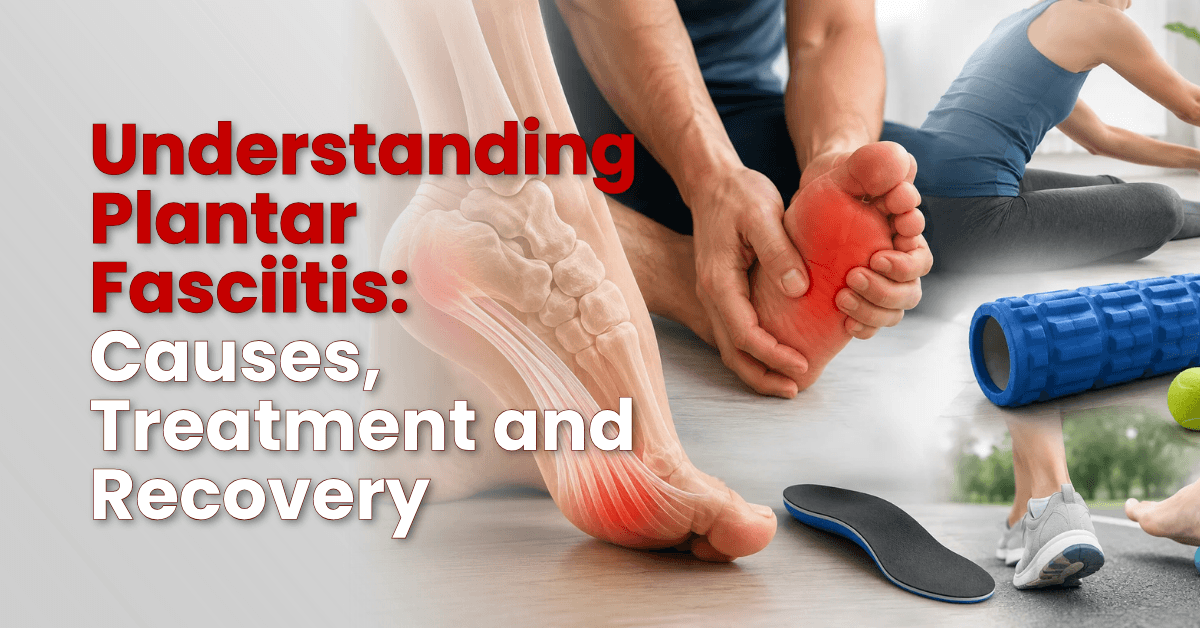
That sharp heel pain when you take your first steps in the morning is one of the classic signs of plantar fasciitis. For some people, it eases once they get moving. For others, it builds through the day until walking, running or standing at work becomes a real problem.
Plantar fasciitis is one of the most common causes of pain under the heel. It can affect runners, tradies, retail workers, gym-goers, people who stand all day, or anyone whose foot has been asked to handle more load than it is ready for.
The good news is that plantar fasciitis treatment is usually conservative. The less convenient news is that it often takes consistency, not one quick fix.
Here is what causes it, what helps, what tends to make it worse, and when to get support.
What Is Plantar Fasciitis?
The plantar fascia is a thick band of connective tissue that runs along the bottom of your foot, from the heel bone towards the toes. It helps support the arch of the foot and absorbs load when you walk, run and stand.
Plantar fasciitis is usually an overload problem at or near the heel attachment of this tissue. Despite the “itis” in the name, it is not always a simple inflammation issue. In longer-running cases, the tissue can become irritated and less tolerant of load, which is why rest alone often does not solve the problem.
Common symptoms include:
- Morning heel pain with the first few steps out of bed
- Pain under the heel after sitting for a while
- Foot arch pain or tightness
- Pain that warms up, then returns after longer activity
- Running foot pain, especially after increasing distance or speed
- Heel pain after long periods standing at work
What Causes Plantar Fasciitis?
Plantar fasciitis causes usually come back to load. The foot is asked to do more than it is currently conditioned to handle.
Common contributing factors include:
- A sudden increase in walking, running or sport
- Long hours standing on hard surfaces
- Unsupportive footwear
- A recent change in shoes or training surface
- Tight or overloaded calf muscles
- Reduced ankle mobility
- Weakness through the foot, calf or hip
- Higher body load through the feet
- Returning to activity too quickly after time off
It is not always one single cause. Often, plantar fasciitis develops when several small factors stack together.
Twisted Foot, Heel Bruise or Plantar Fasciitis?
Not all heel pain is plantar fasciitis. Pain under the heel can also come from fat pad irritation, nerve irritation, a stress injury, referred pain from the back or a more acute soft tissue injury.
Plantar fasciitis usually builds gradually and is often worse with first steps in the morning or after rest. A sudden injury, bruising, significant swelling or pain that is severe enough that you cannot put weight through the foot should be assessed promptly.
If your plantar fasciitis is so bad you can’t walk normally, do not just push through it. That is a sign your foot needs proper assessment.
Plantar Fasciitis Treatment at Home
For mild cases, plantar fasciitis treatment at home may help settle symptoms and reduce irritation.
Useful first steps include:
- Reducing running, jumping or long walks for a short period
- Wearing supportive shoes rather than walking barefoot on hard floors
- Using ice after aggravating activity if it feels helpful
- Breaking up long periods of standing where possible
- Avoiding sudden spikes in training load
- Starting gentle plantar fasciitis stretches and strengthening exercises
Plantar fasciitis insoles or heel cups may help some people by reducing pressure and improving comfort, especially if standing or walking is unavoidable. They are not a cure by themselves, but they can be useful while the tissue settles and strength is rebuilt.
Plantar Fasciitis Exercises and Stretches
The best plantar fasciitis exercises usually combine stretching, strengthening and gradual loading. The goal is to help the foot tolerate more load over time, not just chase short-term pain relief.
Plantar Fascia Stretch
This targets the tissue under the foot directly. It is often done by gently pulling the toes back while supporting the foot, especially before the first steps in the morning.
Calf Stretch
Tight or overloaded calf muscles can increase strain through the foot. Stretching both the gastrocnemius and soleus muscles may help reduce morning tightness and improve ankle mobility.
Towel Scrunches or Short Foot Exercises
These exercises target the small muscles that help support the arch. They are usually low load and can be useful early in rehab.
Calf Raises
Calf raises help build strength through the calf, Achilles tendon and foot. They should be introduced gradually, especially if heel pain is easily aggravated.
Loaded Heel Raises
For some people, progressive strengthening is needed once symptoms are more settled. This may involve heavier, slower calf raise variations, guided by a physiotherapist.
The right starting point depends on your pain level, work demands, footwear, strength and how long symptoms have been present.
What Is the Worst Thing to Do With Plantar Fasciitis?
The worst thing to do with plantar fasciitis is usually ignoring it while continuing to overload it.
Common mistakes include:
- Running through worsening heel pain
- Walking barefoot on hard floors all day
- Doing aggressive stretching that flares symptoms
- Suddenly switching to minimalist shoes
- Resting completely for weeks, then returning at full intensity
- Only treating the pain without rebuilding strength
- Waiting months before getting assessed
Plantar fasciitis often responds best when load is adjusted early and gradually rebuilt. Doing nothing and hoping it disappears can allow the problem to become more persistent.
How Long Does Plantar Fasciitis Take to Recover?
Plantar fasciitis recovery time varies. A mild, recent case may improve over several weeks with the right load changes and exercises. Longer-running cases can take several months, especially if the foot is still being overloaded every day.
Recovery is affected by:
- How long symptoms have been present
- Whether you can modify standing, walking or running load
- Footwear and work demands
- Calf and foot strength
- Training history
- Sleep, recovery and general health
- Whether the plan is followed consistently
If symptoms are not improving after a few weeks of sensible management, it is worth getting assessed. The earlier the plan is matched to the cause, the easier recovery usually is.
When to Worry About Plantar Fasciitis
Book an assessment if:
- Heel pain has lasted more than two to three weeks
- Pain is changing how you walk
- You cannot stand or walk normally
- Symptoms keep returning after rest
- Pain is worsening despite doing stretches
- You have running foot pain that returns every session
- You have numbness, tingling or burning into the foot
Seek prompt medical care if pain follows a fall or major injury, there is significant swelling or bruising, you cannot bear weight, or you have unexplained redness, warmth, fever or night pain.
How Physiotherapy Can Help With Plantar Fasciitis Treatment
Physiotherapy for plantar fasciitis is not just about rubbing the sore spot. A good plan looks at why the heel is overloaded and what needs to change for it to tolerate walking, work or sport again.
At Next Phase Injury Therapy, treatment may include:
- Assessment of foot, ankle, calf and hip strength
- Gait and movement assessment
- Plantar fasciitis exercises matched to your stage of recovery
- Advice on footwear, insoles or taping where appropriate
- Load management for work, running or sport
- Manual therapy to help with stiffness and movement
- Shockwave therapy where appropriate for persistent cases
- A graded return to walking, running or training
The right approach depends on your symptoms, your goals and what your day actually asks of your feet.
Plantar Fasciitis Treatment at Next Phase Injury Therapy
At Next Phase Injury Therapy in Yagoona, we help people with heel pain, foot pain and sports injuries build a clear plan for recovery.
We can support:
- Plantar fasciitis treatment Yagoona
- Heel pain treatment Yagoona
- Foot pain treatment Yagoona
- Sports injury treatment Yagoona
- Injury rehabilitation Yagoona
- Physiotherapy Yagoona
- Return to running or sport planning
If morning heel pain, pain under the heel or foot arch pain is starting to affect your day, getting assessed can help you understand what is driving it and what to do next.
Explore our physiotherapy and sports injury rehabilitation services, or book an appointment with Next Phase Injury Therapy. We are open 8am to 8pm, seven days a week, including Sundays.
Frequently Asked Questions
What causes plantar fasciitis?
Plantar fasciitis is usually caused by repeated overload of the plantar fascia, the tissue under the foot that helps support the arch. Common triggers include sudden increases in walking or running, long periods standing, poor footwear, calf tightness, reduced ankle mobility and weakness through the foot or lower limb.
How long does plantar fasciitis take to recover?
Recovery time varies. Mild cases may improve over several weeks with the right management, while persistent cases can take several months. Recovery depends on load, footwear, strength, work demands and how consistently the plan is followed.
What are the best plantar fasciitis exercises?
Common plantar fasciitis exercises include plantar fascia stretches, calf stretches, short foot exercises, towel scrunches, calf raises and progressive loaded heel raises. The best exercises depend on your symptoms and stage of recovery.
What stretches help plantar fasciitis?
Plantar fascia stretches and calf stretches are commonly used. Stretching should feel controlled and should not significantly flare symptoms. If stretching keeps making pain worse, it is worth getting assessed.
What is the worst thing to do with plantar fasciitis?
The worst thing is usually continuing to overload the foot while ignoring worsening pain. Running through symptoms, walking barefoot on hard floors, doing aggressive stretches or returning to full activity too quickly can all slow recovery.
Can physiotherapy help with plantar fasciitis treatment?
Yes, physiotherapy can help by assessing what is contributing to the heel pain, guiding load management, prescribing appropriate exercises and supporting a gradual return to walking, running, work or sport.
This article provides general information only and is not a substitute for individual clinical assessment or medical advice. Foot and heel pain can have different causes, and treatment needs vary from person to person. Please speak with a qualified health practitioner for advice tailored to your situation.
References
- Martin, RobRoy L., et al. “Heel Pain, Plantar Fasciitis: Revision 2014.” Journal of Orthopaedic & Sports Physical Therapy, vol. 44, no. 11, 2014, pp. A1–A33, https://doi.org/10.2519/jospt.2014.0303
- Morrissey, Dylan, et al. “Management of Plantar Heel Pain: A Best Practice Guide Informed by a Systematic Review, Expert Clinical Reasoning and Patient Values.” British Journal of Sports Medicine, vol. 55, no. 19, 2021, pp. 1106–1118, https://doi.org/10.1136/bjsports-2019-101970
- Rathleff, Michael Skovdal, et al. “High-Load Strength Training Improves Outcome in Patients with Plantar Fasciitis: A Randomized Controlled Trial with 12-Month Follow-Up.” Scandinavian Journal of Medicine & Science in Sports, vol. 25, no. 3, 2015, pp. e292–e300, https://doi.org/10.1111/sms.12313
- Whittaker, Glen A., et al. “Foot Orthoses for Plantar Heel Pain: A Systematic Review and Meta-Analysis.” British Journal of Sports Medicine, vol. 52, no. 5, 2018, pp.
Information on this page is general in nature and is not a substitute for individualised advice from a registered health practitioner. Our practitioners are registered with AHPRA.


