
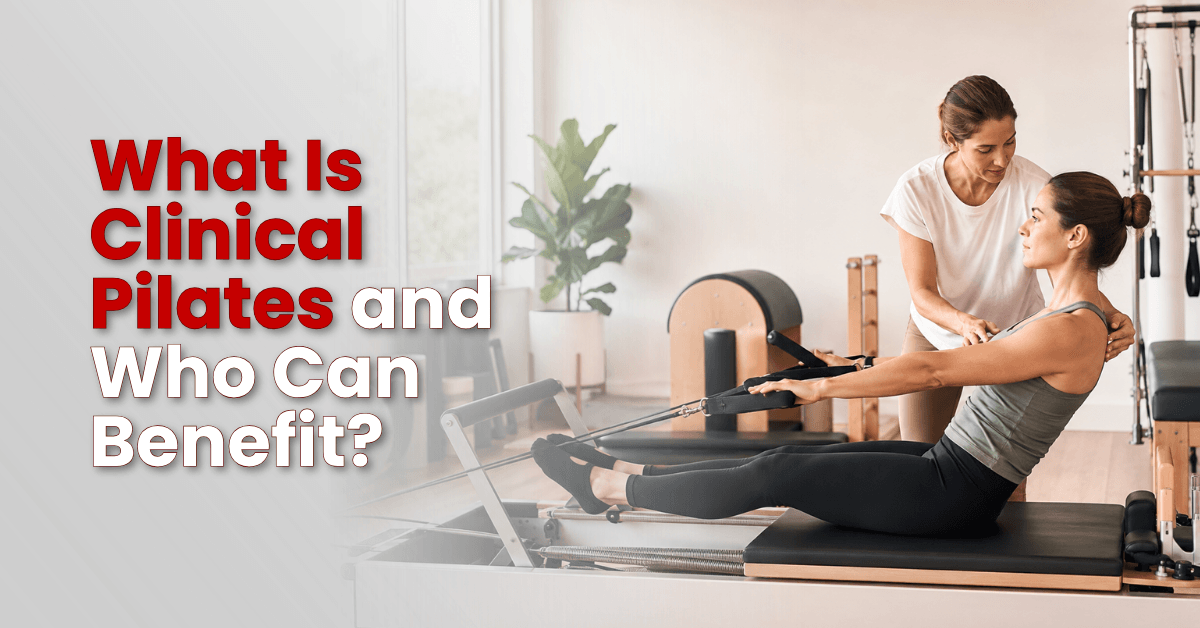
Pilates has become popular for core strength, posture and mobility, but clinical Pilates is a little different from a standard fitness class.
Instead of everyone following the same routine, clinical Pilates is usually more targeted. It starts with your body, your movement, your injury history and your goals. That makes it especially useful for people who want to move better, rebuild strength, manage pain or return to activity after injury.
At Next Phase Injury Therapy in Yagoona, clinical Pilates can form part of a broader physiotherapy or injury rehabilitation plan, especially when someone needs controlled movement, better strength and more confidence in how their body moves.
What Is Clinical Pilates?
Clinical Pilates is a supervised, individualised form of Pilates that focuses on movement control, strength, posture, mobility and rehabilitation.
It often uses Pilates principles such as:
- Controlled movement
- Breathing
- Core engagement
- Postural awareness
- Balance and coordination
- Gradual progression
The key difference is that clinical Pilates is usually guided by assessment. Instead of choosing exercises at random, your program is shaped around what your body needs.
That might mean improving trunk strength after back pain, rebuilding control after an injury, working on mobility after stiffness, or learning how to move with less guarding and compensation.
What Is the Difference Between Clinical Pilates and Regular Pilates?
Regular Pilates is often a general exercise class. It can be excellent for fitness, strength and flexibility, but the exercises are usually designed for a group.
Clinical Pilates is more personalised.
A clinical Pilates program may consider:
- Current pain or injury
- Movement limitations
- Strength and control deficits
- Posture and movement habits
- Previous injuries
- Work, sport or lifestyle demands
- Exercises that need to be modified or avoided
This matters because two people can have the same goal, such as better core strength, but need very different starting points.
For example, someone recovering from a lower back injury may need a different program from someone using reformer Pilates for general strength and mobility.
Clinical Pilates Benefits
Clinical Pilates benefits vary from person to person, but it may help support:
- Core strength and trunk control
- Mobility and flexibility
- Posture and movement awareness
- Balance and coordination
- Injury rehabilitation
- Confidence with movement
- Strength around the hips, shoulders and spine
- Gradual return to exercise after pain or injury
It is not about forcing the body into perfect posture or doing the hardest version of an exercise. The aim is to build better control and capacity over time.
Who Can Benefit from Clinical Pilates?
Clinical Pilates may be suitable for a wide range of people, especially those who want a guided and controlled approach to movement.
This can include:
- People recovering from injury
- People with recurring back or neck pain
- Office workers dealing with stiffness or posture-related discomfort
- Athletes looking to improve control and movement quality
- People returning to exercise after time away
- People with chronic pain who need a gentle starting point
- Post-surgical clients, where cleared by their treating practitioner
- Anyone wanting to build strength and mobility in a supervised setting
The best starting point depends on your symptoms, goals and current capacity, which is why an assessment is important.
Clinical Pilates for Back Pain and Neck Pain
Clinical Pilates for back pain and clinical Pilates for neck pain often focuses on improving how the spine, hips, shoulders and trunk work together.
For back pain, this may include:
- Trunk control
- Hip strength
- Glute strength
- Breathing and bracing strategies
- Gradual loading
- Movement confidence
For neck pain, this may include:
- Shoulder blade control
- Upper back mobility
- Postural awareness
- Neck and shoulder endurance
- Reducing unnecessary guarding
Research suggests Pilates may help some people with chronic low back pain, although results vary and it is not a guaranteed fix. Like most rehabilitation approaches, it works best when the program is matched to the person.
Clinical Pilates for Injury Rehabilitation
Clinical Pilates for injury rehabilitation can be useful because it allows movement to be scaled.
After an injury, many people are not ready to jump straight back into gym training, running or sport. Clinical Pilates can help bridge that gap by building strength, control and confidence in a more controlled environment.
Pilates for rehabilitation may support recovery from:
- Lower back pain
- Neck pain
- Shoulder injuries
- Hip and pelvic pain
- Knee injuries
- Ankle injuries
- Postural and movement issues
- General deconditioning after time away from activity
It can also be used alongside physiotherapy, chiropractic care, remedial massage or a broader injury rehabilitation plan.
Clinical Pilates for Posture, Core Strength and Mobility
Posture is not about holding one perfect position all day. It is about having the strength, mobility and awareness to move comfortably between positions.
Clinical Pilates for posture may help you become more aware of how you sit, stand, breathe and move. It can also help strengthen the muscles that support your spine, hips and shoulders.
Clinical Pilates for core strength is not just about abdominal muscles. It also involves the deep trunk muscles, breathing, pelvic control, glutes, hips and shoulder stabilisers.
Clinical Pilates for mobility can help people who feel stiff, restricted or hesitant with movement, especially when exercises are progressed gradually and safely.
Clinical Pilates for Chronic Pain
When pain has been around for a long time, the body often becomes protective. Muscles tighten, movement becomes smaller, and certain positions can start to feel unsafe.
Clinical Pilates for chronic pain may help by providing a structured, low-impact way to move again. The focus is not on pushing through pain. It is on finding a level of movement your body can tolerate, then building from there.
For chronic pain management, the program may include:
- Gentle movement and mobility
- Breathing and relaxation strategies
- Low-load strengthening
- Graded progression
- Education about pain and movement
- Confidence-building exercises
This approach can be especially helpful for people who have tried exercise before but kept flaring up.
Do I Need a Physiotherapist for Clinical Pilates?
You do not always need a physiotherapist to do general Pilates. Many people do regular Pilates classes safely.
But if you are dealing with pain, injury, surgery recovery, chronic symptoms or movement limitations, a clinical approach can be valuable. A physiotherapist or trained clinical practitioner can assess how you move, understand your injury history and modify exercises to suit your body.
This is especially important if you are using clinical Pilates physiotherapy as part of injury rehabilitation or pain management.
What to Expect in a Clinical Pilates Session
A clinical Pilates session usually starts with understanding your goals and how your body is moving.
Depending on your needs, your session may include:
- Movement and posture assessment
- Reformer Pilates exercises
- Mat-based Pilates exercises
- Core and trunk control work
- Mobility exercises
- Strength and balance exercises
- Breathing and movement coordination
- Progressions or regressions based on symptoms
The exercises should feel targeted, controlled and achievable. They should also progress over time as your body adapts.
Clinical Pilates at Next Phase Injury Therapy
At Next Phase Injury Therapy in Yagoona, clinical Pilates is part of our broader approach to movement, strength, pain management and injury rehabilitation.
We work with you to:
- Assess your movement, posture and goals
- Identify areas that may need strength, control or mobility work
- Build a Pilates plan suited to your current capacity
- Modify exercises around pain or injury where needed
- Support your return to work, sport, training or daily activity
If you are searching for clinical Pilates Yagoona, clinical Pilates near me, physiotherapy Yagoona, injury rehabilitation Yagoona or support with posture, mobility or core strength, our team can help guide the next step.
Explore our clinical Pilates, physiotherapy and chiropractic services, or book an appointment with Next Phase Injury Therapy. We are located at 444 Hume Highway, Yagoona NSW 2199, and open 8am to 8pm, seven days a week.
Frequently Asked Questions About Clinical Pilates
What is clinical Pilates?
Clinical Pilates is a supervised and personalised form of Pilates that focuses on strength, control, mobility, posture and rehabilitation. It is often guided by assessment and tailored to your body, symptoms and goals.
Who can benefit from clinical Pilates?
Clinical Pilates may benefit people recovering from injury, managing back or neck pain, rebuilding strength, improving posture, returning to exercise, or wanting a more guided approach to movement.
What is the difference between clinical Pilates and regular Pilates?
Regular Pilates is often a general fitness class. Clinical Pilates is usually more individualised and may be adapted around pain, injury history, movement limitations and rehabilitation goals.
Can clinical Pilates help with back pain?
Clinical Pilates may help some people with back pain by improving trunk control, strength, mobility and confidence with movement. Results vary, and the program should be matched to the person.
Is clinical Pilates good for injury rehabilitation?
Clinical Pilates can be useful for injury rehabilitation because exercises can be scaled and progressed gradually. It may help rebuild strength, control and movement confidence after injury.
Do I need a physiotherapist for clinical Pilates?
Not always. But if you have pain, an injury, chronic symptoms or post-surgical needs, it is worth starting with a clinical assessment so exercises can be modified safely and appropriately.
This article provides general information only and is not a substitute for individual clinical assessment or medical advice. Clinical Pilates may not be suitable for every person or condition, and exercise should be tailored to your symptoms, health history and goals. If you are unsure whether clinical Pilates is right for you, speak with a qualified health practitioner.
References
- Yamato, T. P., et al. “Pilates for Low Back Pain.” Cochrane Database of Systematic Reviews, 2015. https://www.cochrane.org/evidence/CD010265_pilates-low-back-pain
- Wells, C., et al. “The Effectiveness of Pilates Exercise in People with Chronic Low Back Pain: A Systematic Review.” PLOS ONE, 2014. https://pubmed.ncbi.nlm.nih.gov/24984069/
- Patti, A., et al. “Effectiveness of Pilates Exercise on Low Back Pain: A Systematic Review with Meta-Analysis.” Healthcare, 2024. https://pubmed.ncbi.nlm.nih.gov/37632387/
- Hayden, J. A., et al. “Exercise Therapy for Chronic Low Back Pain.” Cochrane Database of Systematic Reviews, 2021. https://www.cochrane.org/evidence/CD009790_exercise-treatment-chronic-low-back-pain
- Next Phase Injury Therapy. “Clinical Pilates.” https://npit.com.au/our-services-physiotherapy-chiropractic-sydney/clinical-pilates/
Information on this page is general in nature and is not a substitute for individualised advice from a registered health practitioner. Our practitioners are registered with AHPRA.


