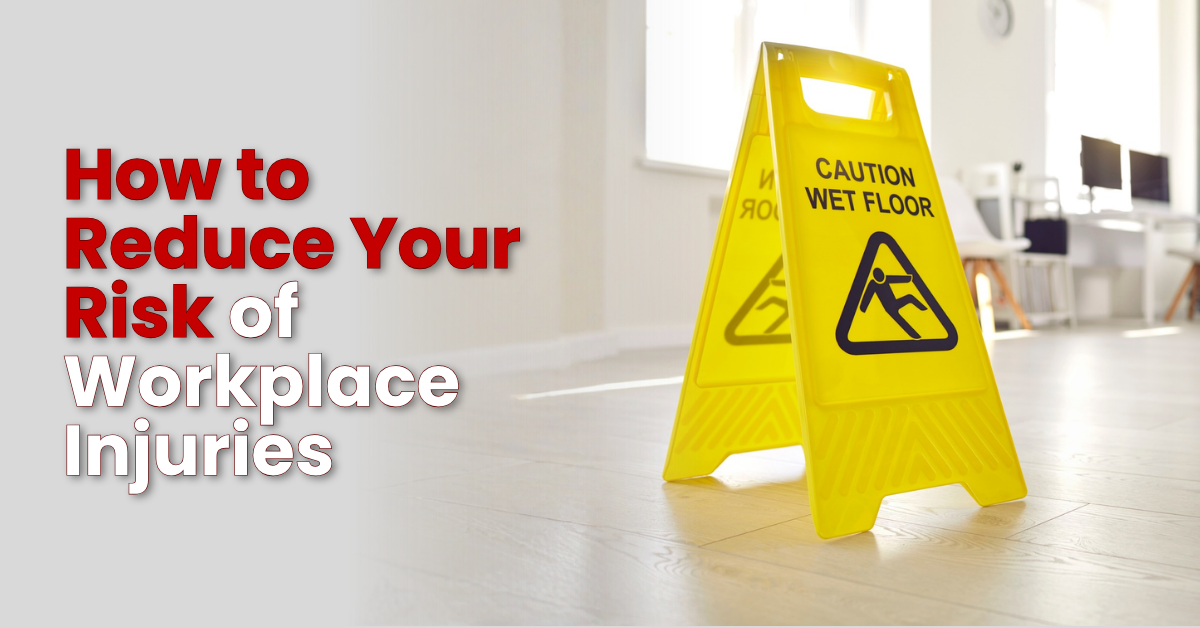
Workplace injuries cost more than the immediate pain and time off. They affect productivity, team morale, rehabilitation costs and, for the person injured, sometimes months of recovery. In Australia, musculoskeletal injuries, sprains, strains, back injuries and overuse conditions, consistently rank among the most common and costly categories of workplace injury.
The good news is that most are preventable, and the principles behind prevention are the same ones that run through every other area of musculoskeletal health: manage load, build capacity, and deal with warning signs before they become injuries.
What Are Common Workplace Injury Risks?
Workplace injury risks vary by industry, but the most common musculoskeletal hazards fall into a few consistent categories:
- Manual handling: Lifting, carrying, pushing, pulling and repetitive tasks are the most common triggers for back, shoulder and upper limb injuries
- Sustained postures: Long periods sitting at a desk, standing on a worksite or working in fixed positions limit movement variety and concentrate load on the same tissues
- Awkward postures: Reaching overhead, twisting under load, working in confined spaces or at non-neutral wrist and neck positions increase injury risk
- Repetitive tasks: Tasks requiring the same movement repeatedly, particularly with force or at pace, are a primary driver of overuse injuries
- Fatigue: Physical and cognitive fatigue reduce coordination, reaction time and the body’s ability to protect itself under load
WHS risks examples in common workplaces include: a warehouse worker repeatedly lifting boxes at knee height, an office worker sustaining eight hours of forward head position, a tradesperson working overhead for extended periods, or a retail worker standing on hard flooring all shift. For workers experiencing persistent back symptoms, understanding the causes and treatment of lower back pain can also help address problems before they interfere with work
How to Control Hazards and Risks in the Workplace
Australia’s Work Health and Safety (WHS) framework provides a structured approach for managing workplace hazards, and the hierarchy of control is its central tool.
What Is the Hierarchy of Control in Workplace Safety?
The hierarchy of control ranks risk control measures from most to least effective. Applied in order, working down from the top:
- Elimination: remove the hazard entirely. Redesign the task so manual lifting isn’t required, or automate a repetitive process. The most effective control.
- Substitution: replace the hazard with something less risky. Use a lighter tool, a different material, or a powered lift instead of a manual one.
- Isolation: separate the hazard from people. Rotate workers across tasks to limit exposure to any one risk.
- Engineering controls: modify equipment or the environment. Adjustable workstations, trolleys, lift tables and anti-fatigue matting all reduce physical load.
- Administrative controls: change how work is done. Job rotation schedules, rest breaks, training in safe work practices and pre-task warm-ups reduce exposure through behaviour and systems.
- Personal protective equipment (PPE): the last line of defence, not the first. Back belts and wrist braces may have a role in specific situations but shouldn’t substitute for higher-order controls.
The most common mistake in workplace injury prevention is jumping to PPE and training while leaving the physical risk in place. A safe lifting technique doesn’t protect a worker who’s lifting 200 times a shift.
Manual Handling and Back Injury Prevention at Work
Manual handling is the single largest source of workplace musculoskeletal injury in Australia. Back and shoulder injuries are the most frequent outcomes. Practical approaches that work:
Build Physical Capacity Alongside Managing Load
A body that’s conditioned for its work demands is more resilient than one that isn’t. Strength training for trunk, hip and shoulder muscles reduces injury risk in physically demanding roles, the same evidence that applies to sport applies here. Employers and workers both benefit from supporting physical conditioning, not just managing task design.
Use Safe Lifting Techniques — Genuinely
Safe lifting training is often compliance-driven and quickly forgotten. The principles that make a difference:
- Plan the lift before you start: know the weight, the route, where it’s going
- Keep the load close to the body
- Avoid twisting under load; turn with your feet
- Share heavy loads or use equipment
- Communicate with co-workers when team lifting
No technique eliminates risk from loads that are too heavy or too frequent. Technique matters most when the load is at the edge of capacity.
Vary the Task and the Position
Rotation between tasks, regular position changes and genuine rest breaks do more for musculoskeletal health than any single ergonomic intervention. Stillness and repetition are the enemies; variety is the protection.
Neck Pain From Work Posture and Workplace Ergonomics
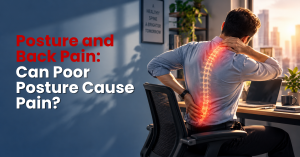
For desk-based workers, the most common musculoskeletal complaints are neck pain and upper back tension, driven more by sustained stillness than by any specific “wrong” posture. Practical ergonomic adjustments that reduce load:
- Screen at eye level or slightly below, arm’s length away
- Chair height so feet rest flat and forearms are roughly horizontal when typing
- Mouse close to the keyboard to avoid sustained shoulder reach
- Headset for regular phone users rather than cradling a handset
- Brief movement breaks every 30 to 60 minutes, more effective than any perfect setup
These adjustments reduce load, but they don’t replace movement. Regular breaks and end-of-day movement remain the most consistently supported interventions for desk-related neck and back pain.
When Should Risk Control Measures Be Reviewed?
Under WHS legislation, risk control measures should be reviewed when:
- A new hazard or risk is identified
- A workplace injury or near miss occurs
- Work processes, equipment or the workplace layout changes
- Following consultation with workers who identify a problem
- At regular intervals as part of routine safety management
Worker input is often the most reliable source of information about what’s actually happening at the task level, the gap between written procedures and actual practice is where many injuries originate.
Can Physiotherapy Help With Workplace Injury Prevention?
Yes, and prevention is an underused reason to access physiotherapy in a work context. A physiotherapist can:
- Assess individual workers’ movement patterns and physical capacity relative to their job demands
- Identify early-stage musculoskeletal problems before they become injuries
- Provide rehabilitation for existing injuries to full work capacity
- Support return-to-work planning after injury, including graded duties
- Deliver education and warm-up programs in workplace settings
Early physiotherapy involvement, before an injury becomes established, tends to produce better outcomes and shorter recovery periods than waiting until someone is significantly injured.
Workplace Injury Support at Next Phase Injury Therapy
At Next Phase Injury Therapy in Yagoona, our physiotherapists and chiropractors work with individuals across a wide range of industries, from office workers to tradies to healthcare workers, and support both injury treatment and injury prevention.
We work with you to:
- Assess musculoskeletal symptoms early, before they become time-off injuries
- Provide rehabilitation that returns you to full work capacity
- Build the physical capacity and movement habits that keep workplace demands within what your body can handle
Prevention Is Cheaper Than Recovery
Workplace injury prevention isn’t a box-ticking exercise. It’s the difference between a workforce that’s available and capable, and one that’s cycling through injury and recovery.
Explore our physiotherapy, chiropractic and remedial massage services, or book an appointment with Next Phase Injury Therapy in Yagoona. We’re open 8am to 8pm, seven days a week.
FAQs
How can you reduce your risk of workplace injuries?
Apply the hierarchy of control to reduce physical hazards, build physical capacity through regular strength and conditioning, vary tasks and positions throughout the shift, and act on early warning signs before they become injuries.
What are common workplace injury risks?
Manual handling, sustained or awkward postures, repetitive tasks, whole-body vibration and fatigue are the most common musculoskeletal hazards. Back, shoulder and upper limb injuries are the most frequent outcomes in Australian workplaces.
How do you control hazards and risks in the workplace?
Work through the hierarchy of control in order, elimination, substitution, isolation, engineering controls, administrative controls and PPE, addressing risks at the highest level possible rather than defaulting to training and PPE alone.
What is the hierarchy of control in workplace safety?
A ranking of risk control measures from most to least effective: elimination, substitution, isolation, engineering controls, administrative controls and PPE. Higher-order controls reduce the hazard itself; lower-order controls reduce exposure to a hazard that remains.
When should risk control measures be reviewed?
After any workplace injury or near miss, when processes or equipment change, when workers identify a new concern, and at regular intervals as part of routine safety management.
Can physiotherapy help with workplace injury prevention?
Yes. Physiotherapy can assess individual physical capacity relative to job demands, identify early-stage problems, provide injury rehabilitation, and Support returning to work after injury, including graded duties. Early involvement tends to produce better outcomes than waiting until an injury is established.
References
- Safe Work Australia. Work-Related Injury and Disease in Australia. Safe Work Australia, 2023, https://www.safeworkaustralia.gov.au.
- Punnett, Laura, and David H. Wegman. “Work-Related Musculoskeletal Disorders: The Epidemiology and the Debate.” Journal of Electromyography and Kinesiology, vol. 14, no. 1, 2004, pp. 13–23, https://doi.org/10.1016/j.jelekin.2003.09.015.
- Lauersen, Jeppe Bo, et al. “The Effectiveness of Exercise Interventions to Prevent Sports Injuries: A Systematic Review and Meta-Analysis of Randomised Controlled Trials.” British Journal of Sports Medicine, vol. 48, no. 11, 2014, pp. 871–877, https://doi.org/10.1136/bjsports-2013-092538.
- van der Molen, Henk F., et al. “Interventions to Prevent Work-Related Musculoskeletal Disorders of the Upper Extremity: Systematic Review of Recent Literature.” International Archives of Occupational and Environmental Health, vol. 93, no. 8, 2020, pp. 1113–1129, https://doi.org/10.1007/s00420-020-01566-z.
- Lin, Ivan, et al. “What Does Best Practice Care for Musculoskeletal Pain Look Like? Eleven Consistent Recommendations from High-Quality Clinical Practice Guidelines: Systematic Review.” British Journal of Sports Medicine, vol. 54, no. 2, 2020, pp. 79–86, https://doi.org/10.1136/bjsports-2018-099878.
Information on this page is general in nature and is not a substitute for individualised advice from a registered health practitioner. Our practitioners are registered with AHPRA.