
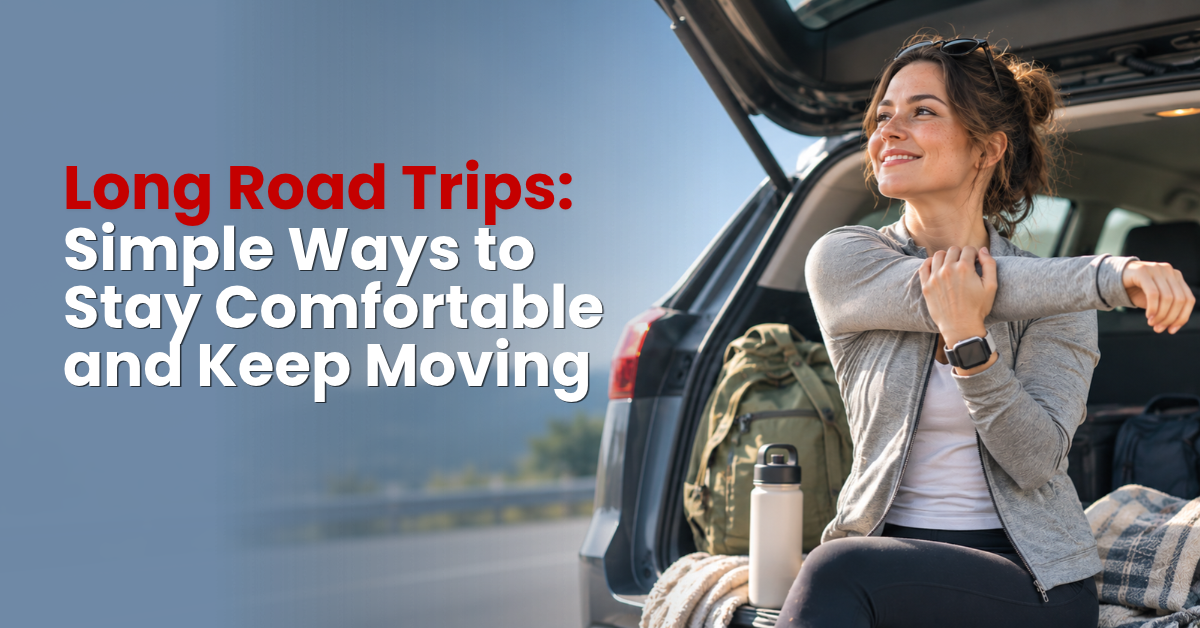
Long road trips can be an enjoyable way to travel, whether you are heading away for a holiday, visiting family or travelling between cities for work. However, spending several hours behind the wheel can place additional demands on your body. Remaining in the same position for extended periods may contribute to muscle stiffness, back discomfort, tight hips and reduced mobility.
Although driving is often considered a relatively low-impact activity, it still involves maintaining a fixed sitting position while making repeated movements with your arms, legs and feet. Without regular movement breaks, these demands can gradually lead to travel discomfort, particularly for people who already experience back or joint problems.
The good news is that a few simple habits can make long road trips more comfortable. Adjusting your driving position, taking regular breaks and incorporating gentle movement into your journey can help reduce stiffness and support better mobility.
In this guide, we will cover practical long drive tips, useful stretches, driving posture adjustments and simple ways to look after your body throughout your journey.
Why Long Periods of Driving Can Cause Physical Discomfort
One of the main challenges of long road trips is spending hours sitting in a relatively fixed position. Unlike walking or other everyday activities, driving offers limited opportunities to change your posture or move freely.
Sitting for long periods can place sustained demands on your lower back, hips, shoulders and neck. Your muscles may become stiff when they remain in similar positions without regular movement.
Prolonged sitting may also contribute to:
- Lower back discomfort: Maintaining the same sitting position can increase discomfort around the lower back, particularly if your seat does not provide adequate support.
- Hip stiffness: Your hip flexors remain in a shortened position while seated, which may contribute to tightness.
- Neck and shoulder tension: Holding the steering wheel and maintaining visual focus can contribute to muscle tension.
- Leg discomfort: Limited movement during prolonged sitting may contribute to feelings of heaviness or stiffness in the legs.
- Reduced mobility: Your body may feel less flexible immediately after getting out of the vehicle.
These effects can become more noticeable during long road trips, especially when you do not take enough breaks.
People who already experience back pain, joint stiffness or previous injuries may find that extended driving aggravates their existing symptoms.
Take Regular Breaks to Keep Your Body Moving
One of the most useful road trip tips is to plan regular stops rather than waiting until you feel uncomfortable.
When you remain seated for extended periods, your muscles have fewer opportunities to change position and move through their normal range of motion. Getting out of the vehicle allows you to walk, stretch and gently activate different muscle groups.
For many drivers, stopping approximately every two hours is a practical starting point. However, you may need more frequent breaks depending on your comfort, existing health conditions and individual needs.
During each stop, try to:
- Walk around for five to ten minutes.
- Gently stretch your legs and hips.
- Roll your shoulders to release tension.
- Stand upright and change your position.
- Drink water and allow yourself time to move before continuing.
These movement breaks can help reduce the effects of prolonged sitting and make your journey more manageable.
Planning stops in advance is one of the simplest long drive tips because it encourages you to move regularly rather than remaining behind the wheel for too long.
If you are travelling with passengers, encourage everyone to get out and move during rest stops. Regular movement is beneficial for passengers as well as drivers.
Improve Your Driving Position for Better Comfort
Your driving position can make a significant difference to how your body feels during a journey. Poor positioning may place unnecessary demands on your lower back, neck, shoulders and legs.
Applying practical driving posture tips before setting off can help you maintain a more comfortable position.
Consider the following adjustments:
Adjust your seat distance
Move your seat so you can comfortably reach the pedals without fully extending your legs. Your knees should remain slightly bent when pressing the pedals.
Support your lower back
Your seat should support the natural curve of your lower back. If necessary, adjust the lumbar support or use an appropriate lumbar cushion.
Position your steering wheel
Keep the steering wheel at a comfortable distance so your shoulders remain relaxed and your elbows slightly bent. Avoid reaching forward or holding your arms in a tense position.
Adjust your headrest
Position the headrest to provide appropriate support for your head and neck. This can also help improve your overall driving position.
Avoid unnecessary leaning
Try not to lean towards the steering wheel or tilt your body to one side. Maintaining a balanced sitting position can help distribute pressure more comfortably.
These driving posture tips are particularly important during long road trips because even small positioning problems can become uncomfortable when maintained for several hours.
Remember that good posture does not mean holding one rigid position throughout the journey. Changing your position safely and taking regular breaks are equally important.
Simple Stretches and Exercises During Rest Stops
Movement exercises can help reduce muscle stiffness and restore comfortable mobility after spending hours in a vehicle.
You do not need specialist equipment to perform these simple stretches for long drives. Most can be completed at a safe rest stop with enough space to move comfortably.
Standing Hamstring Stretch
This stretch targets the muscles at the back of your thighs.
- Stand upright with one foot slightly forward.
- Keep the front leg comfortably straight.
- Gently bend your back knee and move your hips backwards.
- Lean forward slightly until you feel a gentle stretch.
- Hold for 15–20 seconds before changing sides.
Avoid forcing the movement or stretching into pain.
Hip Flexor Stretch
Sitting for extended periods keeps your hips in a flexed position. This exercise gently stretches the muscles at the front of your hips.
- Stand with one foot forward and the other behind you.
- Bend your front knee slightly.
- Gently move your hips forward while keeping your upper body upright.
- Hold for 15–20 seconds.
- Repeat on the opposite side.
Standing Calf Stretch
This exercise targets the muscles at the back of your lower legs.
- Stand facing a wall or stable surface.
- Place one foot behind the other.
- Keep your back heel on the ground.
- Gently lean forward until you feel a stretch in your calf.
- Hold for 15–20 seconds and switch legs.
Shoulder Rolls
Driving can contribute to tension around the upper back and shoulders.
- Sit or stand comfortably.
- Slowly lift your shoulders towards your ears.
- Roll them backwards and downwards.
- Repeat 10 times.
- Reverse the direction if comfortable.
Gentle Walking
Walking is one of the easiest ways to introduce movement after prolonged sitting.
Take a comfortable walk around the rest area for five to ten minutes. This allows you to change your position and move your hips, knees and ankles.
These stretches for long drives can be incorporated into your rest stops to support mobility and reduce stiffness. Choose movements that feel comfortable and avoid any exercise that causes pain, dizziness or unusual symptoms.
Keep Your Legs Moving During the Journey
Although getting out of the vehicle is important, there are also gentle movements you can perform while seated when traffic conditions allow.
Leg exercises while sitting can help you change your position and activate your lower-leg muscles. However, drivers should only perform movements that do not interfere with vehicle control. Never exercise your feet or legs while operating the pedals.
Some simple options include:
- Ankle circles: During a safe break, rotate each ankle gently in both directions.
- Seated knee extensions: While parked safely, straighten one knee and hold briefly before lowering it.
- Ankle pumps: While stationary, move your feet gently up and down.
- Gentle seated marching: While parked, lift one knee at a time in a comfortable range.
Passengers can perform suitable leg exercises while sitting during the journey, provided they have enough space and the movements feel comfortable.
It is important to remember that seated exercises are not a replacement for standing, walking and taking regular breaks.
If you notice one-sided leg swelling, unusual calf pain, warmth or redness, seek prompt medical assessment rather than assuming it is ordinary travel stiffness. Sudden breathlessness or chest pain requires emergency medical attention.
What to Do About Back Pain During and After Driving
Back discomfort is a common concern for people who spend several hours travelling by car. However, the cause can vary depending on your posture, activity levels, previous injuries and individual health circumstances.
Back pain while driving may be associated with prolonged sitting, inadequate lumbar support or maintaining an uncomfortable position for too long.
To help manage discomfort:
- Adjust your seat to support your lower back.
- Avoid sitting with your wallet or other bulky objects in your back pocket.
- Change your position when it is safe to do so.
- Take regular walking breaks.
- Avoid lifting heavy luggage immediately after a long journey without preparing your body.
If you experience back pain after long drive sessions, gentle walking and comfortable mobility exercises may help you gradually return to normal movement.
Avoid assuming that all back discomfort is caused by sitting. Persistent, worsening or unexplained symptoms should be assessed by an appropriate healthcare professional.
Seek urgent medical attention if back pain is accompanied by new bladder or bowel problems, numbness around the groin or saddle area, or significant or progressive leg weakness.
Prepare Your Body Before Setting Off
Looking after your body should start before you begin your journey. A little preparation can make long road trips easier, particularly if you already experience muscle tightness or reduced mobility.
Here are some practical car travel tips to consider:
Move before travelling: Take a short walk and perform gentle mobility exercises before getting into the car.
Avoid starting with stiffness: If you have been sitting at a desk all morning, spend a few minutes moving your hips, shoulders and legs before departure.
Stay hydrated: Drink water regularly throughout the journey and take opportunities to use rest stops.
Wear comfortable clothing: Choose clothing that allows you to sit, move and stretch without restriction.
Plan your stops: Identify suitable rest areas along your route so you can take breaks without rushing.
Avoid rushing: Allow enough travel time to stop when necessary instead of trying to complete the journey without breaks.
Following these car travel tips can help you prepare for extended driving and make movement a regular part of your travel routine.
When Should You Seek Professional Advice?
Occasional stiffness after driving may improve with movement and rest. However, persistent discomfort should not be ignored.
If you regularly experience back pain, hip stiffness, neck tension or reduced mobility following long road trips, an assessment may help identify contributing factors.
A physiotherapist can assess your movement, posture, strength and flexibility to understand what may be contributing to your symptoms.
Depending on your individual needs, treatment may include:
- Physiotherapy exercises to improve strength and mobility.
- Manual therapy to help manage certain musculoskeletal symptoms.
- Clinical Pilates to support core strength, stability and movement control.
- Remedial massage to address muscle tension and discomfort.
The appropriate approach depends on your symptoms, assessment findings and health history. Professional advice is particularly important if discomfort continues despite changing your driving habits.
How NPIT Can Help You Stay Comfortable and Active
At Next Phase Injury Therapy (NPIT), we understand how everyday activities, including driving and travelling, can affect your movement and physical comfort.
Whether you experience lower back discomfort, hip stiffness, neck tension or reduced mobility after travelling, our team can help assess your concerns and develop an approach suited to your individual needs.
Our services include:
- Physiotherapy: Individualised assessment and treatment to help manage musculoskeletal conditions, improve mobility and support recovery.
- Chiropractic: Assessment and appropriate treatment to address certain musculoskeletal concerns and movement-related discomfort.
- Clinical Pilates: Guided exercises designed to develop strength, stability, flexibility and movement control.
- Remedial Massage: Treatment focused on managing muscle tension and supporting physical comfort.
If long journeys regularly leave you feeling stiff or uncomfortable, you do not have to simply accept it as part of travelling.
Book an appointment with NPIT today to discuss your symptoms and find out how our team can help you move more comfortably. Visit NPIT to learn more about our services and take the next step towards better movement and physical wellbeing.
FAQs
1. How often should I take breaks during a long drive?
A practical starting point is to stop approximately every two hours, although individual needs may vary. During long road trips, regular breaks give you an opportunity to stand, walk and change your sitting position. If you experience discomfort or fatigue earlier, stop sooner. Always follow road safety recommendations and never continue driving when you are too tired.
2. What exercises can I do after sitting in a car for hours?
Some useful exercises include gentle hamstring stretches, hip flexor stretches, calf stretches, shoulder rolls and walking. These stretches for long drives can help address muscle stiffness and restore comfortable movement. Start gently and avoid movements that cause pain.
3. Why does my body feel stiff after a long car journey?
Stiffness can develop because prolonged sitting keeps your body in a relatively fixed position. Your hips, lower back, neck and shoulders may experience sustained muscle activity or reduced movement. Taking regular breaks and incorporating mobility exercises can help reduce travel discomfort.
4. Can driving for long periods cause lower back pain?
Yes, extended driving may contribute to lower back discomfort, particularly when combined with poor seat support, prolonged sitting or an existing back condition. Applying driving posture tips, adjusting your seat and taking regular movement breaks may help. Persistent or severe symptoms should be professionally assessed.
5. What is the best sitting position for a long journey?
A comfortable position generally includes adequate lower-back support, slightly bent knees, relaxed shoulders and a steering wheel that you can reach without leaning forward. Avoid holding one rigid position throughout the journey. Good driving posture tips should always be combined with regular breaks and movement.
References
1. Healthdirect Australia – Back Pain
https://www.healthdirect.gov.au/back-pain
2. Healthdirect Australia – How to Improve Your Posture
https://www.healthdirect.gov.au/healthy-living/physical-activity/how-to-improve-your-posture
3. Musculoskeletal Health Australia – Driving
https://muscha.org/driving/
4. RACV – Safe Driving Tips
https://www.racv.com.au/cars-transport/road-safety/safe-driving.html
Information on this page is general in nature and is not a substitute for individualised advice from a registered health practitioner. Our practitioners are registered with AHPRA.